

This is the fifth part of a six-part series which will document our 6,000-km trip from Delhi to Kerala and back. You can read an introduction (the why, where and how) to the series here. And you can find the second part (from Delhi to Bengaluru here), the third part (Bengaluru to Varkala) and the fourth part (Varkala to Hyderabad).
In this leg, we’ll be leaving Hyderabad and going through Central India back home to Delhi. This covered 1655 km, done in three days.
Our motive in a few words: to show you that it’s not just possible to do these long trips on an EV vehicle, but it’s pretty easy and the cost effective.
It’s a long journey and a long article, like the previous ones. I’ve divided it into three parts: one for each day. I’ll also be publishing a separate article on observations from the charging infrastructure we came across through the entire trip. Keep an eye out for that.
Here’s an index for you to skip to the part that would most interest you.
Index
Housekeeping
Please enable images if you are reading this on email. There are 12 images in this article! The best way to experience this article is on a desktop browser (click here) or on the Substack App.
You can check out our individual charging sessions in this handy roadtrip sheet!
We shared live updates about this trip in our WhatsApp community. Join the group to follow our next trip! This trip was in September 2025. We are back from our summer break and will resume regular publishing!
For our premium subscribers, you can access the PowerBI of our trip for free. Just drop me a message. You don’t need a license to access it, just a valid work email.
Hyderabad to Nagpur
Route: Hyderabad - Nizamabad - Adilabad - Jamb - Khandali
Distance: 728 km
Time taken: 9h 45m
Number of charging stops: 3
In Hyderabad, we hosted a small breakfast community meetup at the iconic Cafe Nilofur in Hyderabad. It was open to all. We discussed current issues within the EV ecosystem, trends we observed and the way forward.
Do subscribe - it is free, after all; but if possible, do help us continue this sort of work by becoming a paid subscriber.
Before we left Hyderabad, we wanted to check out a couple of chargers within the city. The Voltran Charging hub, which had six 60kW fast chargers.
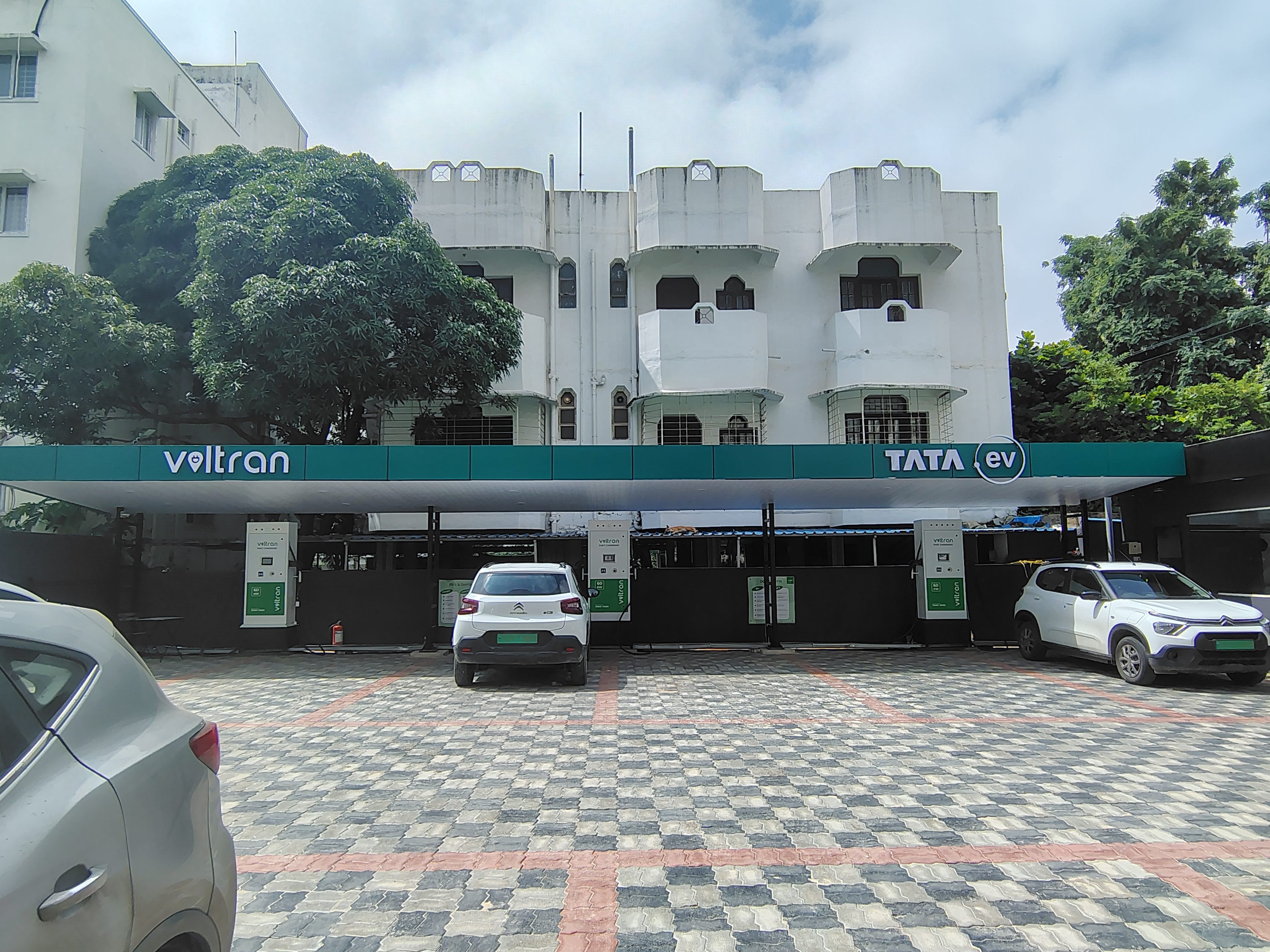
And, Glida’s massive charging hub which had 130 charging points. It had a good vibe, bright machinery and extremely high power charging infra. We hope such kinds of hubs become the norm across India.


We left Hyderabad around noon, the latest start in the road trip so far. Our plan was to head to Nagpur, some 500km away.
Hyderabad is a sprawl. It felt like we had to travel 70km to finally leave its urban influence and start seeing rural scenery. Three hours later, we stopped at a BPCL fuel pump in Nizamabad. We were at 22% SoC.
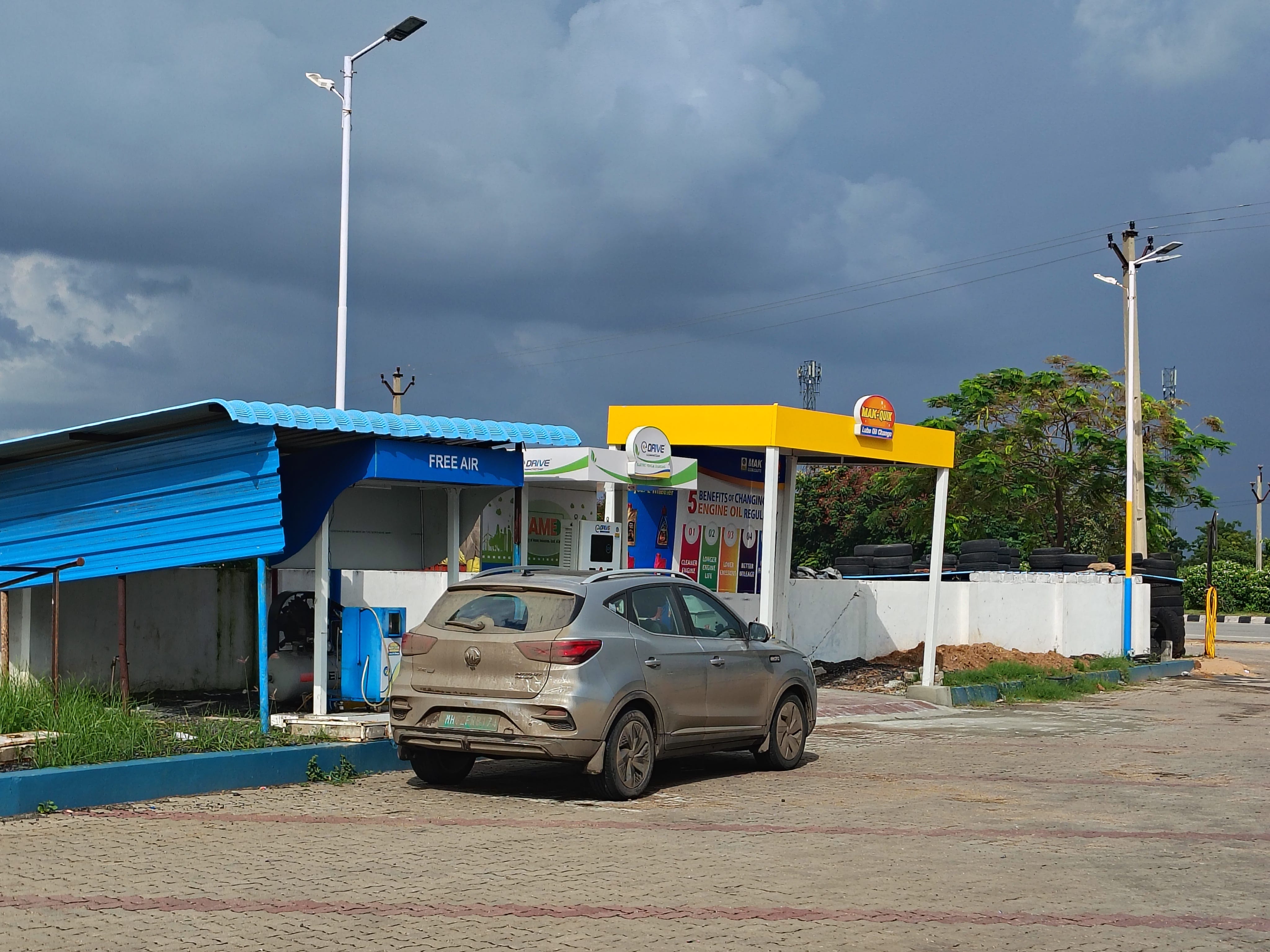
We got cheap electricity for the car, but at a cost on our bodies. The charger has no shade (like, most PSU chargers). 30 minutes later, the car was at 78%. We were pretty depleted though.
All EV owners must now be used to supernatural math skills by now. Nagpur was 300km away and we could do it with a full charge now. But, the charging speed is likely to drop and it would take us 45 minutes to reach 100%. It wasn’t worth it. We decided to head towards Nagpur and get a quick top-up along the way.
The route was an old-fashioned, four-laned highway. It was bustling, with a lot of speed breakers and crossings. Every now and again, it seemed like a village had spilled over onto the highway. It was hard to maintain a consistent speed of 80kmph.
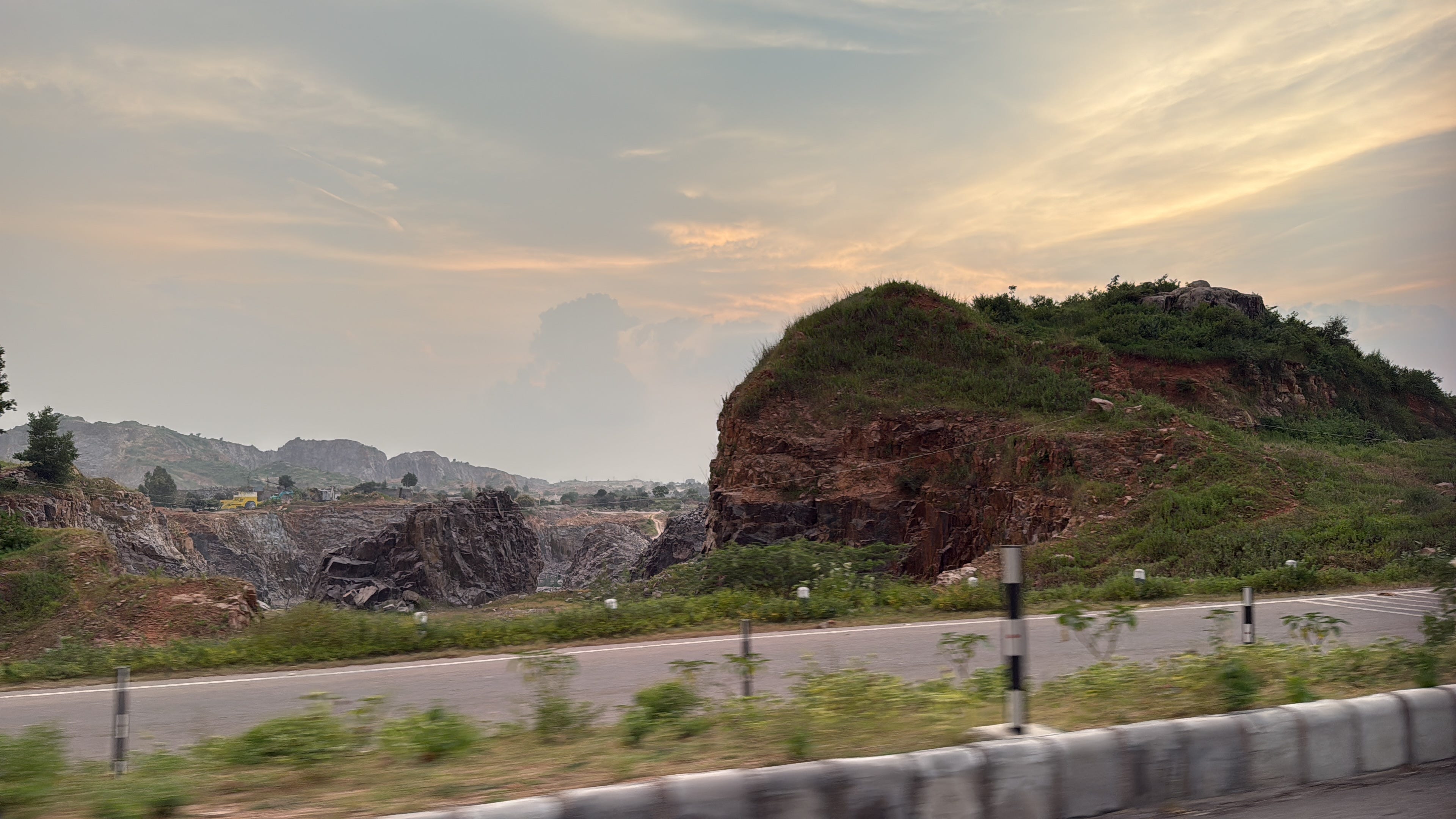
The charging infrastructure on this stretch is yet to catch up to the rest of the country. There were few chargers, and most were 25-30kW. A few 60-120kW chargers were available, but operated by PSUs (BPCL, IOCL) and these seemed - to no one’s surprise - to be offline.
By sundown we were in Maharashtra. It felt like returning to roots: things just seemed a lot more familiar. But, the road condition seemed to have gotten worse. There were large potholes and craters.
Then the drive became significantly worse when it started to rain. Visibility dropped and we had to switch on the AC. Expected range crashed. We needed to finalise a charger sooner than expected.
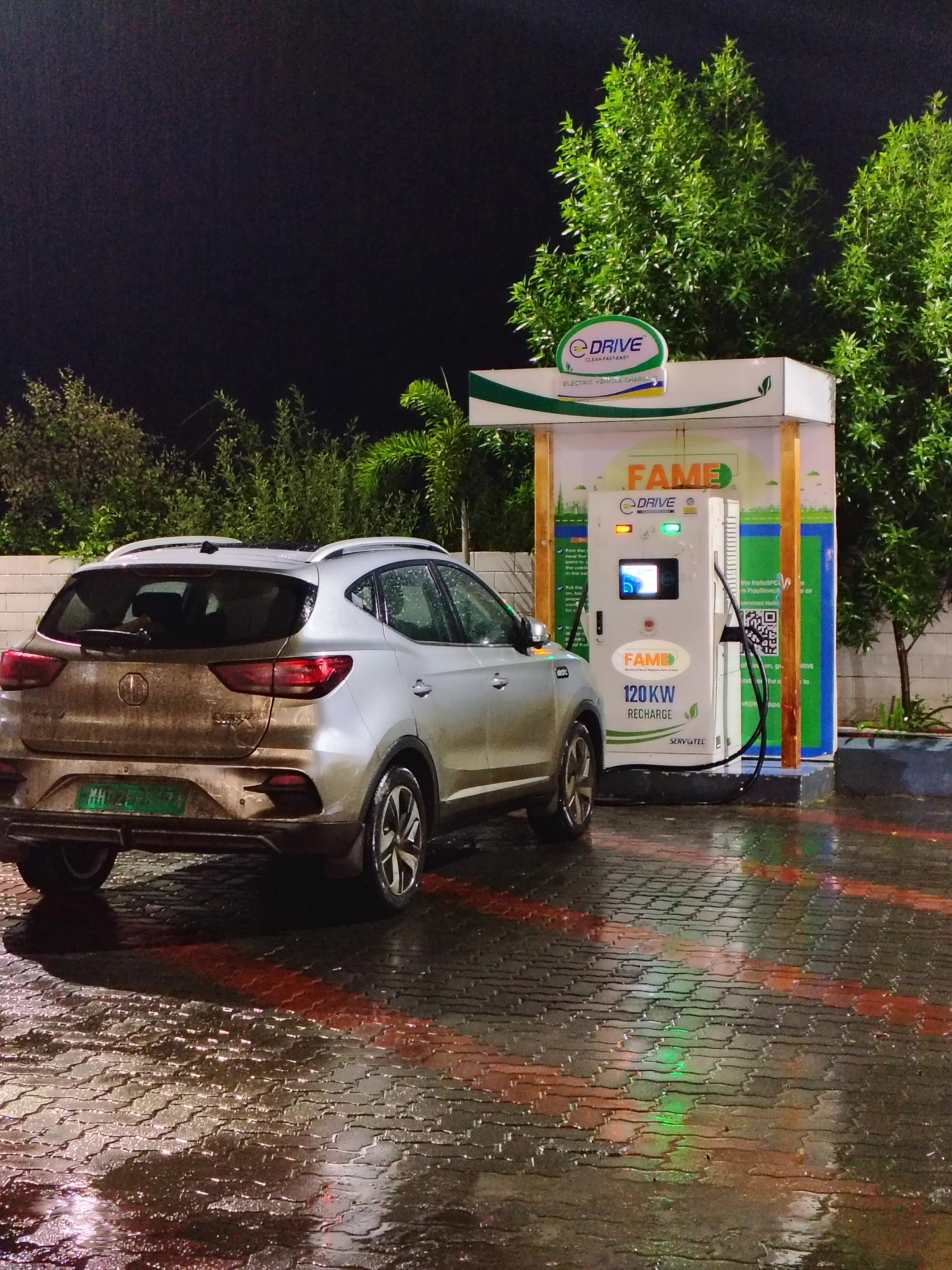
We narrowed down on a 120kW charger operated by BPCL at Jamb, some 60km before Nagpur. We had heard of PSUs keeping high power chargers and wanted to see it first-hand. These chargers are often considered a rare beast, but we have proved it wrong when we analysed the Bull case for PSUs (which you can read for free).
At 8 p.m., we reached Jamb. The charger was empty and it was online. We connected and the car was pulling full power. The other advantage of this charger was that it has a restaurant next door. For those keeping track: Yes, it was our first full meal since Hyderabad.
We were tired and wanted to crash at Jamb itself. But, we struggled getting a hotel room. 1.5 hours later, we gave up and decided to drive towards Nagpur. 18km later, in a non-descript highway town of Khandali, we found a hotel. It had a Jio-bp fast charger attached to it, which we didn’t expect. The rooms were not good. But we were too tired to move on.
Nagpur to Gwalior
Route: Nagpur - Sagar - Gwalior
Distance: 765 km
Time taken: 13h 50m
Number of charging stops: 2
At 6:30 a.m., we left the hotel.
There are three ways from Nagpur to Delhi. Nagpur-Jabalpur-Chitrakoot (UP) and then the expressway to Delhi. This was described in our Bandhavgarh trip. Or, we cut through Indore and join the Delhi–Mumbai Expressway. The second part of the route I’ve done numerous times, including on the first day of this trip. We chose option three: via Gwalior to Agra and Yamuna Expressway. It was new.
This required some planning. We were in areas where charging infrastructure still had gaps. We decided to skip the Nagpur-Chhindwara route, and instead go from Nagpur to Pench and from there to Sagar. This is because the Chhindwara route had mostly 30kW chargers by Glida, BPCL and Tata Power, and a sole 60kW charger by BPCL. The other route had a lot more options for 60kW chargers as well as 25-30kW charging options.
Through the trip we wanted to stick to chargers above 60kW. We wanted to highlight the maturity of the charging infrastructure. Where, we not only had options for charging, but also many options for optimum, high speed chargers.
This trip has shown the abundance of 60kW chargers. If you aren’t using these chargers, then you’re pretty much wasting time during these long road-trips.
The highway drive was beautiful, particularly through Pench. The forest stretched till the horizon, and there was a constant chirp of birds. Signboards notify you of animal crossings and along with rise hopes that one can get to see a tiger along the way. This is what road trips are all about. The last time we felt this much peace and serenity was when we drove through the Western Ghats in Kerala. That was a couple of days ago, but it felt like it was last month.
Two hours later, we had crossed Pench National Park and we decided to stop at a 120kW charger by Statiq at Mohagaon.
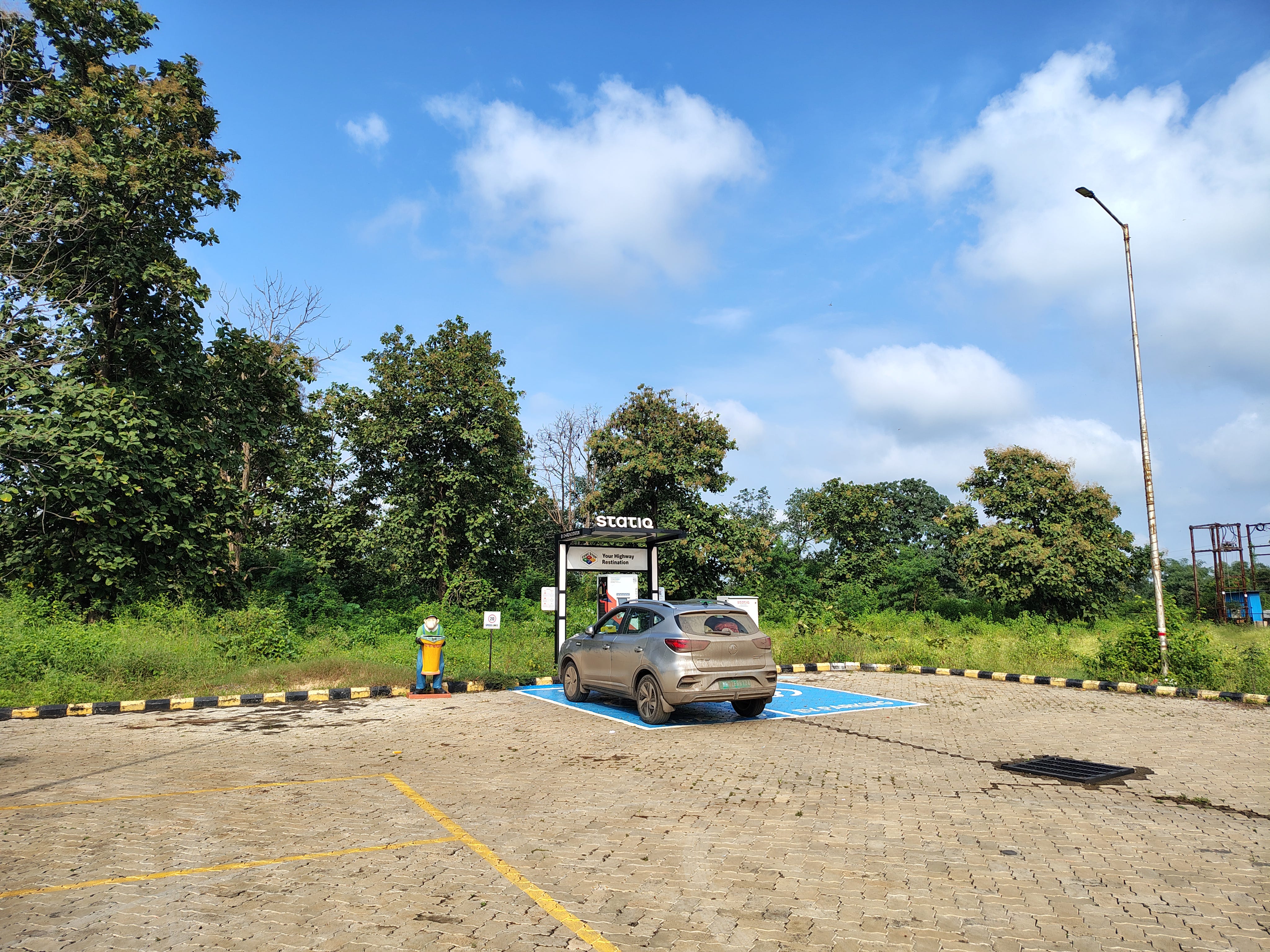
There were plenty of options ahead of us: including some 60kW PSU and non-PSU chargers and a 90kW charger too. The Statiq charger was a 10 km detour. But we were hungry and this charger had a restaurant attached.
We’re in central India now. So no more dosas; and instead we’d have sandwiches and poha.
The next four hours - or, around 250km - was driving on National Highway 44 (Srinagar to Kanyakumari). It was a gorgeous drive: through agricultural fields, forests. We went up and over the Satpur hill range and then over the Vindhyas from where we had entered the Gangetic plains.
There weren’t too many functioning 60kW chargers along the way. Most were just 25-30kW.
By afternoon, we were at Sagar where we had an option of at least eight 25-30kW charges and just two 60kW (one Adani and the other Jio). On route was the Jio charger, which had a hotel attached too.
This hotel seemed to be from some fantasy land recreated for a movie set. It was very weird looking. It was called Hotel Paradise, but not sure whose version of Paradise that is.
For one, it had a big parking lot that was shaded, except for the part which had the charger. The touchscreen of the Mindra machine was not working, but fortunately, we could do this from the app.
And then, we enter the hotel to find it massive. But the seating was circular, as if radiating around a central big pillar. It was exquisite, grand and massive. And eerily empty.
The service was super slow despite us ordering something simple and easy to make. Perhaps, this was among the first meals they had cooked this afternoon.
We were still 695km from Delhi. At the start of the day, we had made an ambitious plan of perhaps attempting to drive directly. We’d reach Delhi late in the night.
But this delay, plus our general exhaustion, meant we were aiming for Gwalior, some 300km away.
Finding cheap and reliable accommodation with AC charging in Gwalior was challenging. After a bit of searching, we found a guy on booking.com who had a room to rent in his house that had EV charging.
For the first hour, the highway cut across low hill ranges. At some point, we crossed Jhansi and entered Uttar Pradesh: the 11th and final new state of the road trip. We crossed more creeks, streams and rivers (Sindh and Betwa), all feeding into Ganga (a river we won’t be crossing on this trip). At one point, the highway cuts across a reservoir. It was dark, however.
Around 8 p.m., we approached the house in Gwalior. The roads were barely five meters wide. Cars were parked on both sides. The charger was in the verandah and not in the parking area. We had to play a little game of tetris with cars to be able to squeeze in the gaps, and put the car nose in. We had to use a 30m extension cable to charge.
We were at 13% SoC and we needed all the juice we could get from this 15A charger. It would take 20 hours to get a full charge with this. Wish people start to specify the type of charger they have when listing it as their amenities.
Folk from the neighbourhood turned up to see us charge, and started interrogating us about the car and the charging.
The guy who rented us the room charged us INR 400 (USD 4.2) as “charging fee”. He clearly overcharged, and perhaps just blurted out a number without understanding how much electricity was being consumed. But it was late, and this overnight charging was saving us time the next day. We just needed enough charge to get us to Agra.
Gwalior to New Delhi
Route: Gwalior - Agra - New Delhi
Distance: 334 km
Time taken: 7h 10m
Number of charging stops: 1
It was a slow, anti-climatic-kind-of-day to end this frenetic road trip. Just 350km, largely on an expressway. If we had fully charged, we’d have driven it in one stretch. But we had to do a quick top-up at Agra. So, we left only at 8 a.m.
In 12 hours of charging it had gone up from 13% SoC to 50%. We had to wait for other cars to be moved so we could exit. In the time it took, it went up to 51%. Always Be Charging.
It was our last day, and we were comfortable with the charging situation. We broke our self-imposed 79kmph rule and decided to burn through the juice at speed.
Two hours later, we were at Agra. There are plenty of options here. My picks are ChargeZone’s charger in Marriott hotel or Statiq at ITC Mughal hotel close to which is a Burger King.
This time, we came across something we hadn’t heard of. A 360kW charger! Operated by Glida. The Statiq app showed a 120kW charger also on the premises, and strangely, it said it was free. We had to check it out, even if it was on the outskirts of Agra.


The charger was in a sort of upcoming suburb of Agra. It was remote, on the Western edge of the city somewhere near the Agra-Lucknow Expressway. We were confused as to why someone would set-up such a high capacity charger here.
We found the charger (a Mindra 360kW and an Exicom 120kW machine). It was functional. The entire area was empty. We parked our car haphazardly (as if any delay would shatter our illusion) and plugged it in. 16% SoC and the charger was active and giving us the car’s full power.
There were no eateries here, but fortunately, we could order a Burger King meal to the spot.
A security guard was present at the site and we got talking. A little while later, a technical team from Glida arrived too. After a while, the property owner came too. Through our conversations, we realised a few things about this hub:
This is primarily a bus charging station, aimed at tourist buses that come from Delhi to Agra and back. While tourists see the Taj Mahal, the bus can charge here.
The charging station was made live only the night before we came. A bus had come for a test charge. I guess they had forgotten to take the charger off the app. This explains why the spot was open and charging marked as free.
While we were charging, a Mahindra 9E pulled up. Perfect because this car could potentially pull in charge at the charger’s max capacity of 360kW compared to our max limit of 60kw (though, we realised later that the charging gun was limited to 180kW).
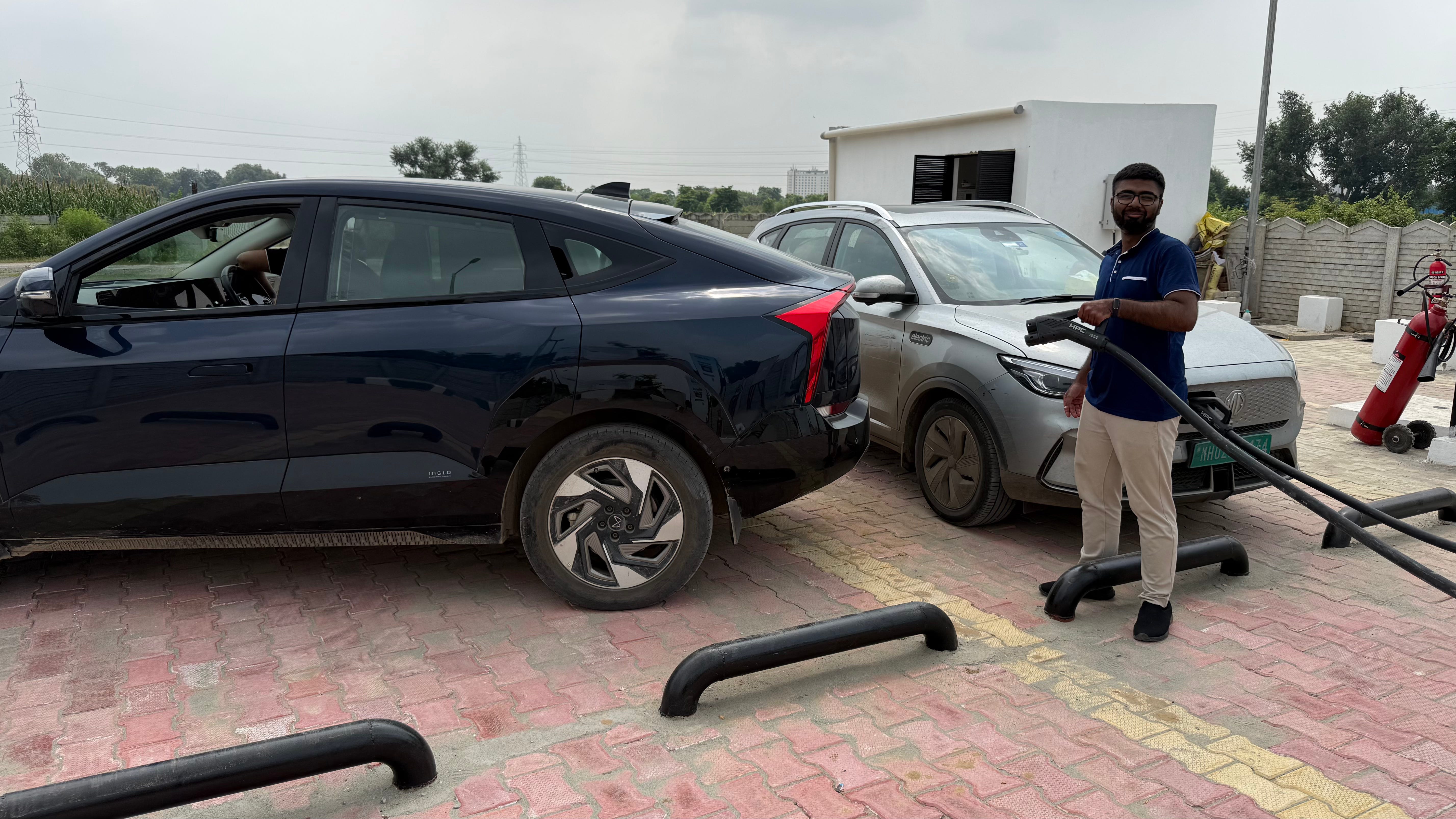
It was when he positioned his car next to ours that we realised that the system was designed for buses (as the charger was installed with a setback on a podium). The 9E owner seemed to be disappointed with his car’s range, saying it would give just 300-350km, compared to the advertised 500km range. We realised later this was because he loved exceeding 120–150kmph on highways.
We were there for nearly an hour. Our car was at 80% SoC.
The final section is a straight expressway. We had enough juice and our speed limit was over 100kmph. Like the Mahindra 9E owner, it was more about thrills than range.
We crossed over the Yamuna River, our 61st river of the trip. We’d cross Hindon River at Greater Noida before crossing Yamuna again.
At 3 p.m., thirteen days since we left, and 6,000-km later, the car rolled into its familiar spot in South Delhi.
Cost and Savings
These trips aren’t meant to be merely joy rides. They allow me to evaluate charging infrastructure along the way (which has become useful for charging companies to understand customer POVs).
They also, hopefully, encourage others to adopt EV technology if they are still under the impression that long journeys in electric cars are still not possible due to the nascent charging infrastructure in the country. We hope we are changing these minds.
EVs are the future: better for the wallet and the environment.
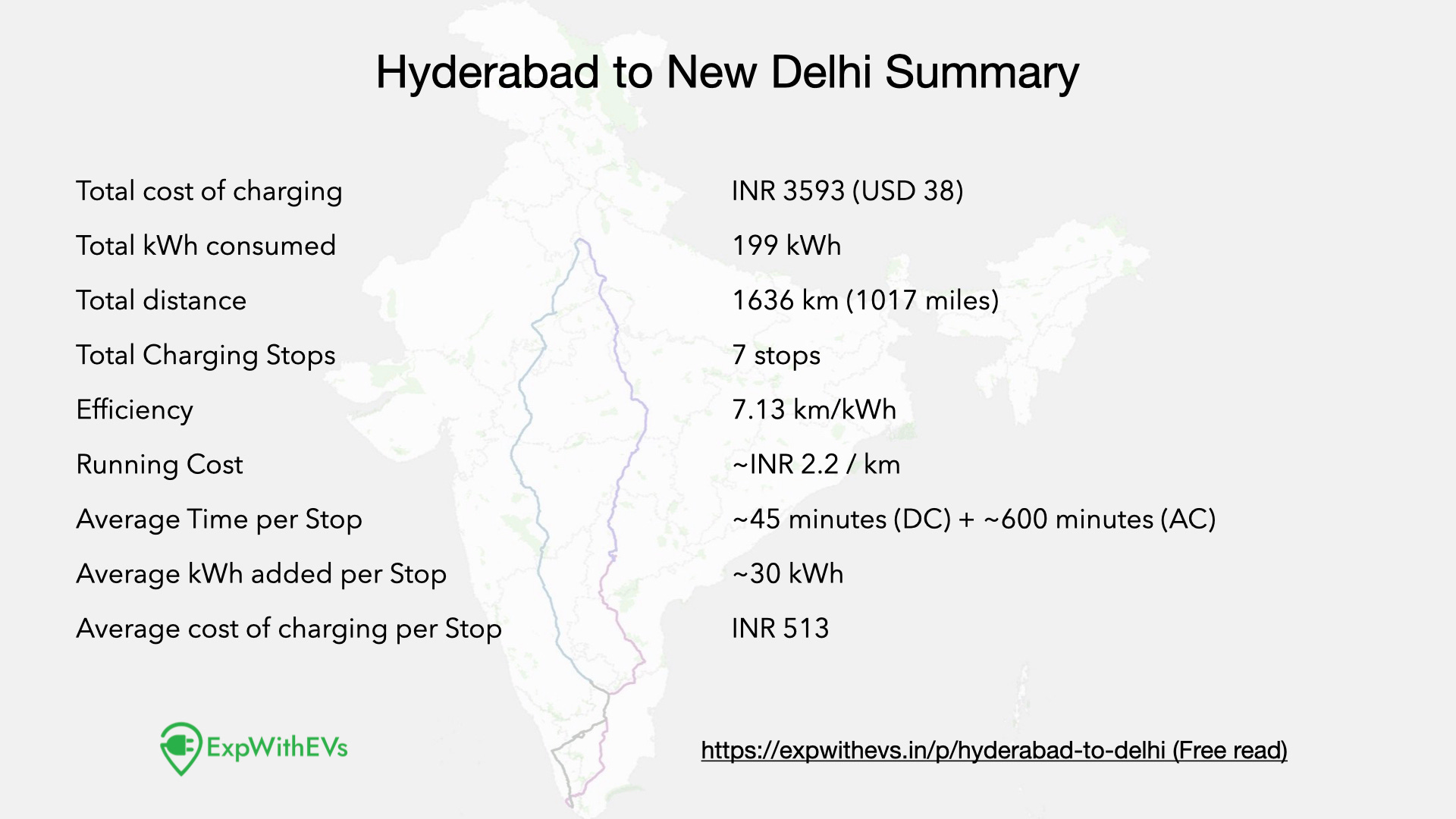
Here is a comparison we’ve made from our trip.
Series Index
The Epic EV Roadtrip! (Published - 16 February 2026)
New Delhi to Bengaluru (Published - 24 February 2026 )
Bengaluru to Varkala (Published - 11 March 2026)
Varkala to Hyderabad (Published - 4 June 2026)
Hyderabad to New Delhi (This one!)
Chargers, Charging and Commentary (Published - 7 July 2026)
This is an index of articles to come. The links will be updated as the articles are published. You can bookmark this section or subscribe to get them straight to your inbox.
This series of articles wouldn’t have been possible without the help of our team. The trip, time, effort - everything was self sponsored and costs money. We do not take advertising or sponsorship money. It allows us to say the uncomfortable truth without compromising on our ethics. You can do your bit by buying us a pizza or getting a premium subscription to the Substack.
Behind the wheel, Photos : Garvit, Priyans.
Words and Graphics : Priyans
Edit : Mohit Rao
Map : Siddharth Agarwal
All rights reserved with Priyans Murarka @ ExpWithEVs.
The data from here and this article cannot be repackaged or sold without explicit written permission of ExpWithEVs.