

This is the third part of a six-part series which will document our 6,000-km trip from Delhi to Kerala and back. You can read an introduction (the why, where and how) to the series. And you can find the first part (from Delhi to Bengaluru)
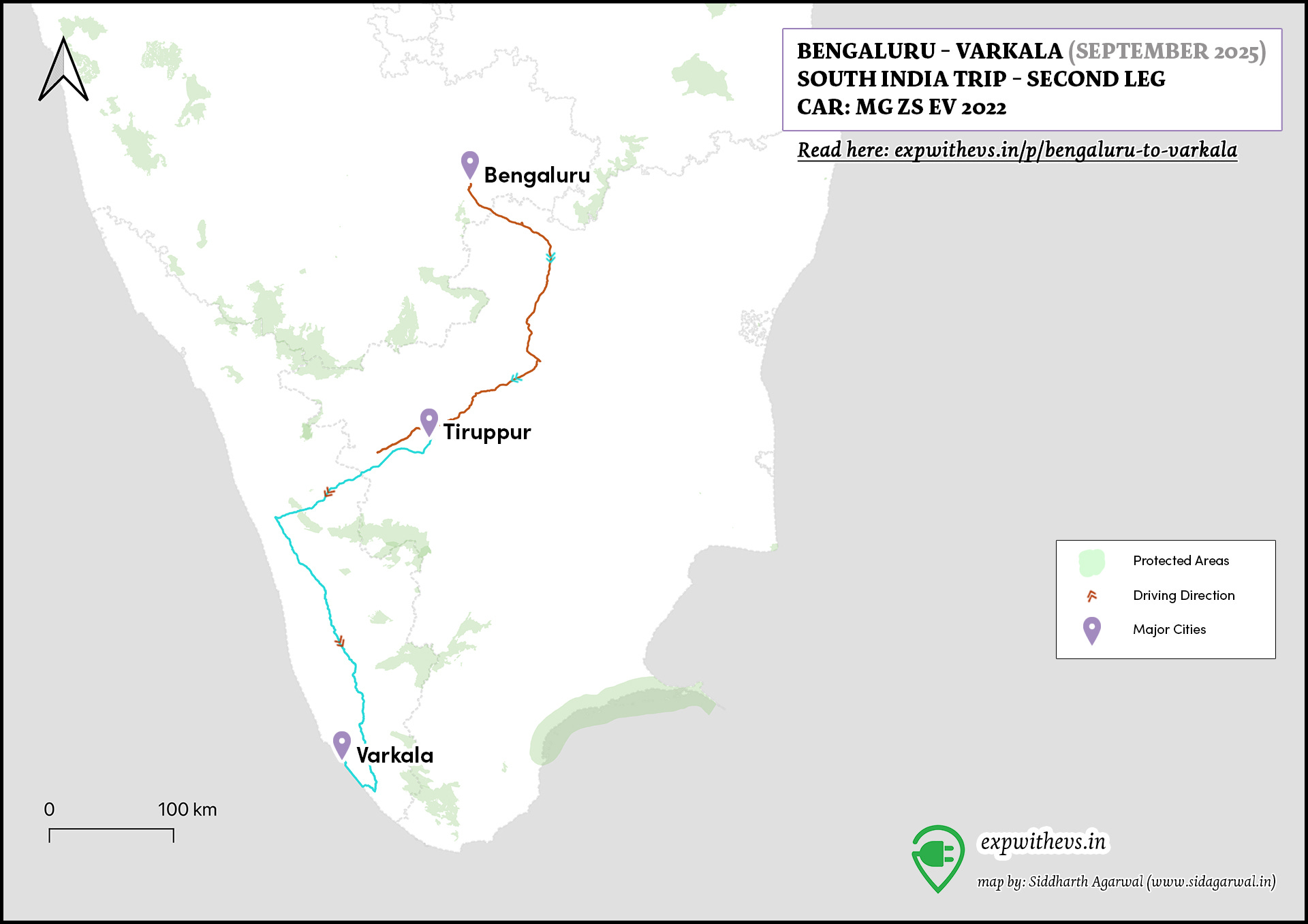
In this leg, we’ll be driving from Bengaluru to Varkala in Kerala through Salem and Coimbatore. This covered 932 km, done in two days. This trip was done to combine a series of meetings with those in the EV industry, meet our community, meet existing and prospective clients. The beautiful cliff town of Varkala would be a well-deserved break.
The motive behind the article is to show you that it’s not just possible to do these long trips on an EV vehicle, but it’s pretty easy and the cost effective.
It’s a long journey and a long article, like the first one. I’ve divided it into two parts: one for each day. I’ll also be publishing a separate article on observations from the charging infrastructure through the entire trip. Keep an eye out for this entire series.
Index
Housekeeping
Please enable images if you are reading this on email. There are over 30 images and videos in this article! The best way to experience this article is on a desktop browser (click here) or on the Substack App.
You can check out our individual charging sessions in this handy roadtrip sheet!
We shared live updates about this trip in our WhatsApp community. Join the group to follow our next trip!
For our premium subscribers, you can access the PowerBI of our trip for free. Just drop me a message. You don’t need a license to access it, just a valid work email.
We are in Hyderabad on 13th March. Drop us a line if you are around.
Bengaluru to Tiruppur
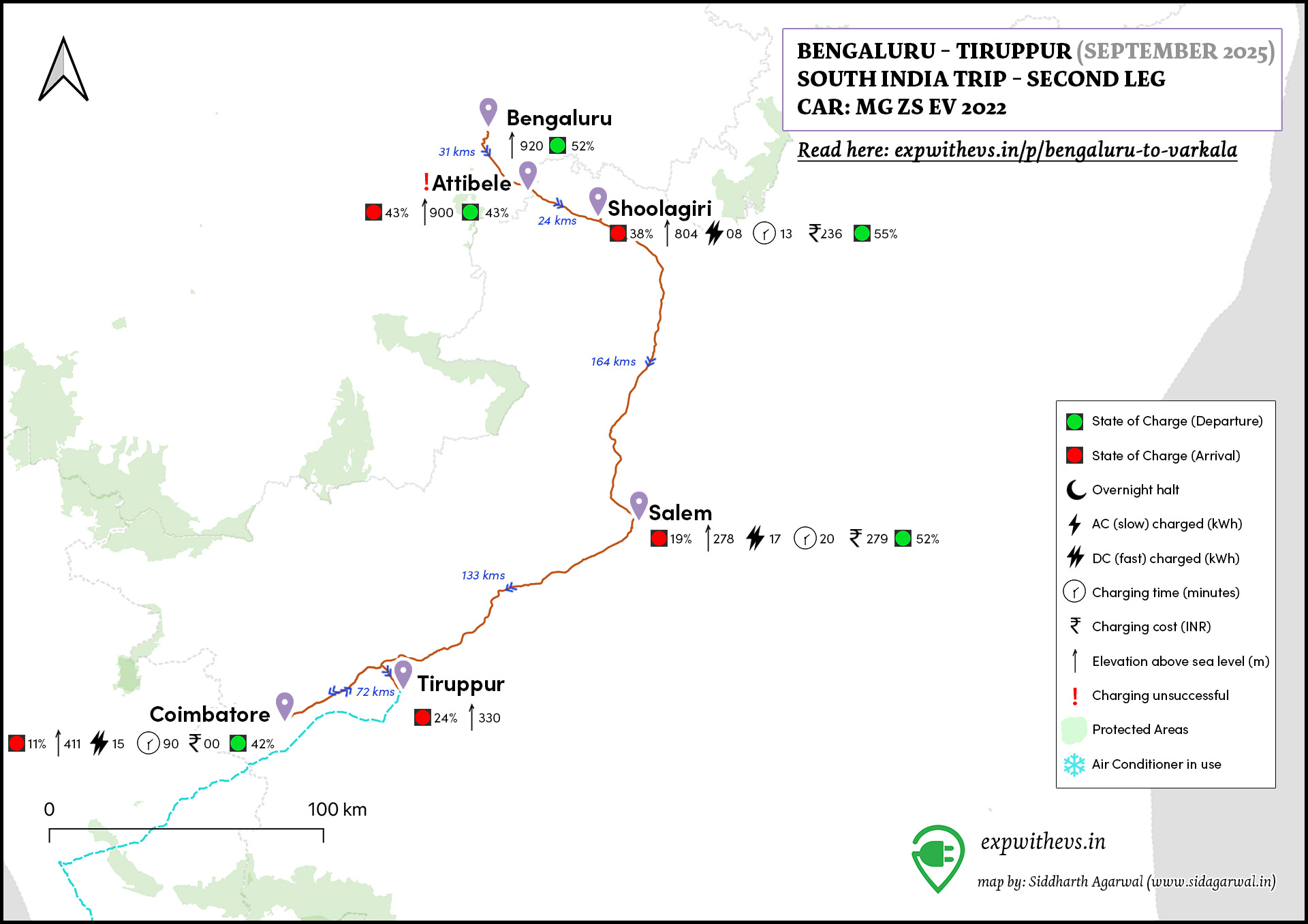
Route: Bengaluru-Krishnagiri-Salem-Coimbatore-Tiruppur
Distance: 424km
Time taken: 14h30m
Number of charging stops: 5, 3 working, 2 not working
It was great to get a couple of days rest after our three-day Delhi to Bengaluru drive. But now, it was time to leave early. Bengaluru to Coimbatore is just 350km and could be done in a single charge.
But speed was not our objective. I wanted to take some pitstops along the way to test out chargers, particularly the Zeon ones as we were now in their territory. Moreover, in Southern India, the charging network is so dense that you don’t really have to plan charging (unlike, say, the stretch between Aurangabad and Solapur, where we had driven through a few days prior).
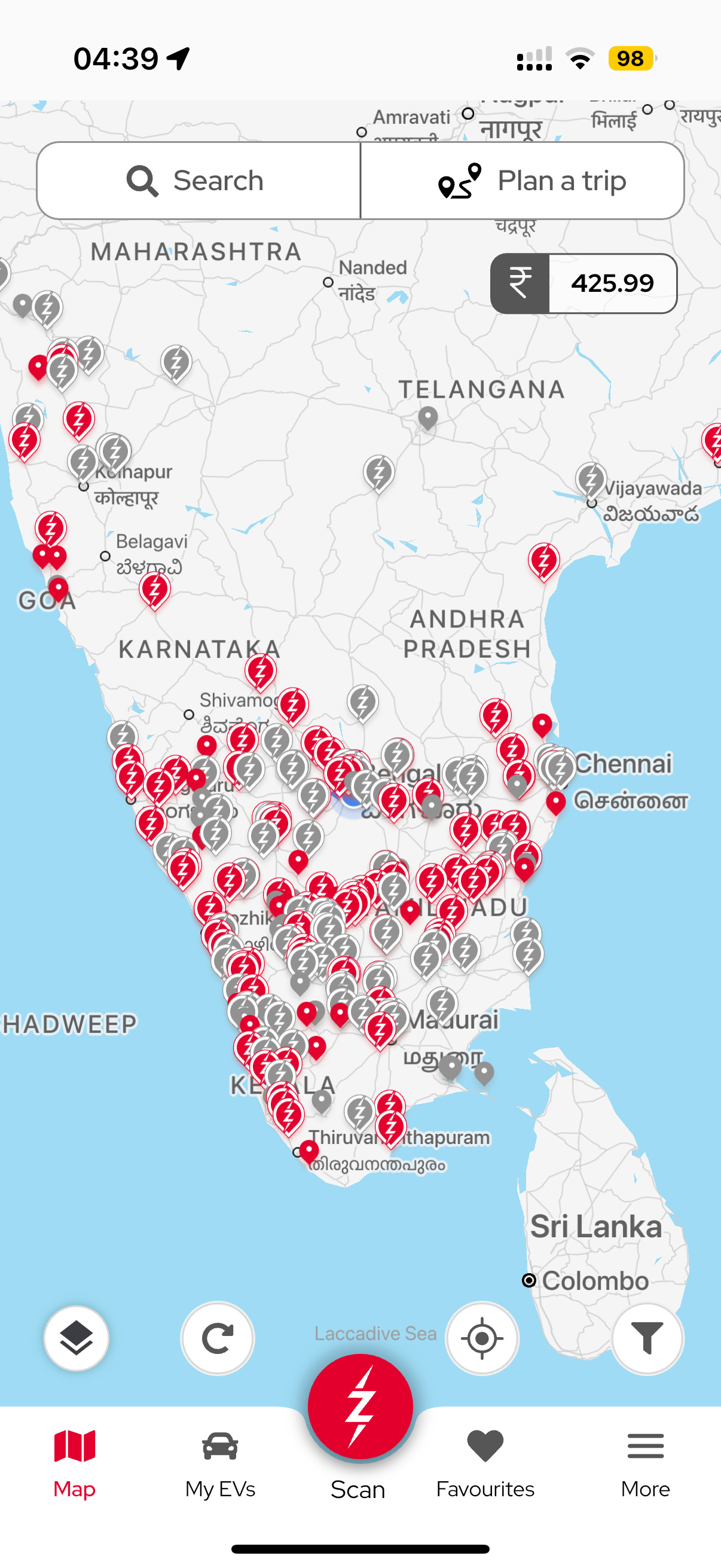
At 4.30 a.m., I opened the Zeon app to find, to my surprise, around 40% of their network to be offline. This mystery would be solved later in the day when we met with the Zeon team.
We left for Coimbatore at 5 a.m. and headed to the Karnataka-Tamil Nadu border town of Attibele to use the BESCOM charger there.
I wanted to charge on the BESCOM (Bengaluru Electricity Supply Company) network in Bengaluru. It has an incredibly cheap charging fee: at just Rs. 7 per kWh. But the community (Join our Whatsapp group) had warned us that cab drivers usually occupy these slots and disapprove of outsiders - who can probably afford the more expensive chargers elsewhere - using these chargers. It was early in the morning and the hope was to do a sneaky, quick charge before we could get these looks.
As we left Bengaluru, the EVMitra app showed that a charger was available. We were excited.
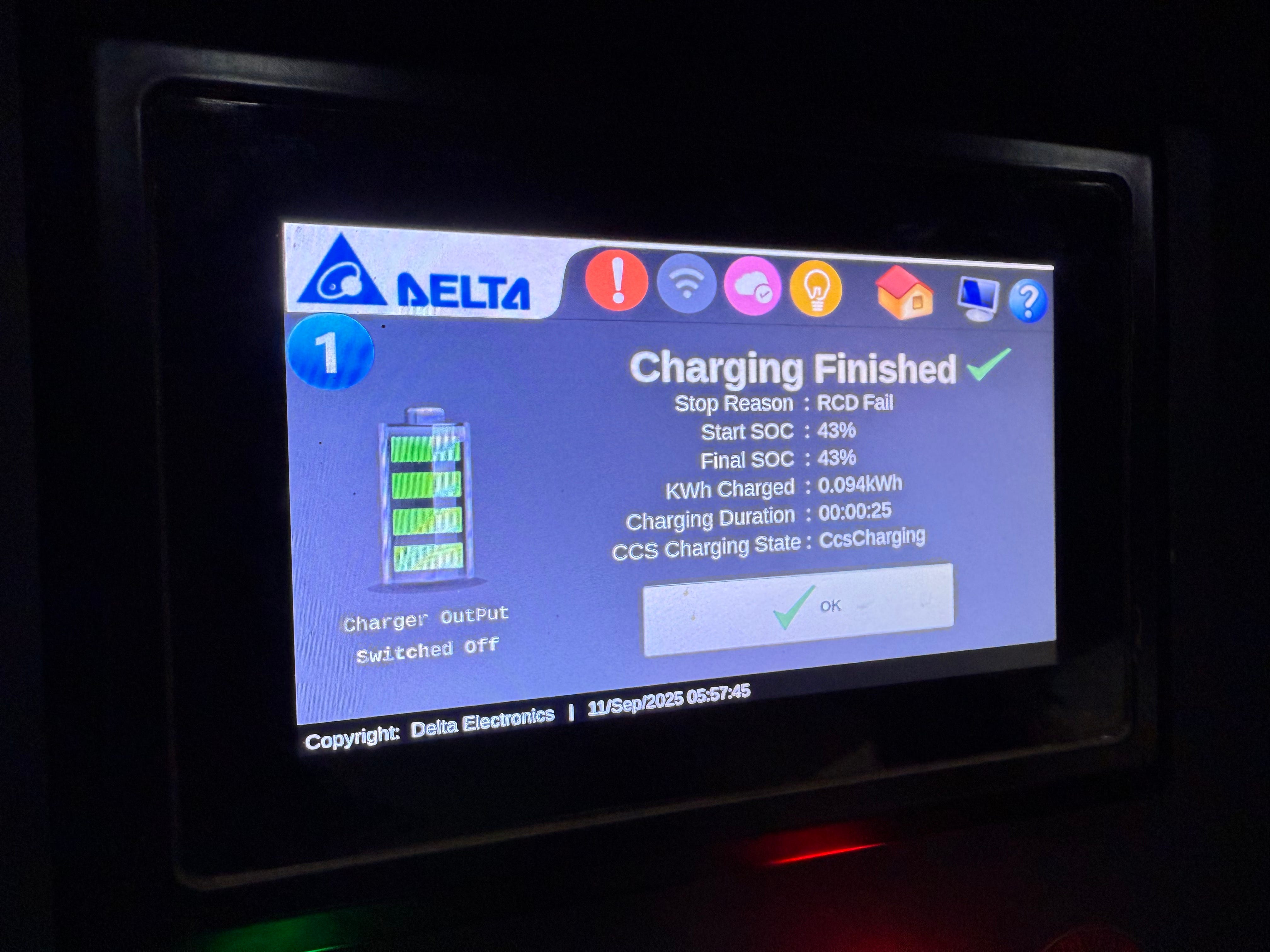
The charger was by the side of a building, and parking was a challenge here. A cab had finished charging at the charger, but was still plugged in. We took the other charging gun, and it connected. The charging started. And seconds later, it stopped. Less than 0.1kWh was added. The Residual Current Device (RCD - a sort of safety trip for the device) had failed. This could be due to some sort of electricity leak from the wiring or a damaged component. Sigh. Just our luck.
Back to the road, and back to expensive private chargers.
To make the best of the situation, we looked out for a charger close to a coffee shop. We used our EVInfraBI to find a Starbucks at Shoolagiri, just 24km away, open at 6.30 a.m.
We zipped by the industrial town of Hosur, after which National Highway 44 winds a bit around the rocky hills of the Eastern Ghats. We soon arrived at a 60 kW charger operated by Statiq on Hyundai’s network. A little fact that surprised us: Hyundai has 65 chargers across ChargeZone and Statiq app. More than half of them are in South India. But, none of them are actually at Hyundai dealerships. You’d assume that it would be a no-brainer to use your distribution network for your branded electric charging. Instead, next to the Hyundai showrooms, you are likely to find ChargeZone, Tata Power, Shell Recharge, Adani TGas chargers.
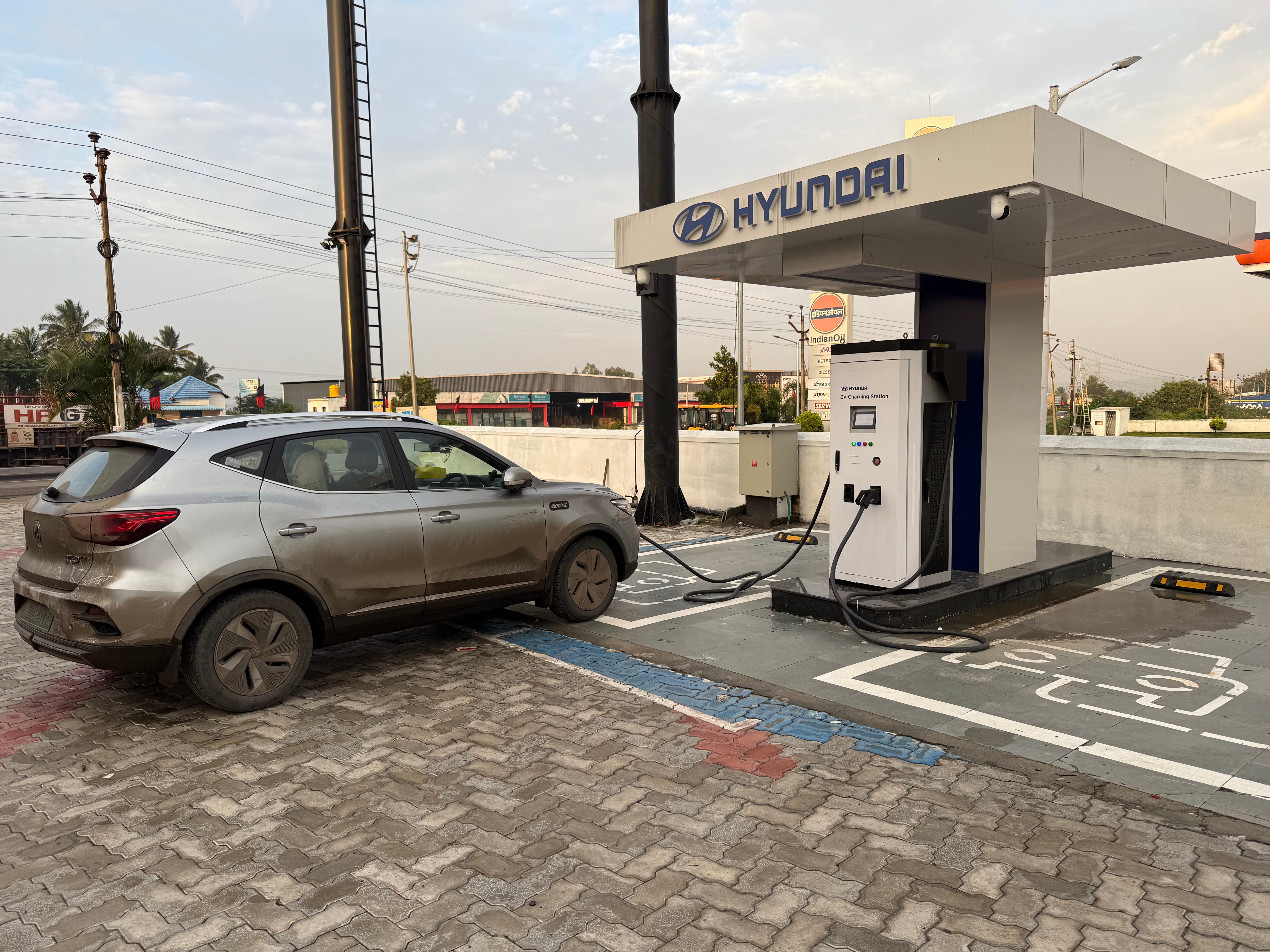
The car went from 38% SoC to over 50% in the time we got our coffees. This was enough for us. As I said, the purpose of the trip was to check out more chargers.
The highway to Coimbatore is smooth, with loads of trucks carrying wind turbine blades (Tamil Nadu is the epicentre of wind energy in India). There was a good tailwind and a natural drop in elevation from Bengaluru (3,000 feet above sea level) to Coimbatore (1,350 feet). Our efficiency was close to 10km/kWh or 100wh/km: about 42% better than the typical 7 km/kWh that we get. Pretty good for a boxy SUV.


There is little else to say about this day’s drive, so we’ll focus on what we do best: looking at chargers.
2.5 hours later, we decided to test a BPCL charger near Salem. Chargers operated by the Oil Public Sector Units (like, Indian Oil or HP or BP) are significantly cheaper than private Charge Point Operators (CPOs): Rs. 14 per unit at BPCL, compared to Rs. 28 at other CPOs.
One would think this would mean that Oil PSUs would be dominating the market. But, reality is entirely different. (We wrote a detailed piece on potential bull case for Oil PSUs). Most of these chargers at petrol stations don’t work. Moreover, if you were family, would you prefer to stop at a swanky restaurant complex or a dingy petrol bunk where the washrooms are filthy?
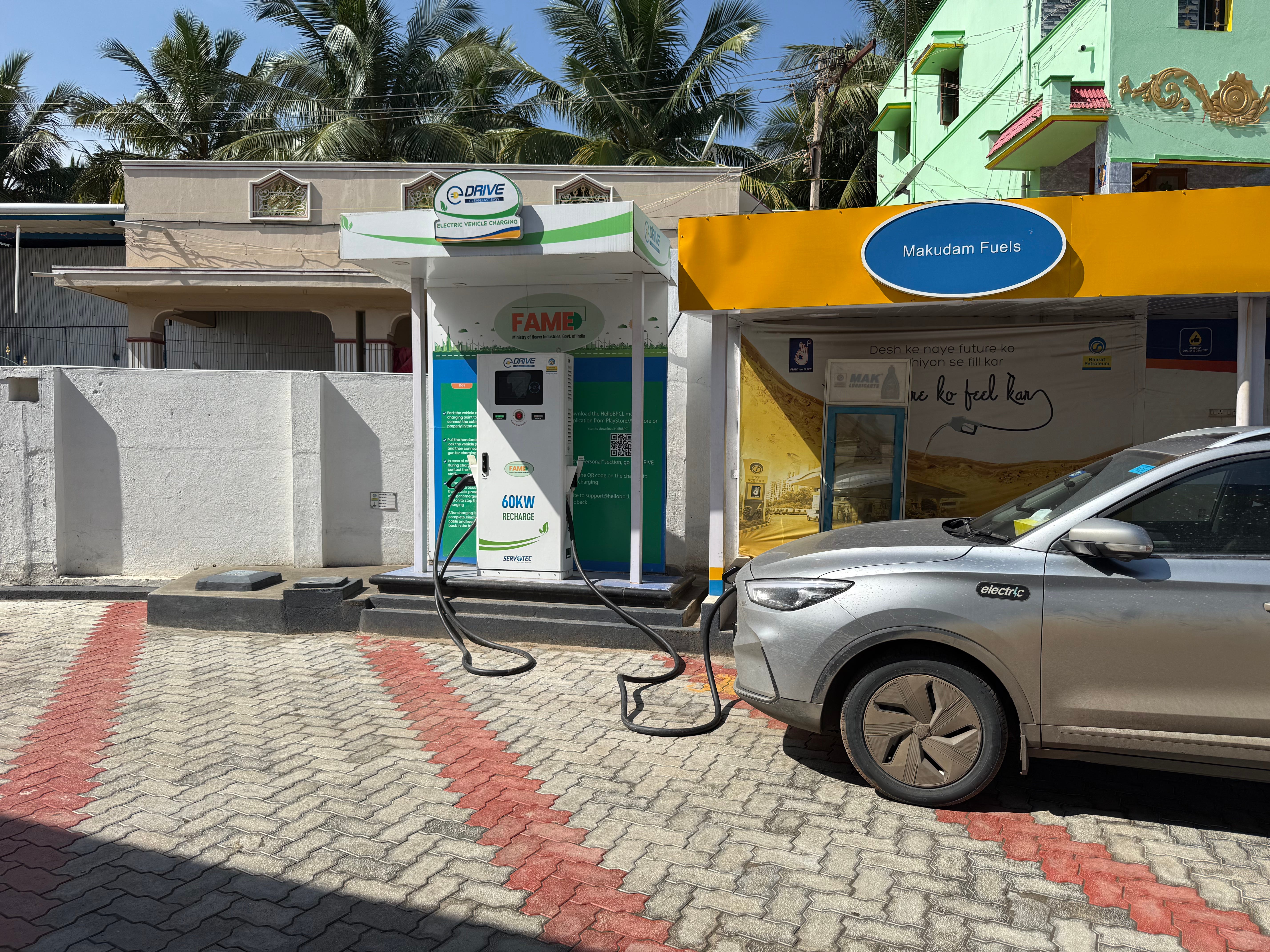
To our joy, this charger was working. While we had tea and snacks from a stall next door, the car went from 19% SoC to 52%. More than enough to go to Coimbatore, some 130km away.
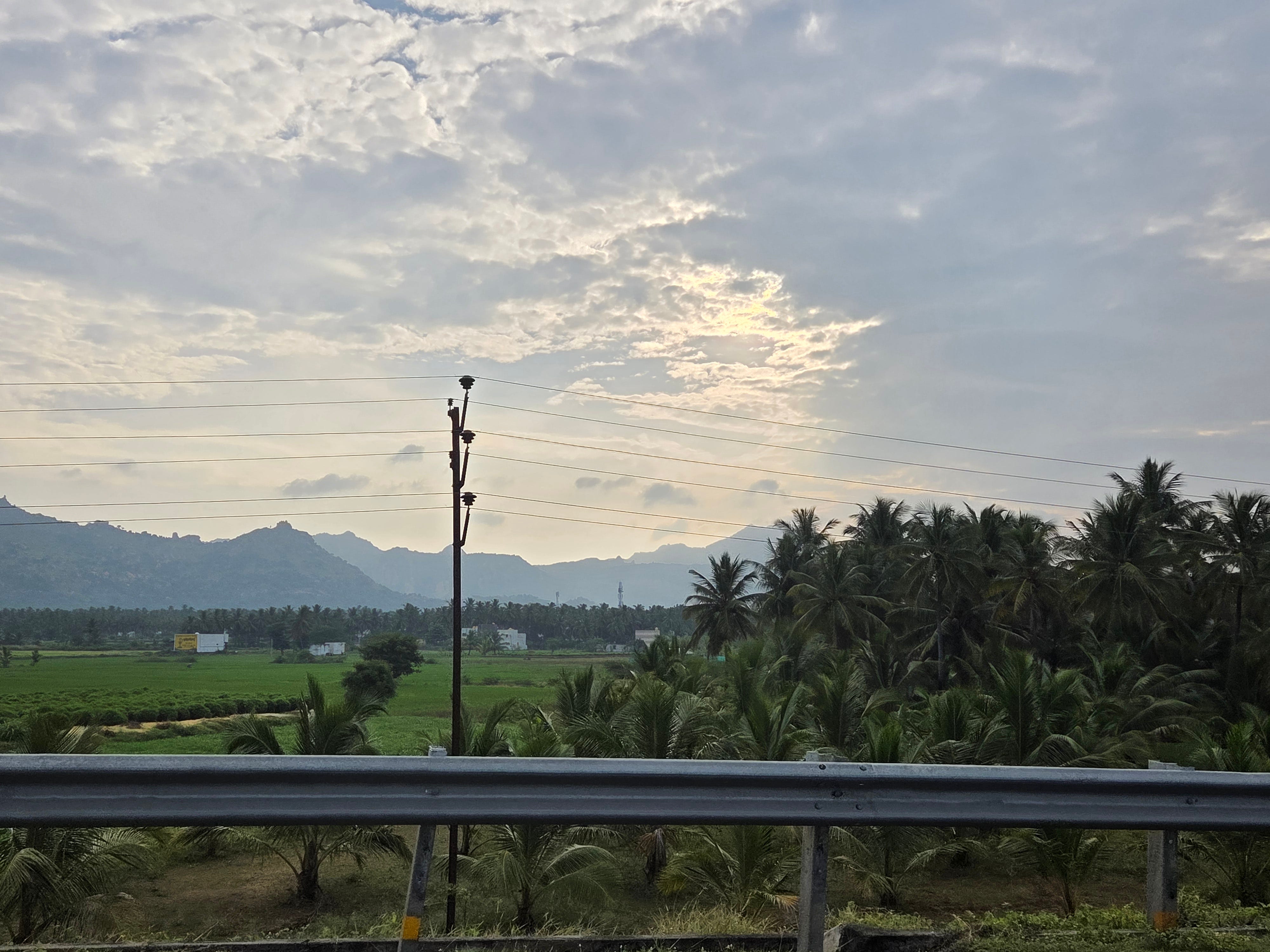
On the road again: green fields on either side, dhabas and restaurants, lots of trucks, the usual road trip.
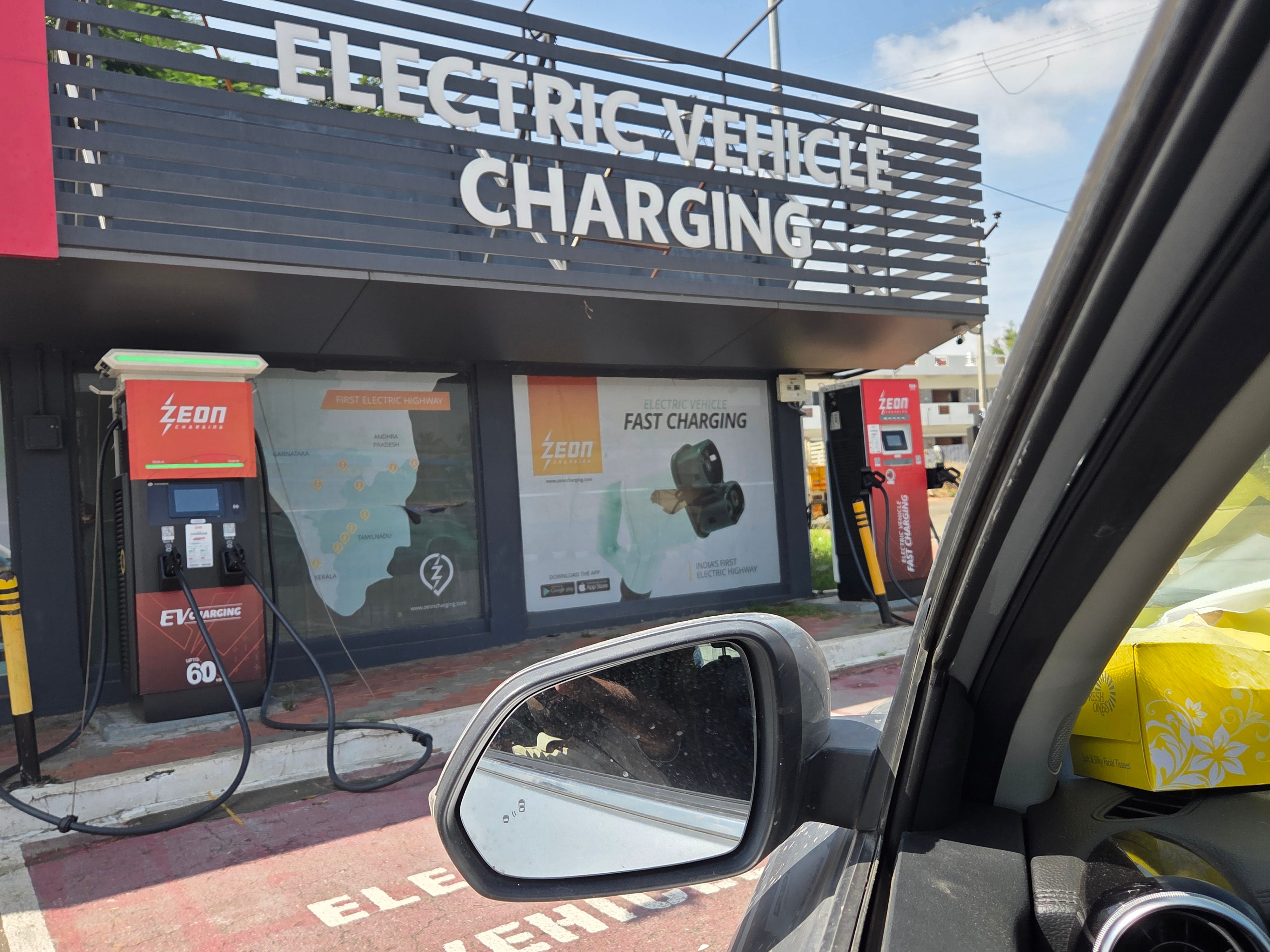
A couple of chargers of note: Close to Salem is the Sankagiri Zeon, one of the earliest Zeon installations. You’ll find numerous videos of early EV adopters stopping here. The chargers here have been upgraded from ABB to Exicom over the years. If you’re into EV charging infrastructure, then do read our analysis report from our EVHardwareBI tool which tracks trends across the country.
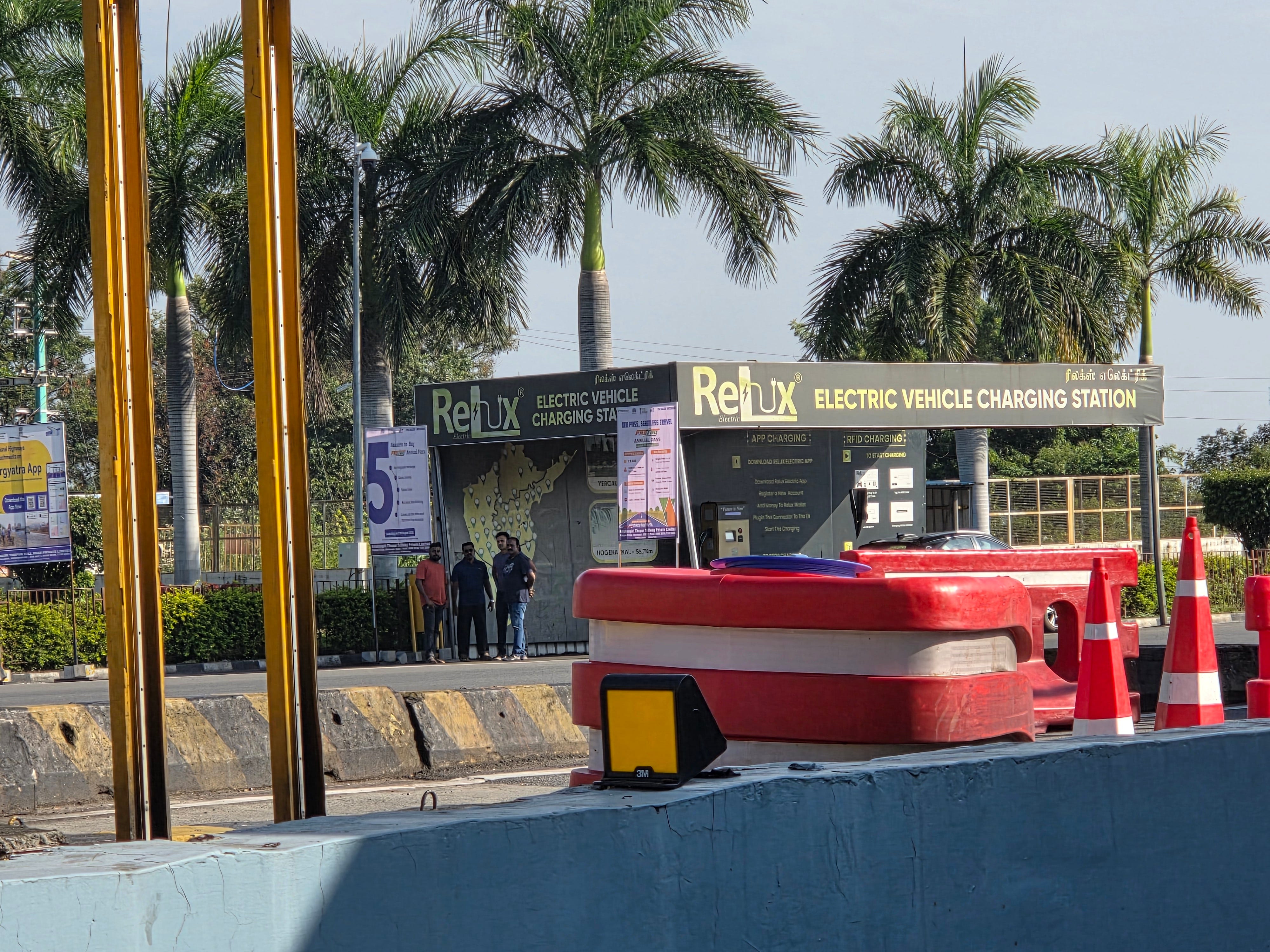
There’s also a Relux charging station at the toll. I don’t really get the concept of charging by a toll, as you’d have to navigate into this in traffic and navigate out of it in traffic.
At Coimbatore, we had a couple of meetings: with MAK controls where we saw their new chargers and another with Steam A, the software powering Zeon’s charging app.
To Steam A, we asked why Zeon’s network was down at 4.30 a.m. They seemed surprised. They checked the data and came back with the answer: their app was being updated and the chargers were temporarily shown offline on the app. Zeon is known for its reliable charging network, thus it was surprising to see 40% of the network offline.
After a lovely afternoon, we headed to Tiruppur, around 50km away. The city is best known for its dyeing and textile industries, and Zeon spun out (pun intended) from a similar clothing and yarn company. We spoke at length with Karthikeyan, founder of Zeon charging, on the company’s plans.
For the night, I chose Hotel Sri Sakthi in Tiruppur because it had a Type2 7.4kW slow charger. The charger, a Type2 BrightBlu charger on Zeon’s network, was located in the basement.
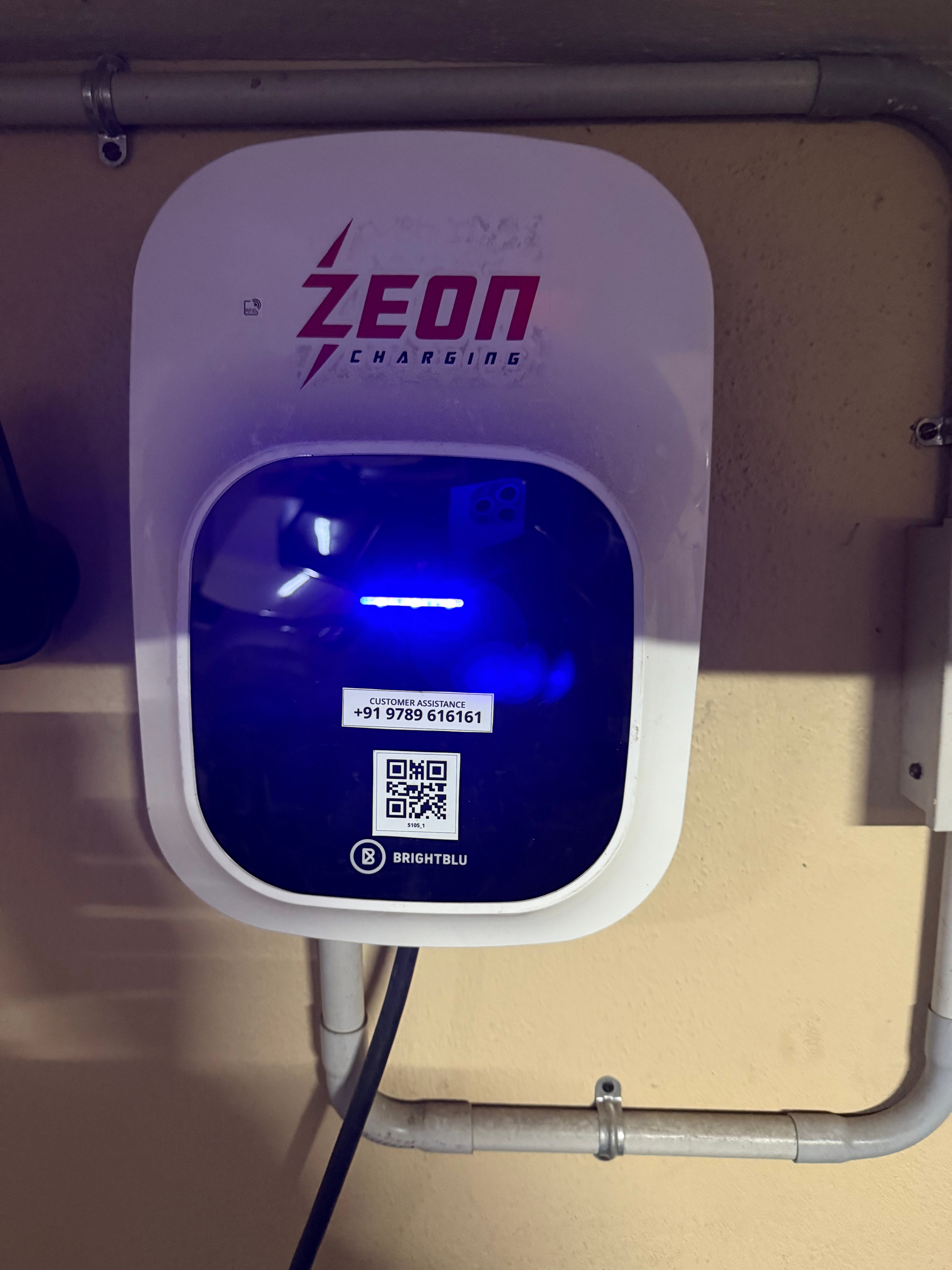
In my room, I checked my phone to see how the charging was proceeding. To my shock, it showed that the charging had been interrupted or that it had not started. Both, the Zeon app and the MG app, didn’t show charging.


I waited a few minutes before calling the customer support line. The call centre picked up quickly and confirmed they couldn’t see that the charging had started.
I returned to the basement, disconnected the gun, rebooted the charger via the MCB and waited for the lights to come back on. No charge, and even the customer support confirmed that there was no session triggered from their end. I spent around 20 minutes trying various combinations of restarting the power supply, resetting the charger, refreshing the app, to no success.
Looking back, there could be two reasons. Maybe, the charger wasn’t getting enough power and the MCB kept tripping again and again. Or, maybe, the chargers are connected by SIM Card and the basement had patchy network. It was barely strong enough there for me to speak to customer care. Perhaps.
It was already 11 p.m. and the car was at 24% SoC. Frustrating. We had to slot in 30 minutes of charging before we headed to Thiruvananthapuram.
Tiruppur to Varkala
Route: Tiruppur - Palakkad - Pathanamthitta - Thiruvanathapuram - Varkala
Distance: 508km
Time taken: 17h30m
Number of charging stops: 4
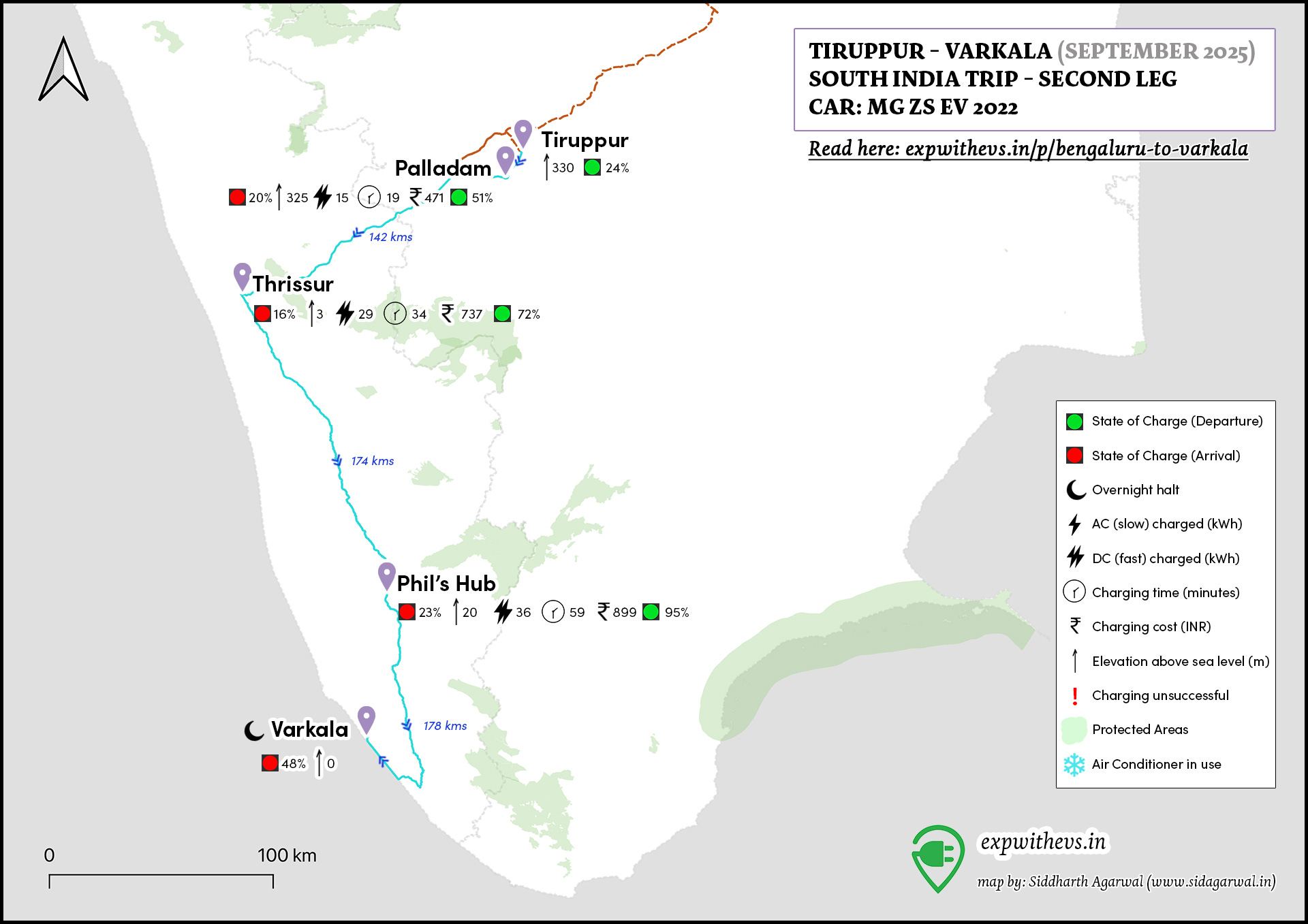
It was an early morning start again. 5.30 a.m. from Tiruppur. Our immediate plan was to head to Palladam, some 20 minute drive away, where Zeon had a 120kW Exicom charger.
The great thing about 120kW chargers is that even if the gun is shared, each car would get 60kW. This was the maximum input for most EV cars anyway.
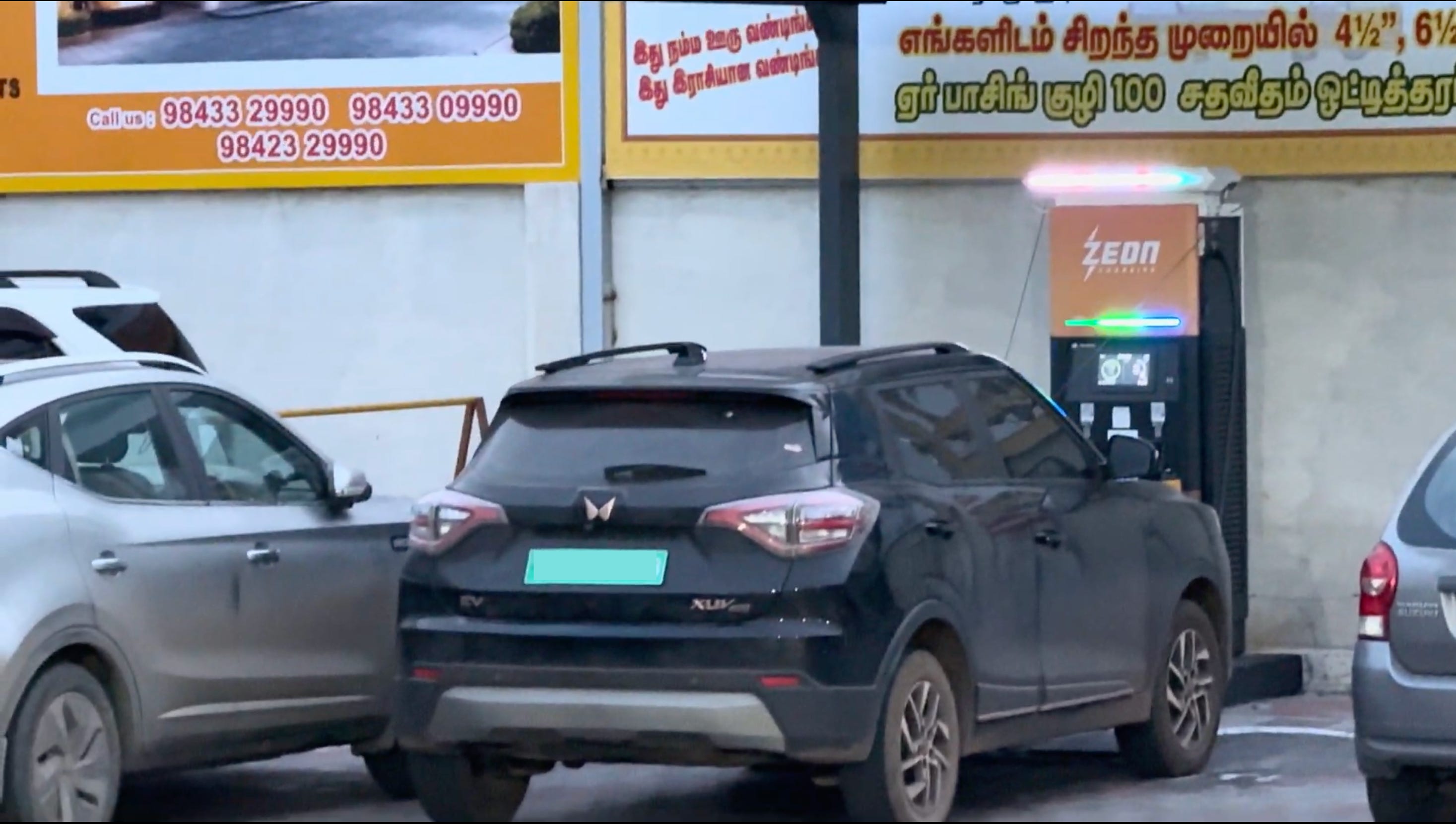
By the time filter coffee and samosas was had, the car was at 51% SoC. Enough to get us deep into Kerala.
Our initial plan for the day was to attend a meeting in Kochi and Thiruvananthapuram. This means cutting through Palakkad - the gap in the Western Ghats - and then through rivers and fields to the coastal town. But, at the start of the journey, we found out that our Kochi meeting was cancelled. We had to re-route to Varkala near Thiruvananthapuram. The advantage is that we had to drive through the central vein of Kerala. Otherwise, if we knew we had to head to Varkala, we’d have taken the boring highway running down Tamil Nadu towards Kanyakumari. The other advantage of this route was that we could stop at Phil’s hub, some 300km away. We thought it’ll be a fun new type of charging station to see.
I’m not one to be evocative or descriptive about my road trips, but I must mention that our drive today was gorgeous.
The crossing at Pallakkad was one of the most beautiful state crossings I’ve seen. The roads in Tamil Nadu are buttery smooth. It’s a downhill ride with verdant green forests and mountains on either side. A bit of mist. Freshness in the air. It was golden hour too. We kept stopping to take photos. We hadn’t expected this, and we were reminded that this is what makes road trips across this country magical.


Back to chargers. Right across the Tamil Nadu border, there were a couple of charging stations by GoEC and ESYGo in Kerala. It made sense to capitalise on the massive tariff difference between the two states (much like how Haryana’s liquor shops are priced cheaper and are located close to the Delhi border). In Tamil Nadu, the per unit charge is ~INR 25, while in Kerala, it is ~INR 17.50.


A 100km later, we started looking at a charger. We wanted one that had a restaurant too. We narrowed down on Zeon’s charger at Chennai Ananda Bhawan. We know that dosas here are usually good.
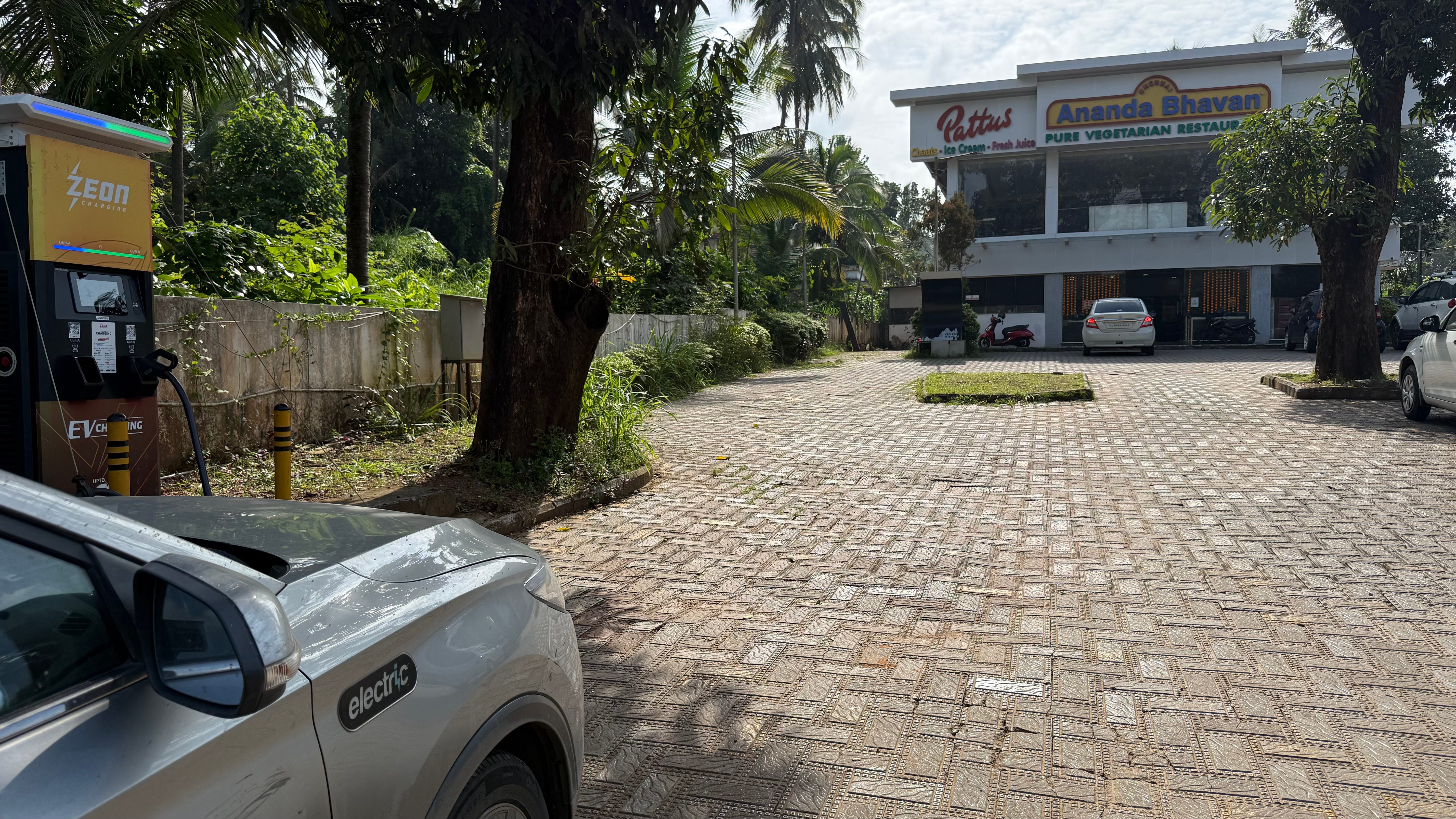
We connected the car to the Exicom charger and the car started charging via autocharge. We didn’t need to do a full charge as Phil’s hub was just 174km away.
We drove on. A mixture of plantations, paddy fields, forests, compact villages and hills. There was perhaps no straight stretch of road. Always winding. None of these roads have a toll also. Somewhere in the middle, we stopped for coconut water. It was a way to celebrate the 3,000km mark on our trip. Nearly half way!


Kerala just after the monsoons is a delight. We were lucky to have chosen a route that goes through the Western Ghats. At one point, we were driving along a river. Perhaps the calmest point of our journey so far.
At 2.30 p.m., we reached Phil’s hub at Pathanamittha. This is the pilgrimage town from where millions embark on their journey to Sabrimala, a famous Hindu temple on the hill.
It also means a lot of people drive here. Many with Electric Vehicles. It makes a great spot to set-up a hub like this.
Phil’s hub is a great new model for charging infrastructure. They have multiple chargers by multiple CPOs using multiple hardware at the same location, allowing ten cars to charge at one go. They have a 50 kW solar plant generating electricity. There’s snacking options and an air-conditioned lounge, clean washrooms and even a place to nap. This is how an ideal charging station should be: prioritising the comforts of the EV owner.
We’d a long discussion with the installer and a distributor for a major charger OEM.


From Phil’s hub, it was a four-hour drive to Thiruvanthapuram. Another beautiful journey.
As we came close to Kerala’s capital city, the traffic increased. We also took a diversion and got lost. Fortunately, we spotted a bus heading to Thiruvanthapuram and decided to follow it.
The bus took us through patches where we had dense forests on either side, but also through single-lane roads where traffic seemed to be pouring in from all sides. Chaos and adventure.
By 7.30 p.m., we were in the city where our agenda was to meet Manu. He has clocked nearly 2 lakh km in his Tata Nexon EV and has kept meticulous logs of his trips, issues and feedback. The entire documentation - which is fascinating and worth looking at if you’re in the industry - is available free in both English and Malayalam. If you are from South India, you must have encountered his Tips or recommended solutions when you’ve been stuck with an issue with your Tata EV car. Manu’s methodical tracking is a blueprint for someone wanting to understand India’s e4W Car ecosystem.
We left Thiruvanthapuram at 10 p.m. and an hour later, I was at my friend’s hostel, Molly’s, in Varkala. It’s been a long day. Heck, it seems like we left Delhi years ago. So much had happened. A vacation here was needed before the long journey back to Delhi.
P.S.: There’s EV charging available at Molly’s via a 15A socket!
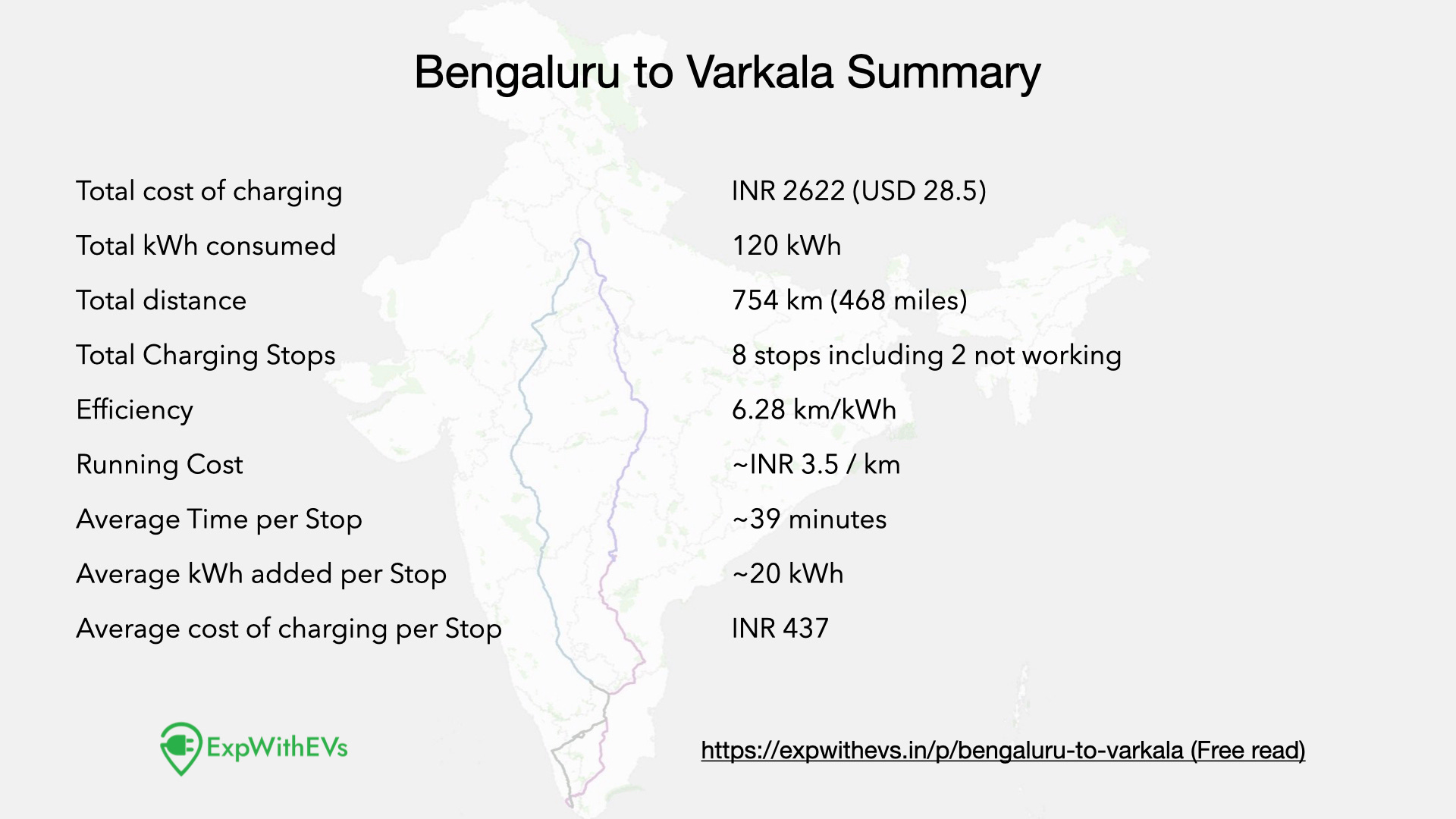
Cost and Savings
These trips aren’t meant to be merely joy rides. They allow me to evaluate charging infrastructure along the way (which has become useful for charging companies to understand customer POVs).
They also, hopefully, encourage others to adopt EV technology if they are still under the impression that long journeys in electric cars are still not possible due to the nascent charging infrastructure in the country. We hope we are changing these minds.
EVs are the future: better for the wallet and the environment.
Series Index
The Epic EV Roadtrip! (Published - 16 February 2026)
New Delhi to Bengaluru (Published - 24 February 2026 )
Bengaluru to Varkala (This one!)
This is an index of articles to come. The links will be updated as the articles are published. You can bookmark this section or subscribe to get them straight to your inbox.
This series of articles wouldn’t have been possible without the help of our team. The trip, time, effort - everything was self sponsored and costs money. We do not take advertising or sponsorship money. It allows us to say the uncomfortable truth without compromising on our ethics. You can do your bit by buying us a pizza or getting a premium subscription to the Substack.
Behind the wheel, Photos : Garvit, Priyans. Special acknowledgement for Phil’s hub photo by Liju.
Words and Graphics : Priyans
Edit : Mohit Rao
Map : Siddharth Agarwal
All rights reserved with Priyans Murarka @ ExpWithEVs.
The data from here and this article cannot be repackaged or sold without explicit written permission of ExpWithEVs.
Amazing work Priyans. Reading your road trip experience with EV has definitely changed my confidence in EV charging in India. Came across your blog from reddit. Looking forward to more insights from you on EV in India.