

This is the fourth part of a six-part series which will document our 6,000-km trip from Delhi to Kerala and back. You can read an introduction (the why, where and how) to the series here. And you can find the second part (from Delhi to Bengaluru here), and the third part (Bengaluru to Varkala).
This trip was in September 2025, if you’d like to get real time updates, please join our WhatsApp group. We are back from our summer break and will resume regular publishing!
In this leg, we’ll be leaving the beautiful cliffs of Varkala in Kerala towards Hyderabad. This covered 1385 km, done in two days.
Our motive in a few words: to show you that it’s not just possible to do these long trips on an EV vehicle, but it’s pretty easy and the cost effective. We also check out the charging infrastructure along the way.
It’s a long journey and a long article, like the previous ones. I’ve divided it into two parts: one for each day. I’ll also be publishing a separate article on observations from the charging infrastructure through the entire trip. Keep an eye out for that.
Here’s an index for you to skip to the part that would most interest you.
Index
Housekeeping
Please enable images if you are reading this on email. There are over 15 images and videos in this article! The best way to experience this article is on a desktop browser (click here) or on the Substack App.

You can check out our individual charging sessions in this handy roadtrip sheet!
We shared live updates about this trip in our WhatsApp community. Join the group to follow our next trip!
For our premium subscribers, you can access the PowerBI of our trip for free. Just drop me a message. You don’t need a license to access it, just a valid work email.
Varkala to Tirupati
Route: Varkala - Aravakuruchi - Krishnagiri - Vellore - Chitoor - Tirupati
Distance: 822 km
Time taken: 17 h
Number of charging stops: 7
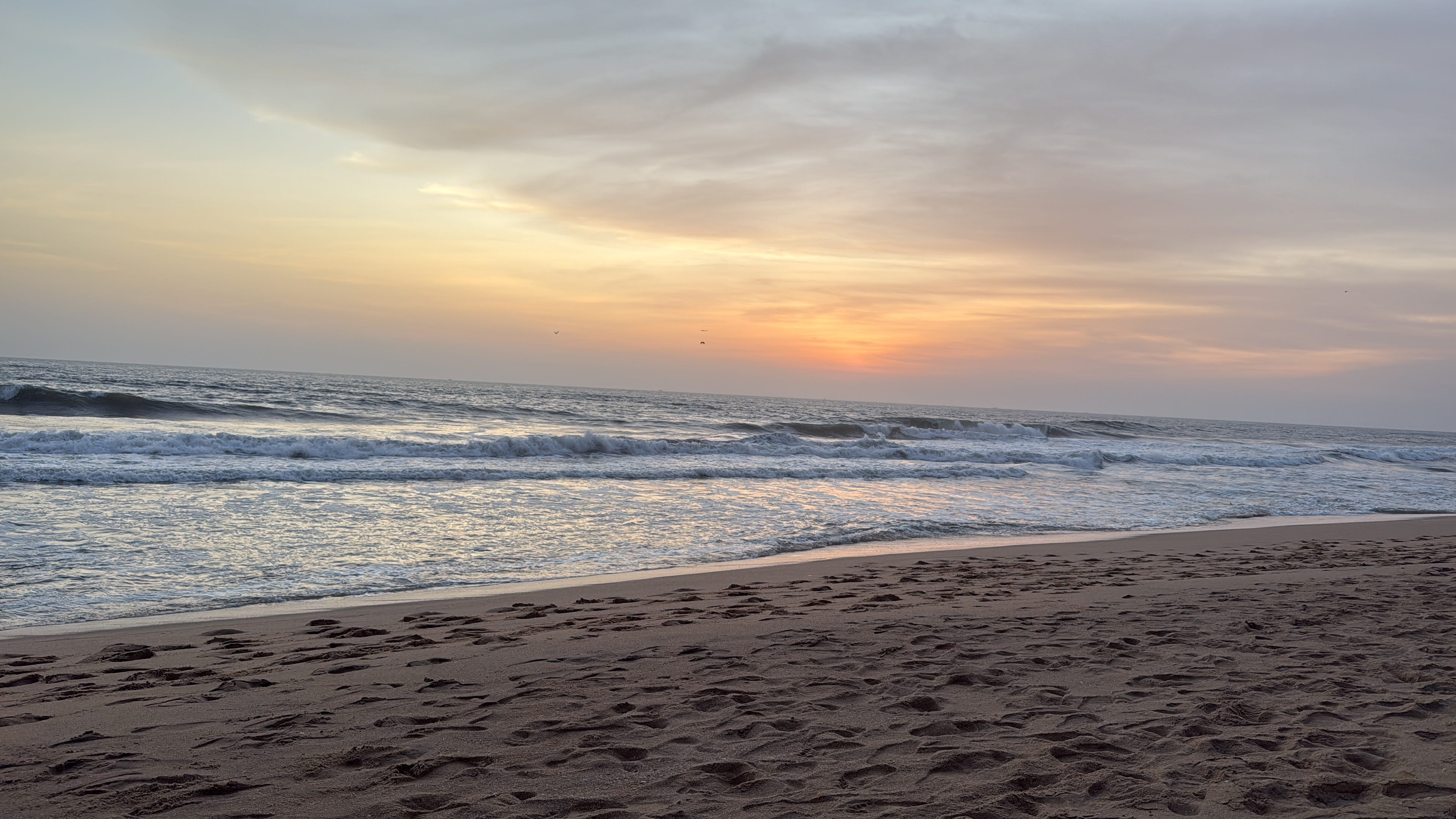
Sigh. I’m going to miss Varkala. Look at this sunset the day before we left.
At 5.20 a.m., we left for Hyderabad. We were supposed to go to Chennai for a meeting. But since that was cancelled, we decided to do the drive towards Hyderabad. This was almost 1,400km that we hoped to cover in two days.
The drive back seemed even more daunting than the journey here. We had driven for three days from Delhi to Bengaluru, where we took a couple of days break. This time, we’d be on all-day drives for at least four days. Highway, chargers, roadside food and suspect hotels before we got home.
But when we left Varkala, at least our car, bodies and mind were well-rested and recharged.
We knew most of the journey would be in the plains of Tamil Nadu and Andhra Pradesh. And so, we wanted to soak in the first three hours, where we’d be driving through Southern Kerala and over the Western Ghats to Tenkasi. Gorgeous.


We knew we had to charge once in Tamil Nadu. It’s a place with notoriously high prices per unit (Rs. 28 per unit at private Charge Point Operators (CPOs), compared to Rs. 14 at BPCL or IOCL).
As mentioned a few times in our road trips and articles, this price differential did not bother private CPOs. This is because they offer reliable charging with better amenities. At BPCL’s petrol stations, you may not even find functional restrooms.
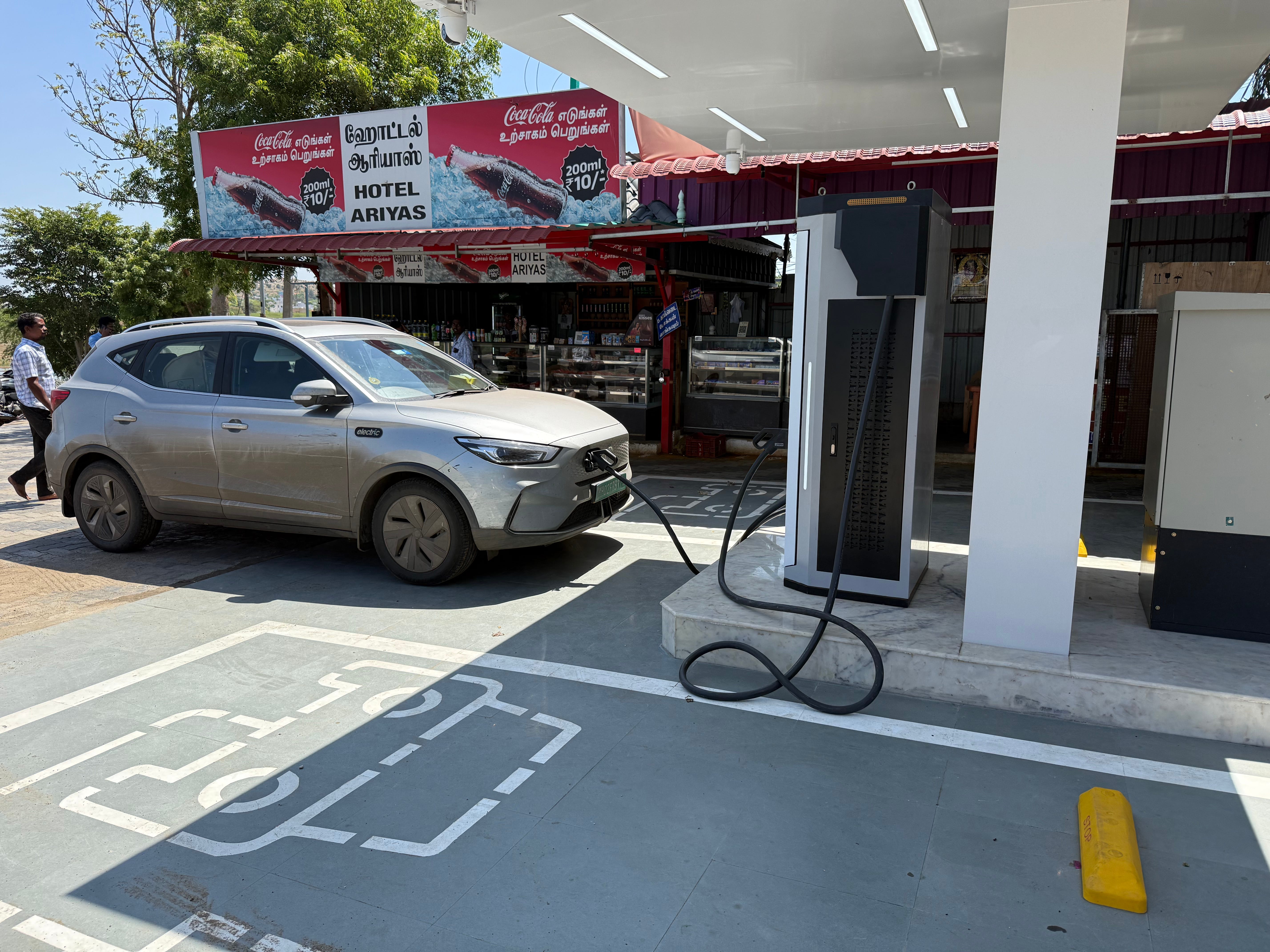
Around 10.30 a.m., nearly 5 hours into the drive, we decided to stop for breakfast and to charge at Thanakkankulam. We’d done just 250km all morning. This was more due to the scenery that caused us to stop or slow down in awe, rather than the state of the roads.
Vadas and dosas for us from Ariyas Bhawan; and a 120kW Hyundai charger hosted on Statiq for the car. A 30 minute charging session got us from 30% SoC to 75%.
Back on the road. We were heading to Vellore through Madurai. Compared to the scenery of the ghats, there was nothing much to write home about the plains of Tamil Nadu. It was beautiful in its own way. Just not Western-Ghats-in-the-monsoons gorgeous. It was also warm outside, and didn’t feel like winter was coming. 35C and bright sunlight.
So I’ll focus a bit on the chargers we spotted along the way. (We’re a bit nuts that way. One of our favourite exercises was to spot the charger in petrol stations from the highway and figure out the manufacturer. We’re getting very good at this game!)
Enroute we saw Hydra Charging, a CPO we hadn’t seen in a while. We decided to take a quick drinks break at this 120kW charger.
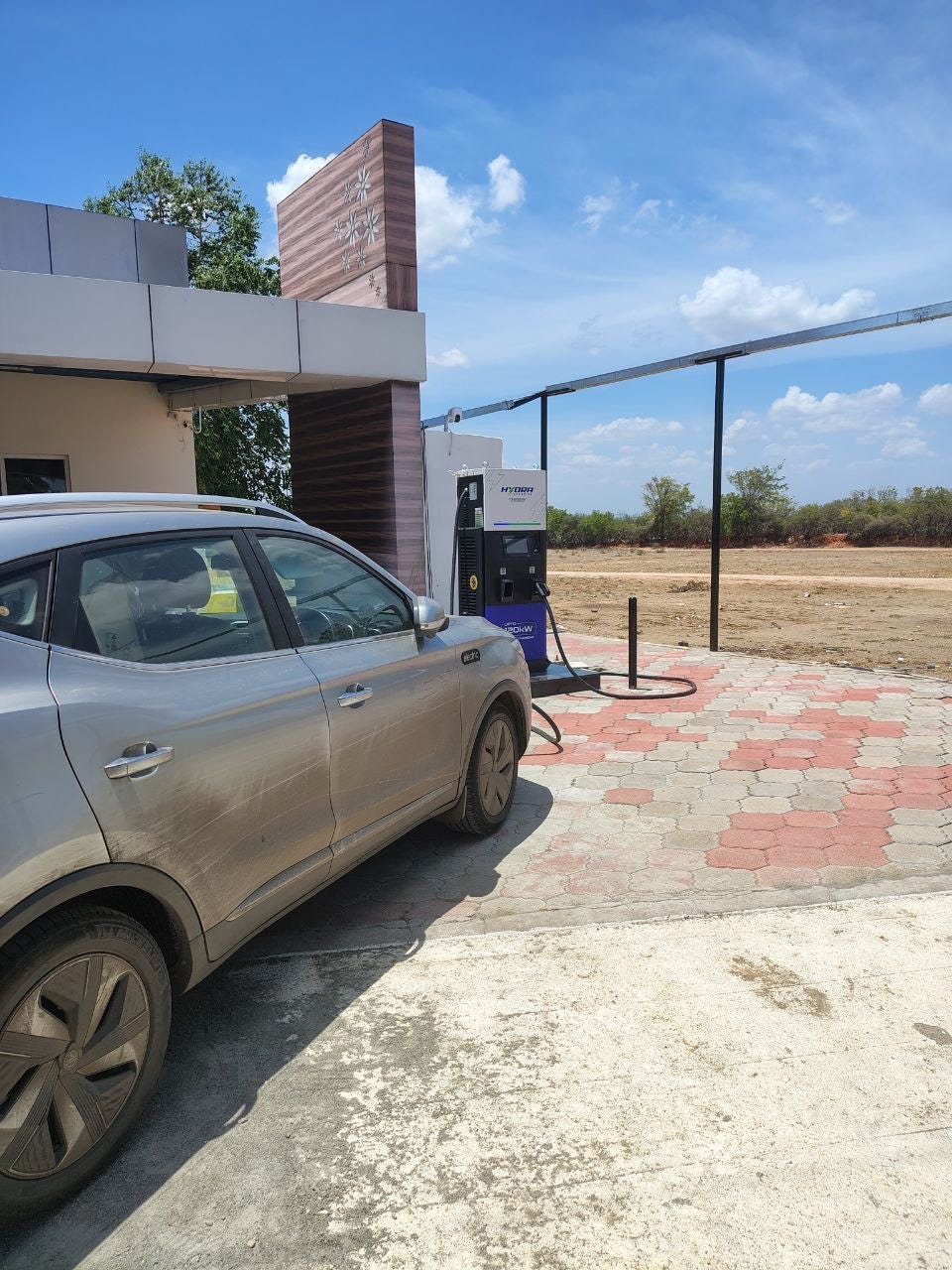
In 10 minutes, we went from 40% SoC to 54%. Handy, but unnecessary. Though we were the only ones charging, it felt slower than 120kW. The charger was giving just 7 units of energy in 10 minutes, or 42kW. It should’ve been closer to 50kW if it was charging at decent speeds.
We really didn’t need to repeatedly top-up, but to keep the drive interesting, we decided to try out only BPCL chargers. It would help us save money.
85km from the Hydra Charger, we stopped at BP Navani, north of Nammakal. The charger, at a fuel pump, has no amenities around. It has an abandoned or non-operational food mall. Not exciting stuff and this makes the wait much more dull. In 20 minutes, the SoC went from 27% to 61%. More than enough to cover the 240km to reach Vellore.
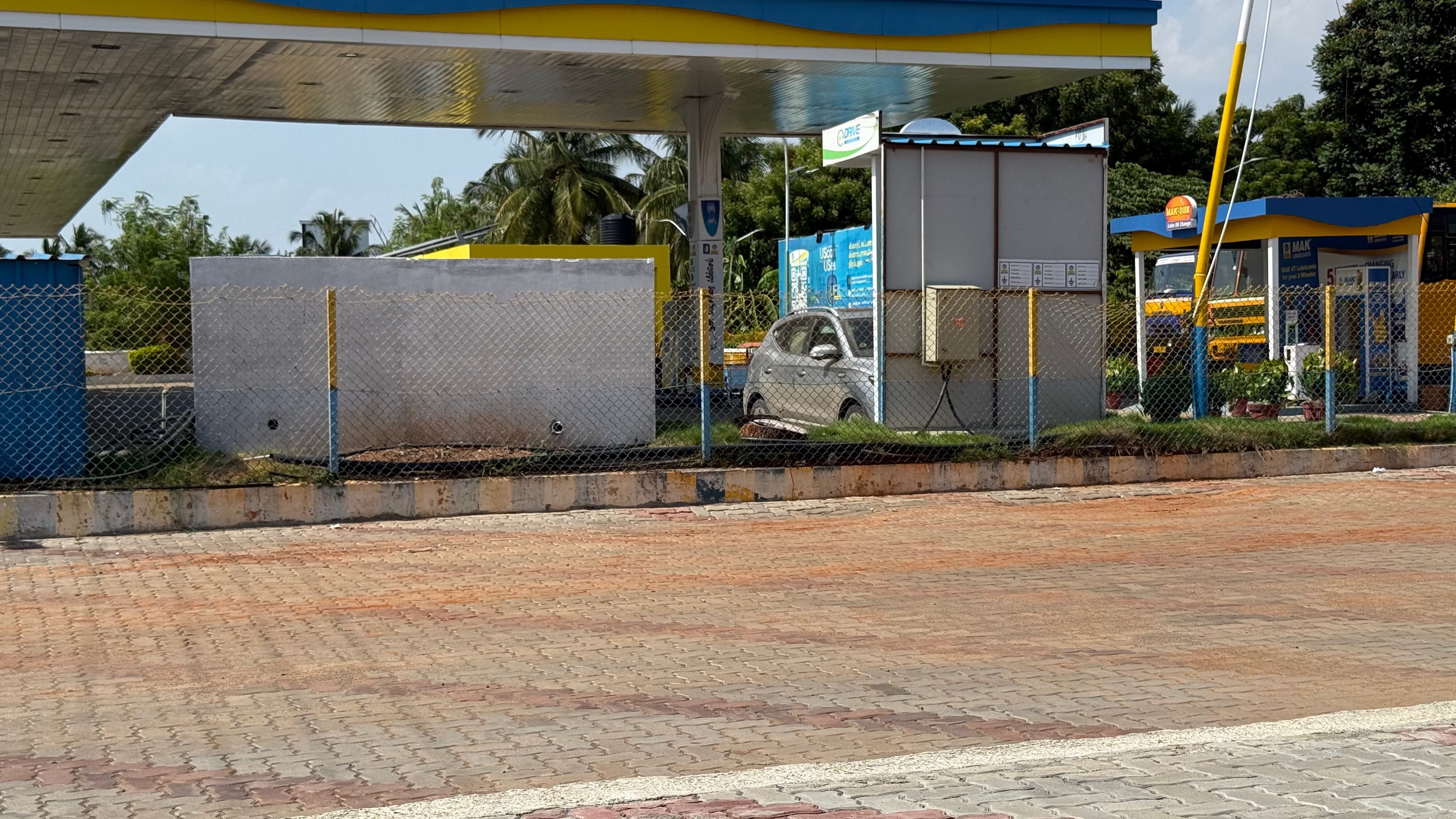
On the road again, we decided to stop at another BPCL charger at Krishnagiri, some 150km from our previous charger. This was a 60kW charger, but had the advantage of a restaurant, the iconic Sarvana Bhavan, right opposite the petrol station. It was 5 p.m., we’d been on the road for nearly 12 hours. It was time to grab a late lunch (or, an early dinner?).
The Krishnagiri BPCL charger was at a fuel pump which also seemed to be a popular rest stop for trucks and heavy vehicles. There was just enough space for our car to fit in amongst the jigsaw puzzle of heavy vehicles. I can’t imagine families using this on their journeys.
Tamil Nadu notoriously high prices per unit: Rs. 28 per unit at private Charge Point Operators (CPOs), compared to Rs. 14 at BPCL or IOCL. As mentioned a few times in our road trips and articles, this price differential did not bother private CPOs. This is because they offer reliable charging with better amenities. At BPCL’s petrol stations, you may not even find functional restrooms.
For instance, in Krishnagiri, Mahindra set-up one of their flagship chargers across this BPCL charger. They know that cheaper charging does not take away their competitive edge.
In general, South India has great charging infrastructure. Reliable, fast. But, we did see a lot of non-functional Public Sector Unit chargers too.
Anyway, back to our road trip. We had a decision to make. From Krishnagiri, the route to Hyderabad would either go on the outskirts of Bengaluru or cut across the border and head through Kolar Gold Fields to the Bengaluru-Hyderabad Highway. But, we decided another route. Head east, instead of North to go to Vellore. This would be a deviation, but we wanted to pay homage to one of the most iconic charging sites in India, ChargeZone’s Cafe Coffee Day charger at Vellore.
We were excited, we had enough juice in the car. To hell with maintaining optimal speeds below 80kmph. We sped through on the wide, classic national highway connecting Bengaluru and Chennai. In 40 minutes, we were at Vellore.
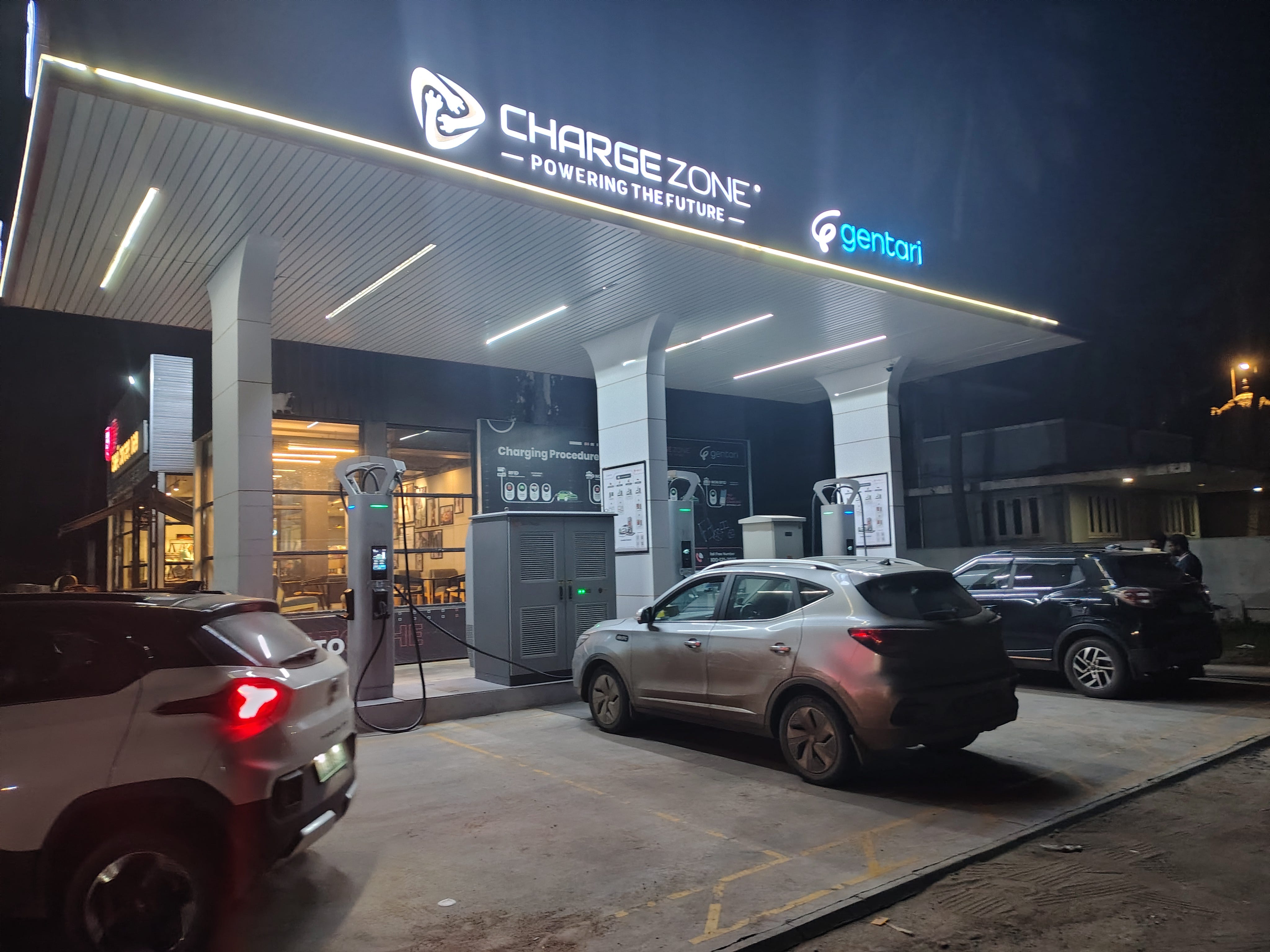
This charging site was one of the first high power publicly-accessible charging sites. Gentari and ChargeZone set-up this charging site. It then became an expansive showcase of chargers. ChargeZone also set-up another site next to this: this one with a 1MWh BESS (Battery Energy Storage System) with a 55kW solar to charge high-power electric vehicles like buses and trucks as well as electric four wheelers. This was an investment of Rs. 1 crore and enabled the site to have five 240kW chargers.
Eventually, it was time to move on. Despite having been on the road for 12 hours, we felt we had it in us to push a bit more. The more distance we covered today, the earlier we’d reach Hyderabad the next day.
On to the next charger then: Elektrik Mobility, a small CPO based out of Andhra Pradesh which had a hub in nearby Chittoor where at least 10 cars could charge at once.
We had two options, either take the main road through Vellore city or a rural bypass road. We chose the latter hoping it would save us time by beating city traffic.
But, we quickly found out that trusting Google Maps can be a mistake. The rural road kept getting narrower and took us through villages that were buzzing with activity. There was often just enough space for our car to pass (and on one occasion, we had to get down and do some back-of-the-hand calculations to see if the car could fit through the space. We had to fold all the side mirrors and stop oncoming traffic just to move forward.).
Along the way, we crossed another great Indian River: Cauvery.
The roads in Andhra Pradesh were much better. Our stop in Vellore to Chittor was just 64km. But it took us two hours to cover that distance.
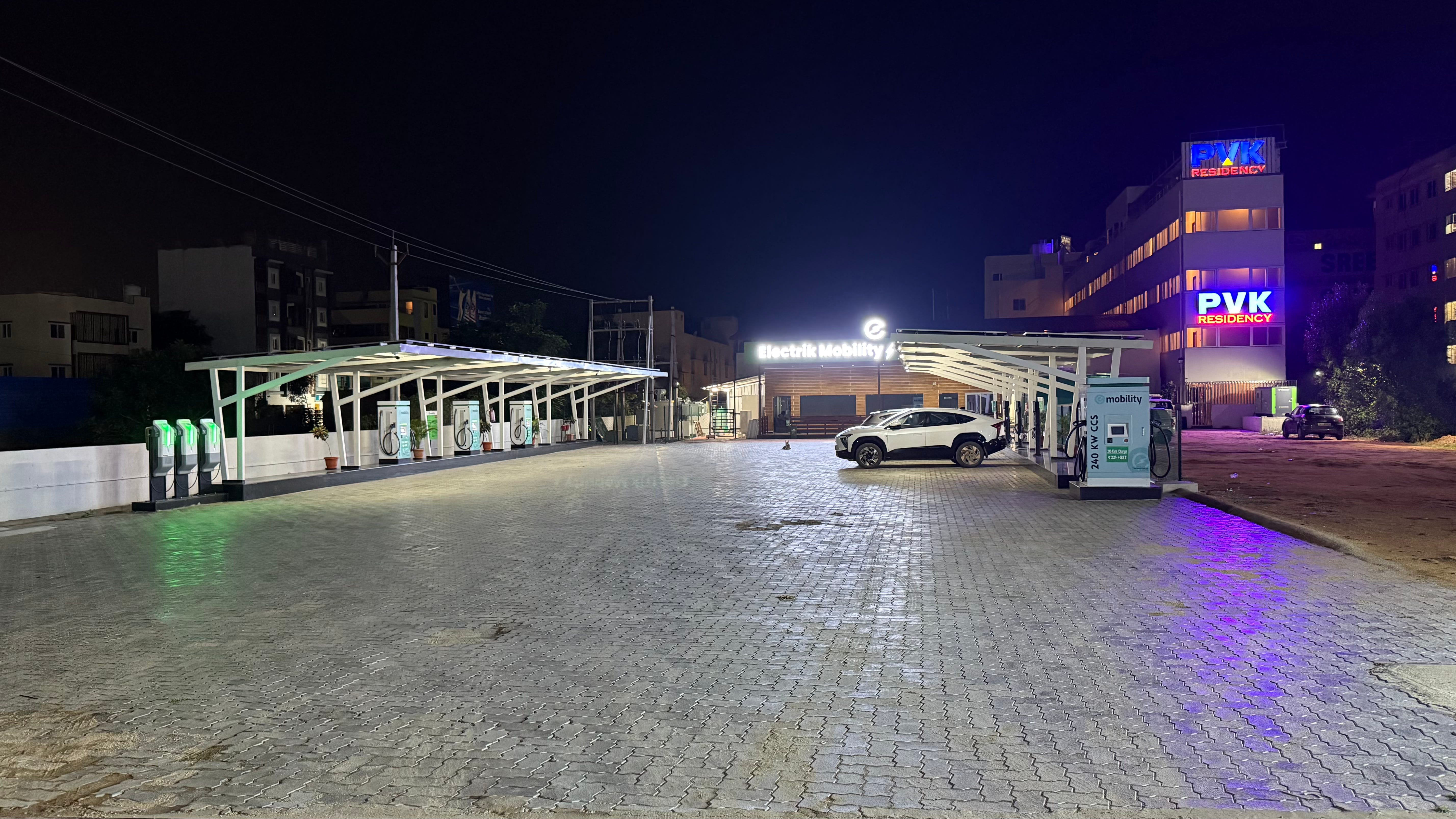
The Chittoor charger was well-lit, right beside the alternate Bengaluru-Chennai highway, and had multiple chargers (including, high powered ones for trucks, an Ather one for two-wheelers, and had fast and slow chargers). There were clean washrooms and even had personnel manning the hub. It was great to see these hubs being set-up across the country.
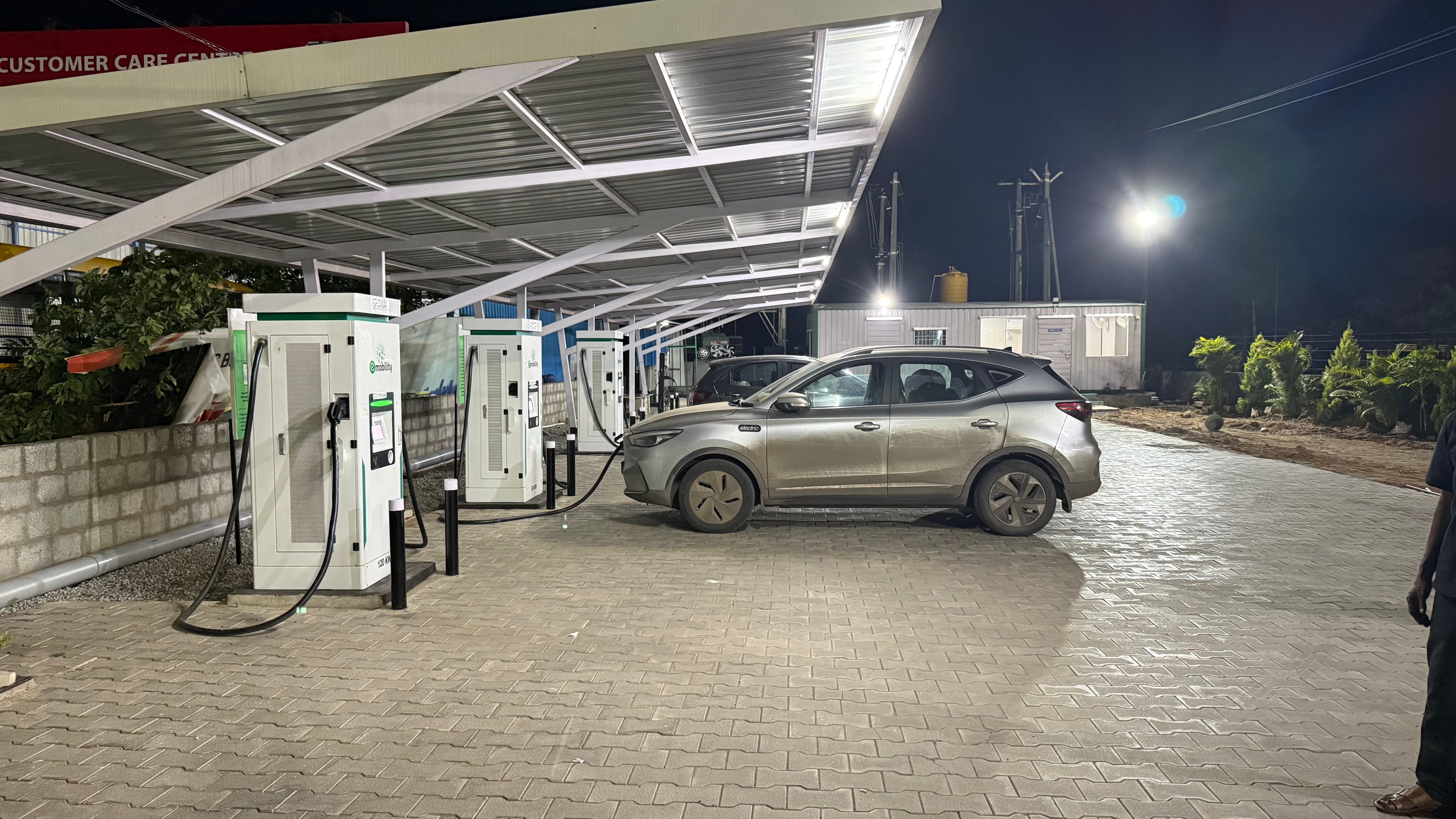
We were at 49% SoC. It was 8.50 p.m. As the car charged, we evaluated our moods and energy. Maybe, we could push a little more?
In 15 minutes, the car was at 70% SoC. By then, we had decided to drive to the Temple town of Tirupati , some 75km away. Tirupati was chosen as it had 5 Type2 chargers for slow charging, while there was a hotel next to the charging hub.
The highway from Chittoor to Tirupati was excellent: wide, well-lit, clear lane markings, bright divider markings, and low traffic. In an hour, we were at Tirupati.
The charging hub was at the bypass before Tirupati. It was a great location for tourists and those in transit. We were at 53% SoC and decided to put the car in a slow charger.
For those planning multi-day road trips on their EV, this is something to ponder about. So far, we had done 4,000-km and had put the car in slow charging only in Varkala before this. Slow charging definitely helps balance the battery pack. The battery is made of a series of individual cells, and slow charging helps spread electrons more evenly across these cells. Whereas, when only resorting to fast charge, electrons are dumped in the pack at high speeds, which can lead to an imbalance spread.
With the car on slow charge, we took a relatively cheap room in the hotel next door.
Tirupati to Hyderabad
Route: Tirupati - Kadappa - Kothakotha - Hyderabad
Distance: 563 km
Time taken: 10h 30m
Number of charging stops: 2
We left at 5 a.m. It was going to be a straight-forward route and straight-forward drive. So, we’ll do a bit more charger talk today.
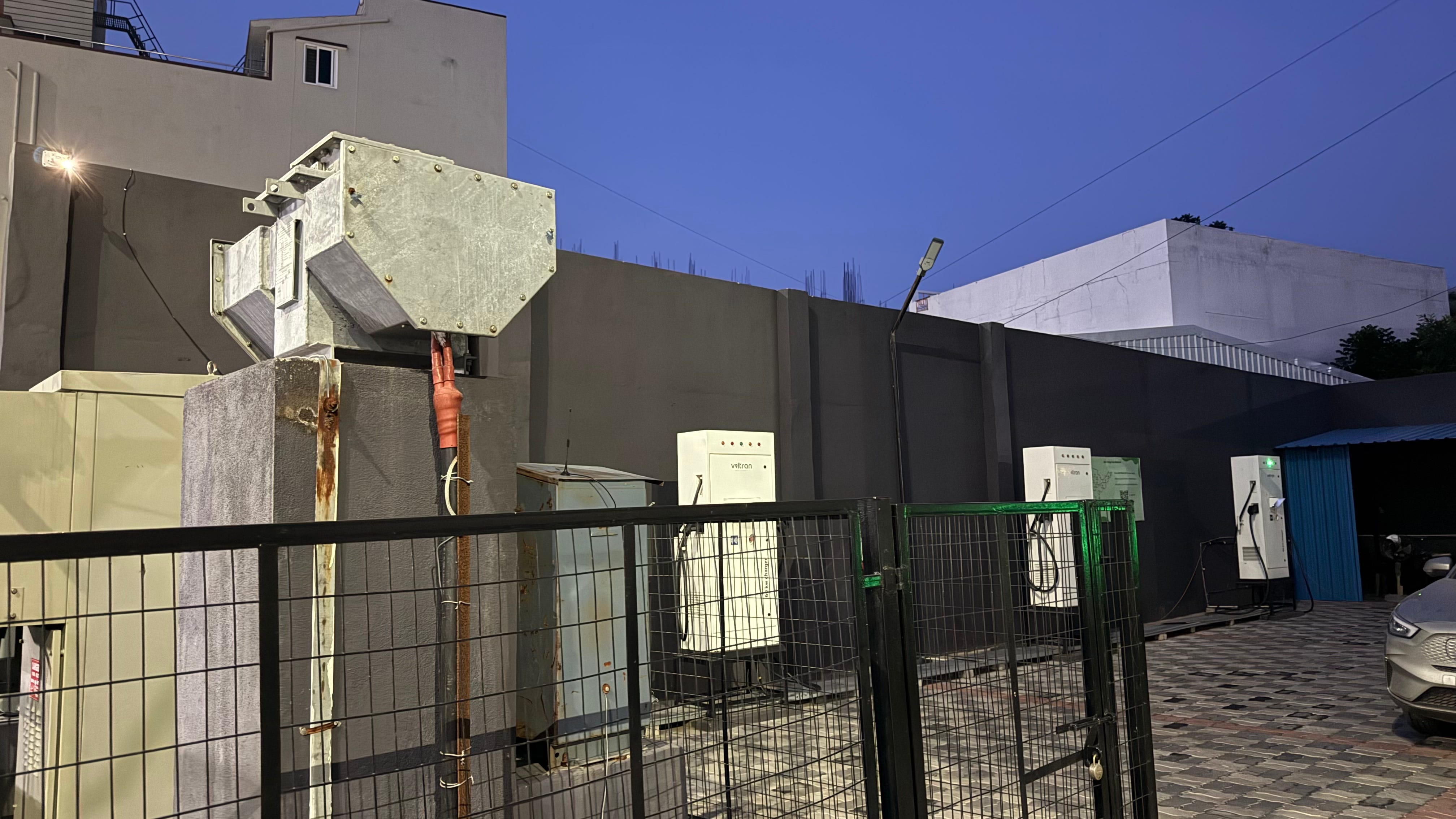
Before we left Tirupati, we wanted to check out Voltran’s charging hub. Voltran is a CPO based out of Andhra Pradesh and Telangana, where they have 6-8 charging locations. It was dark and empty. I’m not sure if they had a power cut or it wasn’t as impressive as E-mobility’s hub or I had wrongly assumed it was 24x7.
For the journey to Hyderabad, we chose the route towards Kadapa and then Kurnool. This route (on National highway 44 and National Highway 400) is the shortest route, and passes through the forested regions of the Eastern Ghats.
The highway was surprisingly very empty, and winded through the lush green forests. It was a clear day with a gentle breeze. A great day to drive. We observed several chargers, many of them being 60kW.
We had narrowed down on a Voltran hub north of Kadappa as we wanted to try as many regional players as possible. It could be a good stop for a quick breakfast. The hub was at a non–descript location on the highway. The signage on the approach was not good.


But this hub did have personnel manning it. He had the connector in hand, signed us on the app for Voltran, asked us for how long we wanted the charge (30 minutes, we said), and with a tap of his RFID, the charging session started. The hub only has a tea and coffee machine, and no food.
The road-side eatery next door was small, but looks can be deceiving. This was among the best dosas we had on the trip. It was run by a friendly, warm couple.
In 30 minutes, the car was at 82% SoC. Between Kadapa and Kurnool, some 174km away, there were not many chargers. We had enough to reach Kurnool, after which there were plenty of chargers till Hyderabad.
After Kurnool, we first crossed the Tungabhadra River, and 15 minutes later, crossed the Krishna River. We were now in Telangana, our 10th state.
At Kothakota, we stopped at a BPCL charger. In 20 minutes, the car went from 12% SoC to 45%. That was enough to reach Hyderabad 145km away.
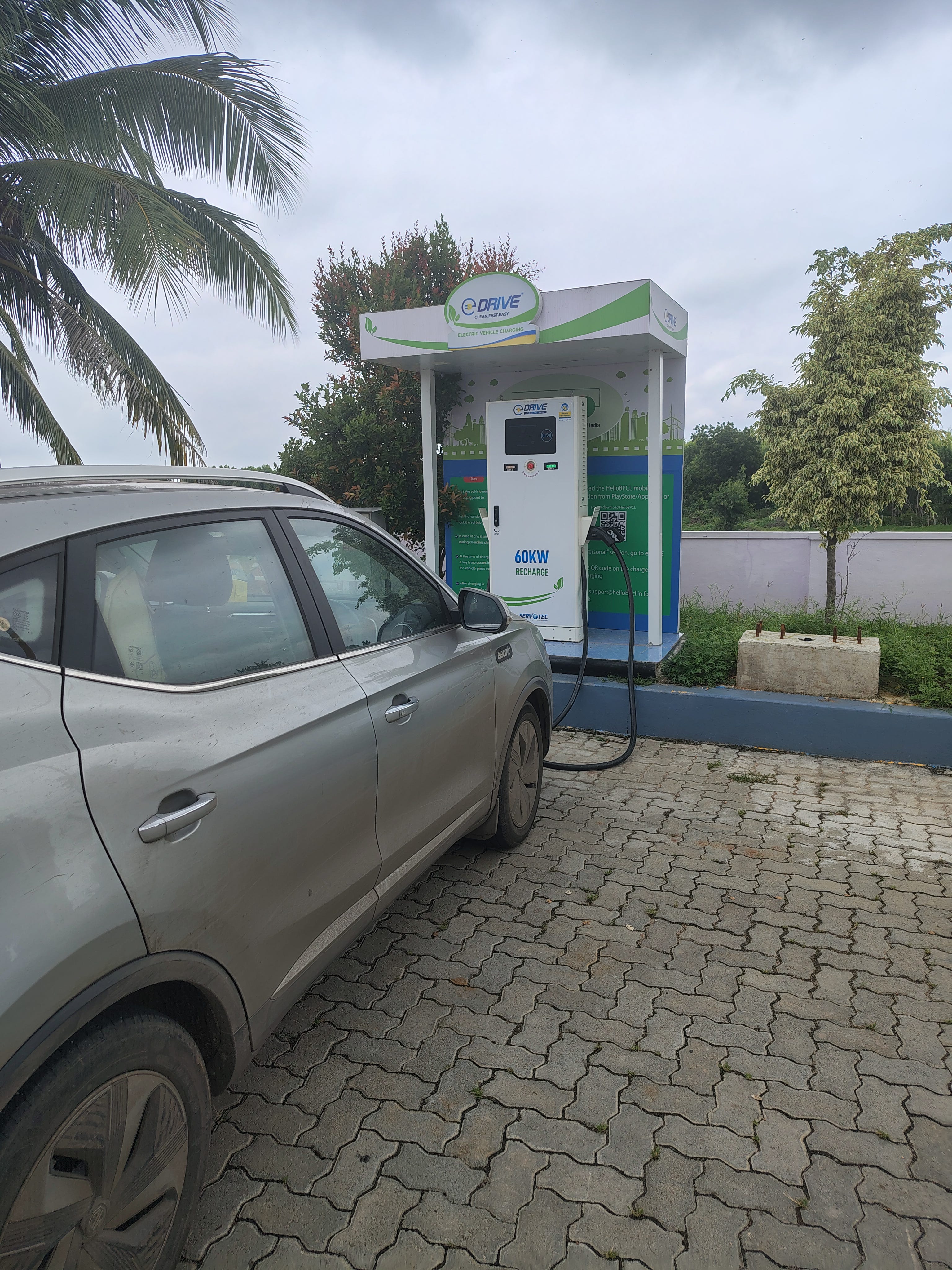
While the charger was good and delivered full power, there was nothing to do at the petrol station but wait out in the open. Fortunately, it was a bit cloudy.
On our way, we saw a 120kW IOCL charger and wanted to take a closer look. It was cordoned off. A restaurant was next door and a watchman kept beckoning us over. We thought he was warning us to stay away. But turns out, the restaurant had an Adani charger and the watchman was trying to get us to use it.
We stopped to take a few pictures - probably confusing the watchman - and then we were on the road again. Just before entering Hyderabad, we stopped by Jio-bp’s massive charger hub near the airport. It had 50 charging points and we can see Refex EV Cab companies cars being charged here. It was a new charger where minor construction was still happening.


At nearly 3.30 p.m., we entered Hyderabad. What welcomed us were wide roads and high speed limits. Strangely, we couldn’t find a hotel with a public Type2 Charger for slow charging. We were at 3% SoC, so our priority was to find a charger.
Costs and savings
These trips aren’t meant to be merely joy rides. They allow me to evaluate charging infrastructure along the way (which has become useful for charging companies to understand customer POVs).
They also, hopefully, encourage others to adopt EV technology if they are still under the impression that long journeys in electric cars are still not possible due to the nascent charging infrastructure in the country. We hope we are changing these minds.
EVs are the future: better for the wallet and the environment.
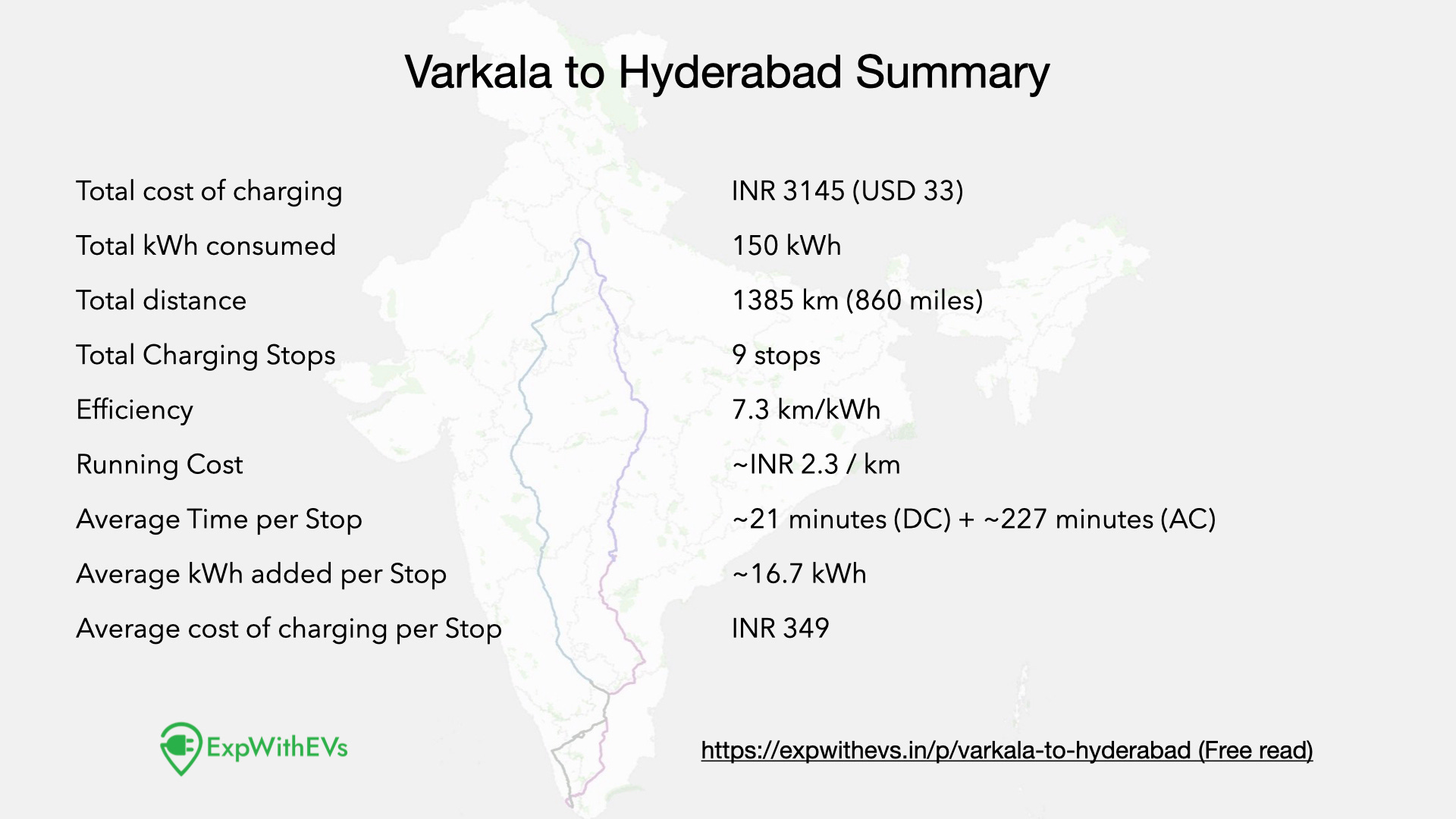
Here is a comparison we’ve made from our trip.
Series Index
The Epic EV Roadtrip! (Published - 16 February 2026)
New Delhi to Bengaluru (Published - 24 February 2026 )
Bengaluru to Varkala (Published - 11 March 2026)
Varkala to Hyderabad (This one!)
This is an index of articles to come. The links will be updated as the articles are published. You can bookmark this section or subscribe to get them straight to your inbox.
This series of articles wouldn’t have been possible without the help of our team. The trip, time, effort - everything was self sponsored and costs money. We do not take advertising or sponsorship money. It allows us to say the uncomfortable truth without compromising on our ethics. You can do your bit by buying us a pizza or getting a premium subscription to the Substack.
Behind the wheel, Photos : Garvit, Priyans.
Words and Graphics : Priyans
Edit : Mohit Rao
Map : Siddharth Agarwal
All rights reserved with Priyans Murarka @ ExpWithEVs.
The data from here and this article cannot be repackaged or sold without explicit written permission of ExpWithEVs.