

This is the second part of a six-part series which will document our 6,300-km trip from Delhi to Kerala and back. You can read an introduction to the series here.
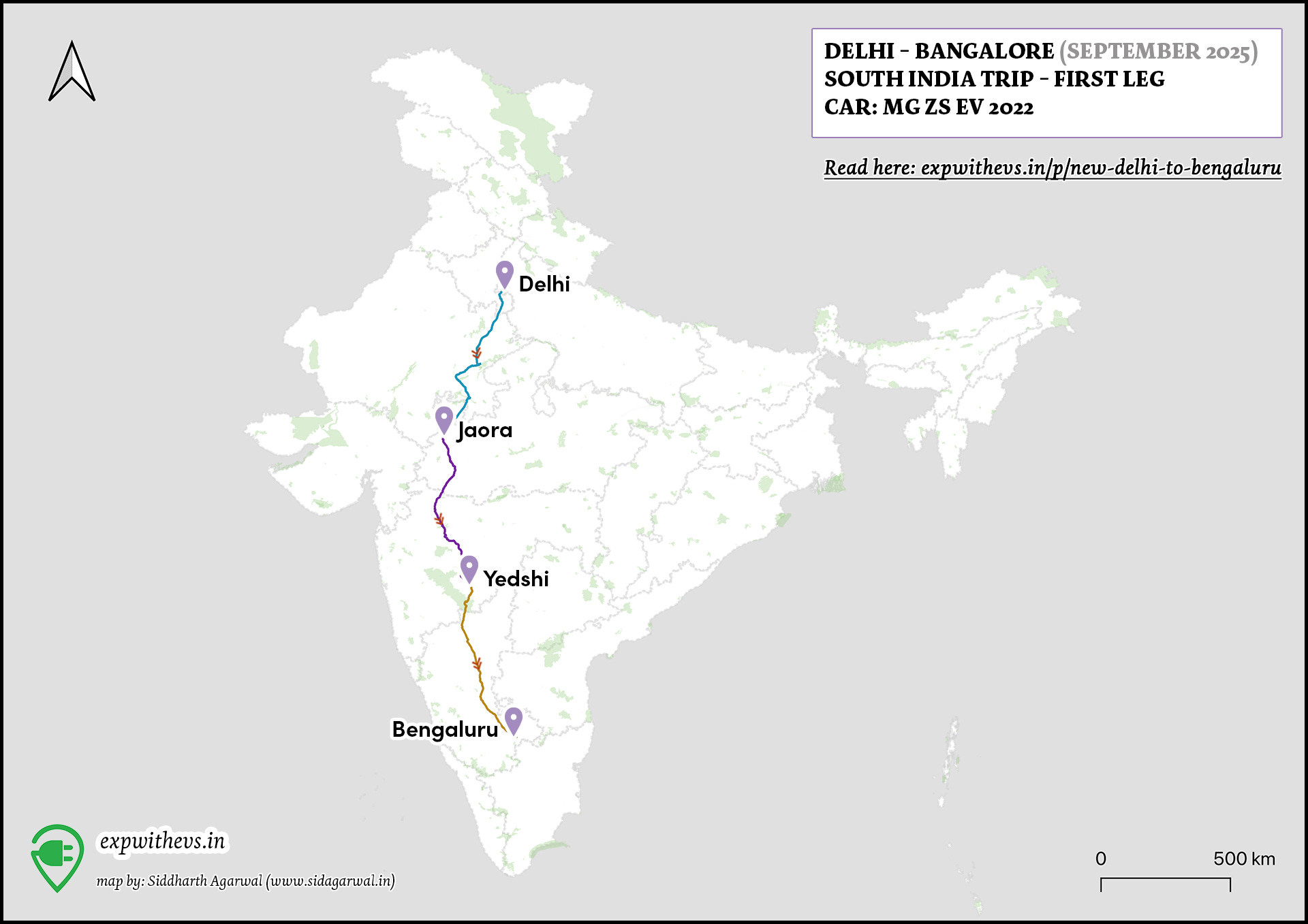
In this leg, we’ll cover the drive from Delhi to Bengaluru, at nearly 2,300km, that was done in three days. It was near continuous driving, with only brief night halts.
Our motive for this trip is to show you that it’s not just possible to do these long trips on an EV vehicle, but it’s pretty easy and cost effective.
It’s a long journey and a long article. I’ve divided it into three parts: one for each day. I’ll also be publishing a separate article on observations from the charging infrastructure through the entire trip.
Here’s an index of the journey. Each section takes about 5 minutes to read.
Index
Housekeeping
Please enable images if you are reading this on email. There are over 40 images and videos in this article! The best way to experience this article is on a desktop browser (click here) or on the Substack App.

We shared live updates about this trip in our WhatsApp community. Join the group to follow our next trip! (P.S. : Happening this weekend!)
For our premium subscribers, you can access the PowerBI of our trip for free. Just drop me a message. You don’t need a license to access it, just a valid work email.
We are in Gandhinagar on 25th and 26th February. We will be in Hyderabad on 12th and 13th March. Drop us a line if you are around.
New Delhi to Jaora
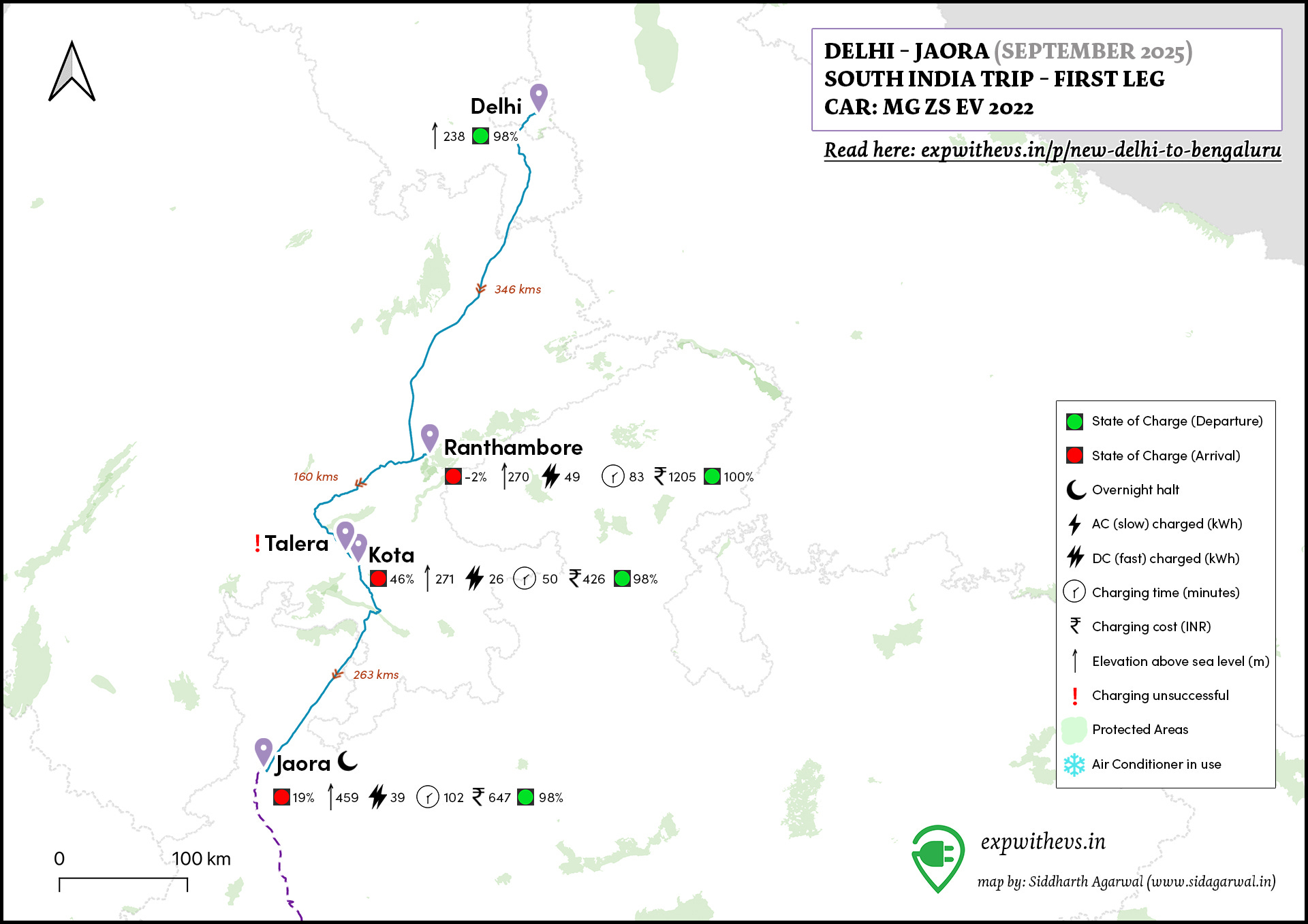
Route: New Delhi - Sawai Madhopur (National Expressway 4) - Kota - Jaora
Distance: 769km
Time taken: 15h30m
Number of charging stops: 2 (and one charger that wasn’t working)
The first day of this trip was something I’d done plenty of times before. This would be the ninth time: I’ve written about it before (here & here for reference).
I didn’t have to think much to plan this day. Delhi to Ranthambore is a stretch I could do with my eyes closed (figuratively). When starting with a full or an almost full charge from Delhi, I have been able to make it to the charger at Oberoi Vanyavilas Wildlife Resort in Ranthambore, some 350km away, without charging. The times when I’ve not been able to do it was because it was done in summers where air conditioning had to be on full blast or when I was not trying to optimise my charging stops.
I left my house at 3.49 a.m. Empty roads, empty expressways. Cruise control in the car and mind.
By the time the SoC dropped to 50%, I had done 180km in 2.5 hours. I had 165km to go to Sawai Madhopur, which had a charger in a resort I had been to multiple times before. The arrival SoC was predicted to be under 2%. Touch and go.
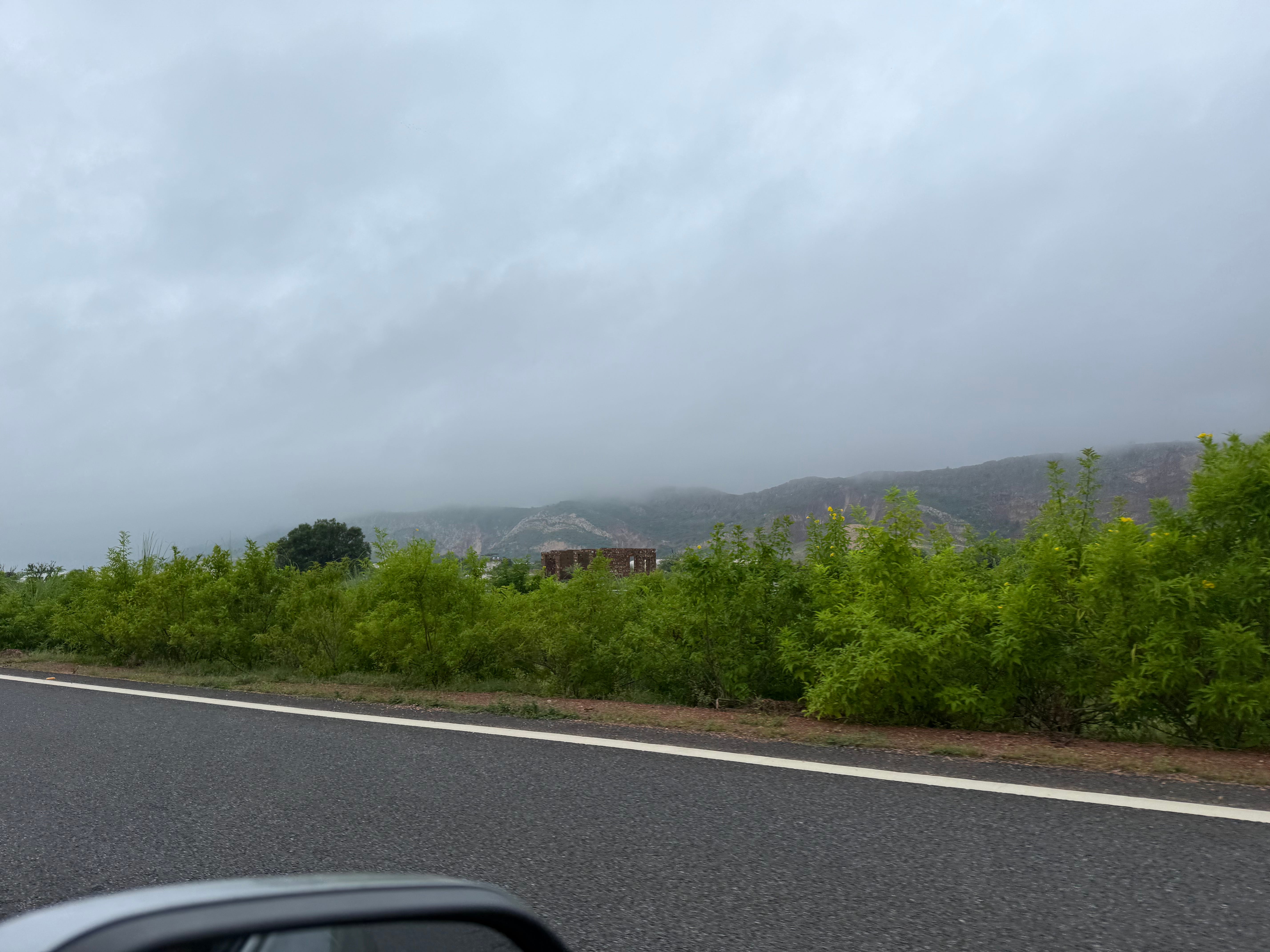
As dawn broke, it started to rain. Around 8 a.m., the rains became heavy. This meant that I had to shut windows, rely on air conditioning and switch on the defogger. All of this consumes battery.
In times like this, the mind races with figures, possibilities and scenarios.
I still had 24km to go to a charger and my SoC was at 4%. This means I can cover 16km.
I reduced my speed to 60kmph (from 80kmph). You never know if this extra few meters gained will be useful later on. Every bit of juice matters.
I still had 8km before I could turn off the expressway. This was important as a back-up plan. If my car stopped in town roads or village roads, I could always ask someone to let me charge at their shop via a regular 15A socket. This would be enough charge to get me to the charging point. But on this access-controlled Expressway, I did not have the option now to get this extra charge.
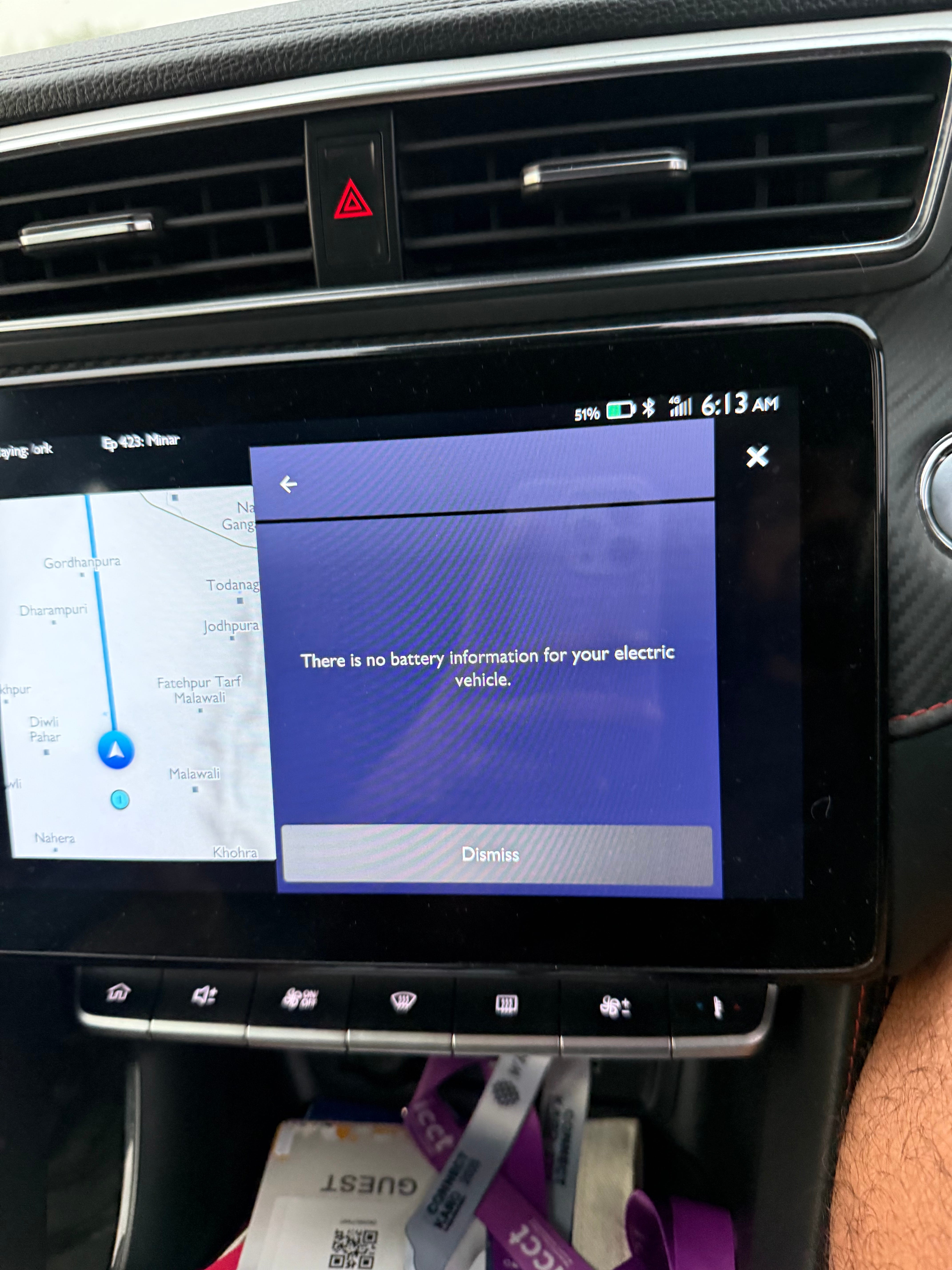
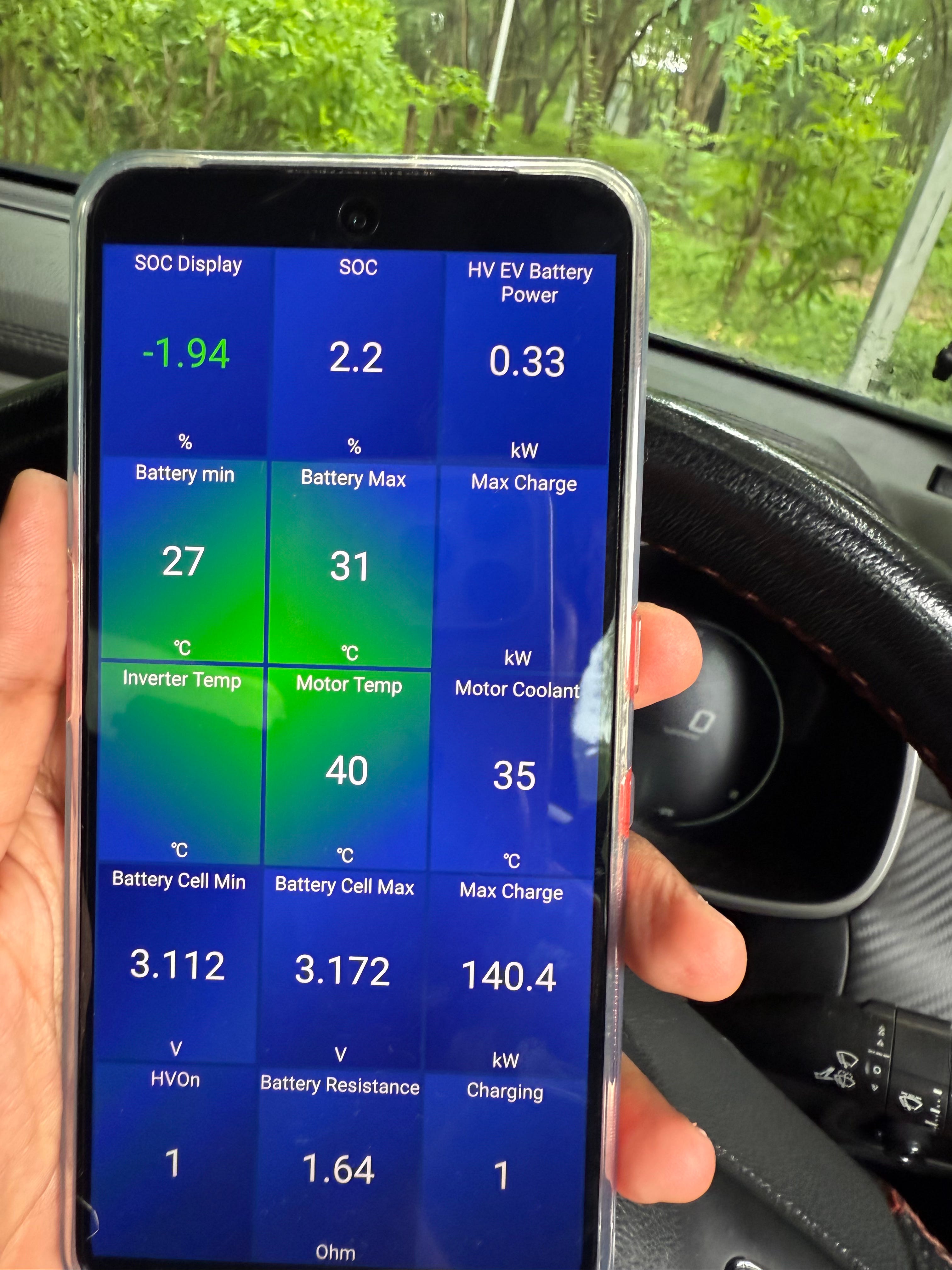
The car hit the 0% SoC mark somewhere before Sawai Madhopur town.
I used the On-Board Diagnostics (OBD) to figure out exactly how much buffer capacity (like a reserve on a fuel tank) is left on the battery. It showed 4% battery left. In an ideal world, this should be enough for 16km. For those keeping count, just enough to reach the charger at the periphery of Ranthambore Tiger Reserve.
The last time I drove below 0% SoC was at Bandhavgarh forest in Madhya Pradesh. Maybe the universe was telling me to plan better near forests!
Through Sawai Madhopur town, I used regenerative braking as much as I could. It was nerve-wracking. Not an ideal start to a trip planned to show that cross-country driving of EVs was easy. To be honest, though, I aimed for this charger knowing it would be tight. For those doing the same route, it is advisable to use the options in rest stops along the way, or take a short detour at Dausa, to top up for 15 minutes or so.
But all’s well that ends well. I arrived at the charger which is in the wildlife resort. The entrance is easy to miss, so keep a look out.
Previously, you had to sign some paperwork. This time, it was digital: You had to give your ID proof and phone number. I didn’t switch off the car because at such a low SoC, who knows whether it will even turn on.
The previous times I’ve used the charger, I ate at the property. Too posh for my liking: very little food for the price they charge. Instead, I attempted to head out and walk 700m to a couple of eateries. At the gate, I was stopped.
According to the staff, many people had left their cars on charge, went out, did a safari, and returned late in the evening to collect the car. That is, many used the space as a parking spot.
Needless to say, if you’re an EV owner, don’t do that. Once your car is charged, unplug and leave so someone else can use that spot. Or, if you’re the owner of a charger, charge waiting fees. Automatically, people will move their car.
I pleaded with the staff. Eventually, I kept my car keys with the security as deposit and left. The hotel, like the resort, was just opening up. During the monsoons, safaris are closed. Restaurants close down, and resorts become ghost palaces.
I returned after 30 minutes. The security guard let out a visible sigh of relief, as if his faith in humanity had been restored. It took about 83 minutes to charge to full.
My plan was to reach Ratlam in Madhya Pradesh by the end of the day. That was a distance of 342km, which might again end in close to 0% SoC.
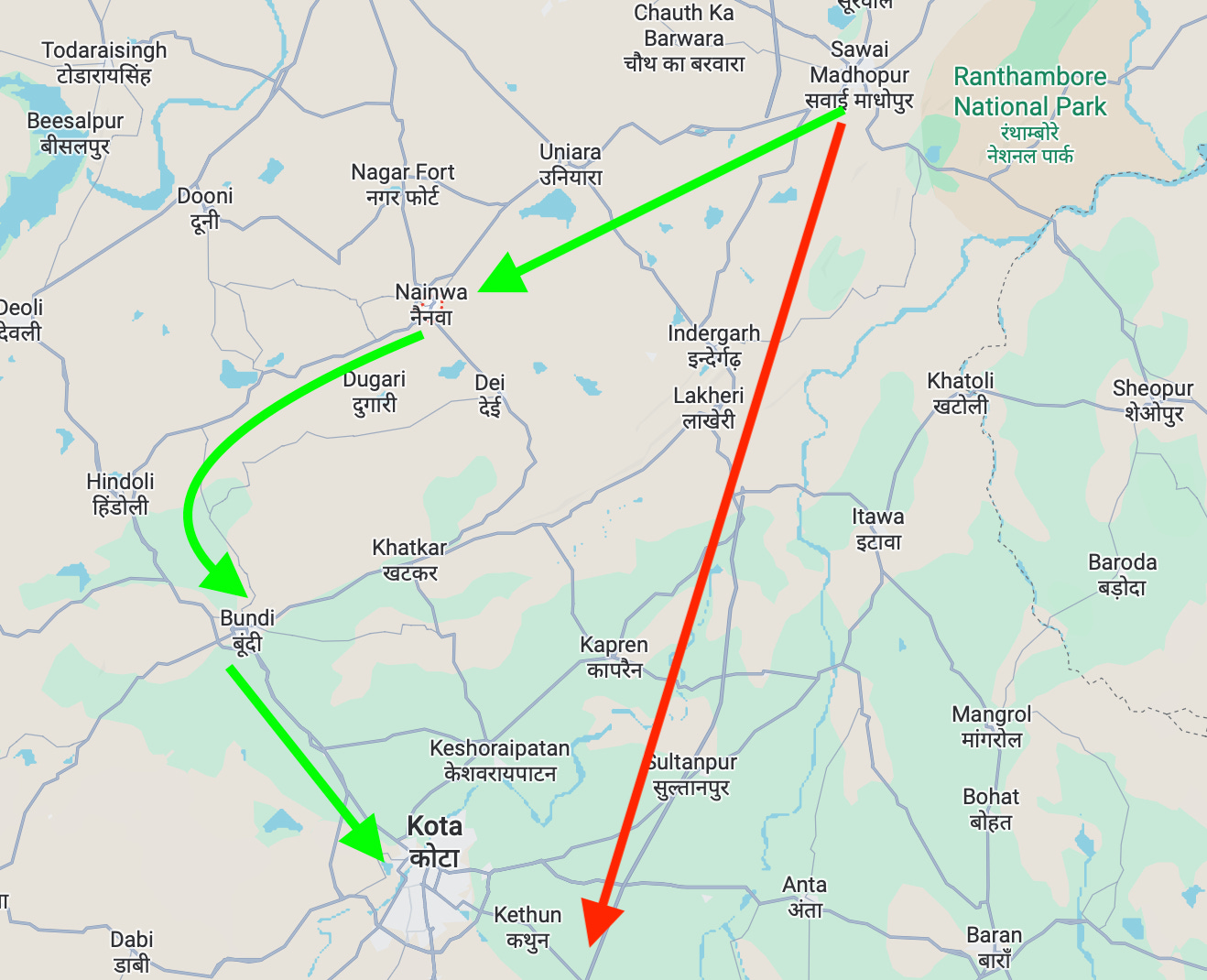
It would be along the Delhi-Mumbai Expressway or whatever sections of it were open. Unfortunately, the route was impacted by floods in Rajasthan. Google Maps wasn’t advising to take this route either. My good friend Siddharth Agarwal, founder of Veditum India Foundation that works with Rivers (who also makes the maps for us) checked the flood markings on Chambal river, and they seemed below the alert mark.
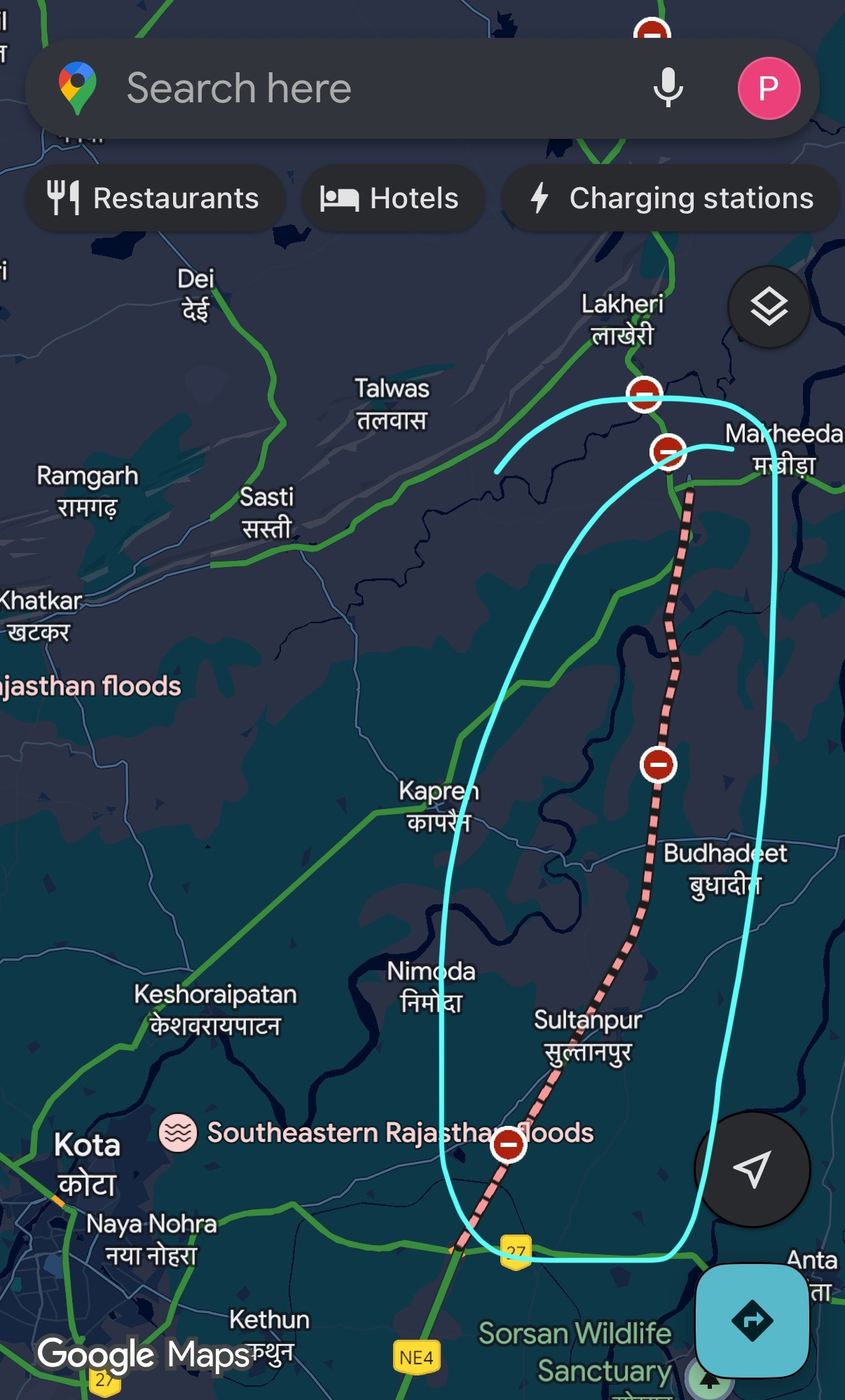
But, I was driving solo. I didn’t want to risk floods, diversions and delays. Moreover, there were no chargers along the expressway until Jaora/Ratlam. A drive on the expressway would be cutting it too close for my comfort.
And so, I decided on the conservative route: through Nainwa, Bundi (where I knew a reliable charger was present) and to Kota. It was 60km longer and an hour’s extra drive. It was a narrower highway that needed me to be on high alert throughout. But it had a lot more charging options.
The above video shows the state of roads in this section of the trip.
2.5 hours later, I reached the Jio-BP charger at Bundi. The sight of an unoccupied charger means dil mein laddu foota.
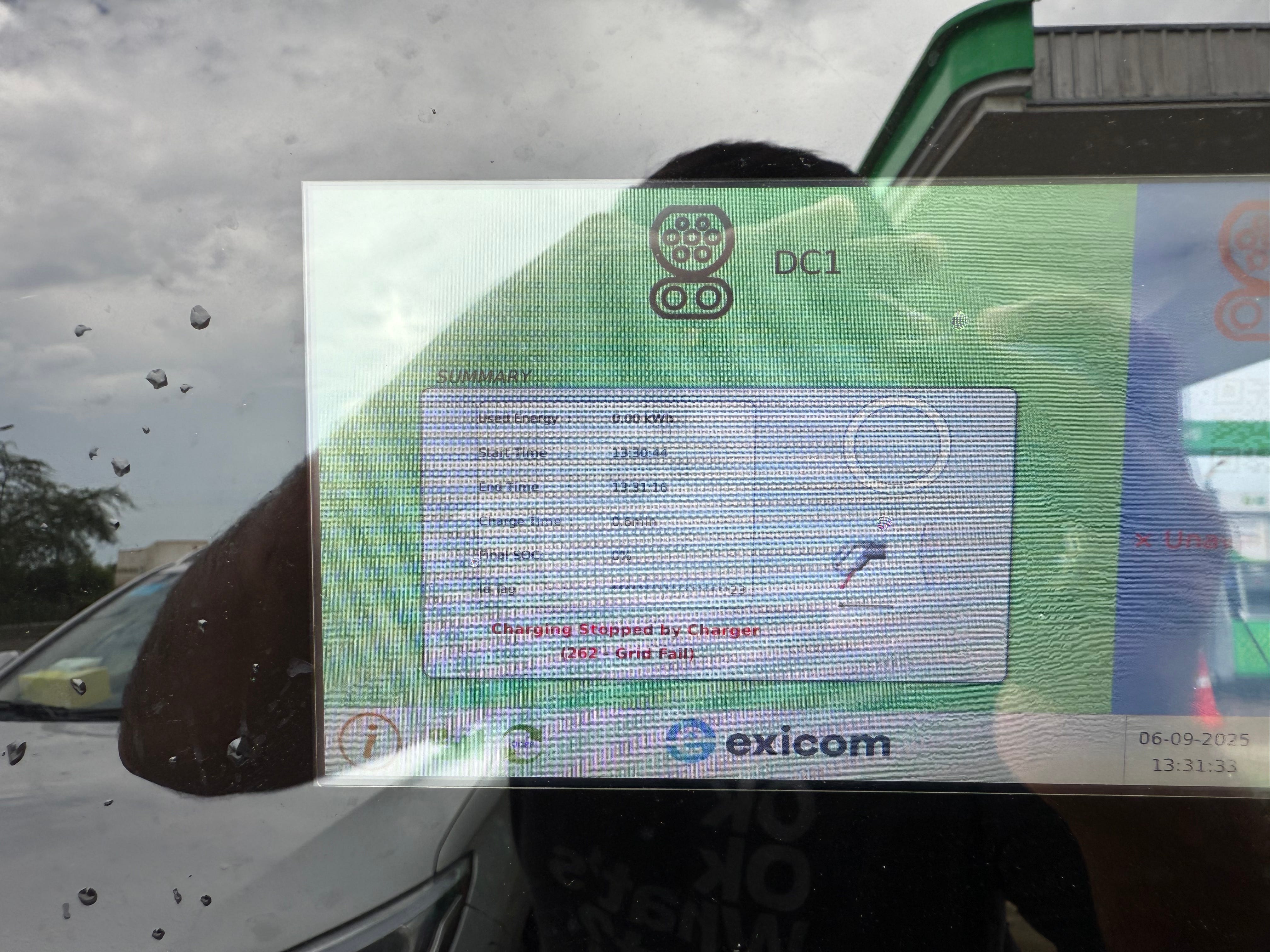
The joy was short-lived. An error flashed on the screen: “Charging was stopped by the grid”. There was power at the fuel station though. There was an electricity supply at the fuel pump. I couldn’t understand this. Weirdly, I’d encounter this issue through the trip.
The next charger was a few kilometers away, a BPCL charger. It was just before one enters Kota city and before Chambal River. There are a couple of restaurants within a five minute walk. Decent spots for lunch.
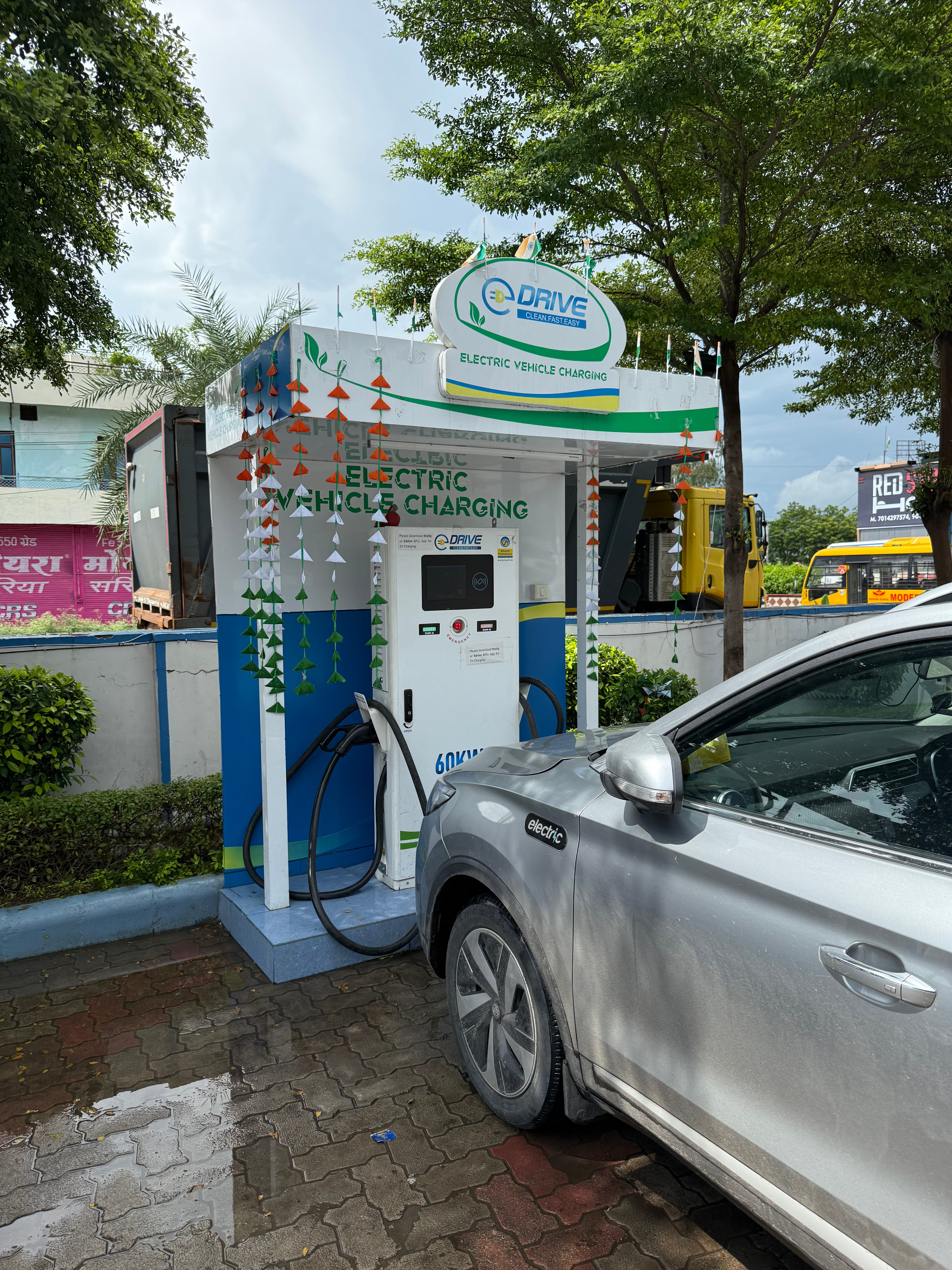
The charging was complete before I finished my lunch. For some reason, the BPCL charger cut off my charging at 98%.
Just out of Kota, I’d be entering Madhya Pradesh. My final stop of the day would be dependent on the charger. Odd, I know: but that’s what we do here at ExpWithEVs.
I had enough charge to reach Jaora’s 30kW BPCL charger or Ratlam’s 60kW ChargeZone charger. Jaora’s charger was 33% cheaper than Ratlam’s. Since I was going to halt for the night, I was in no rush to charge quickly. Jaora it is, then.
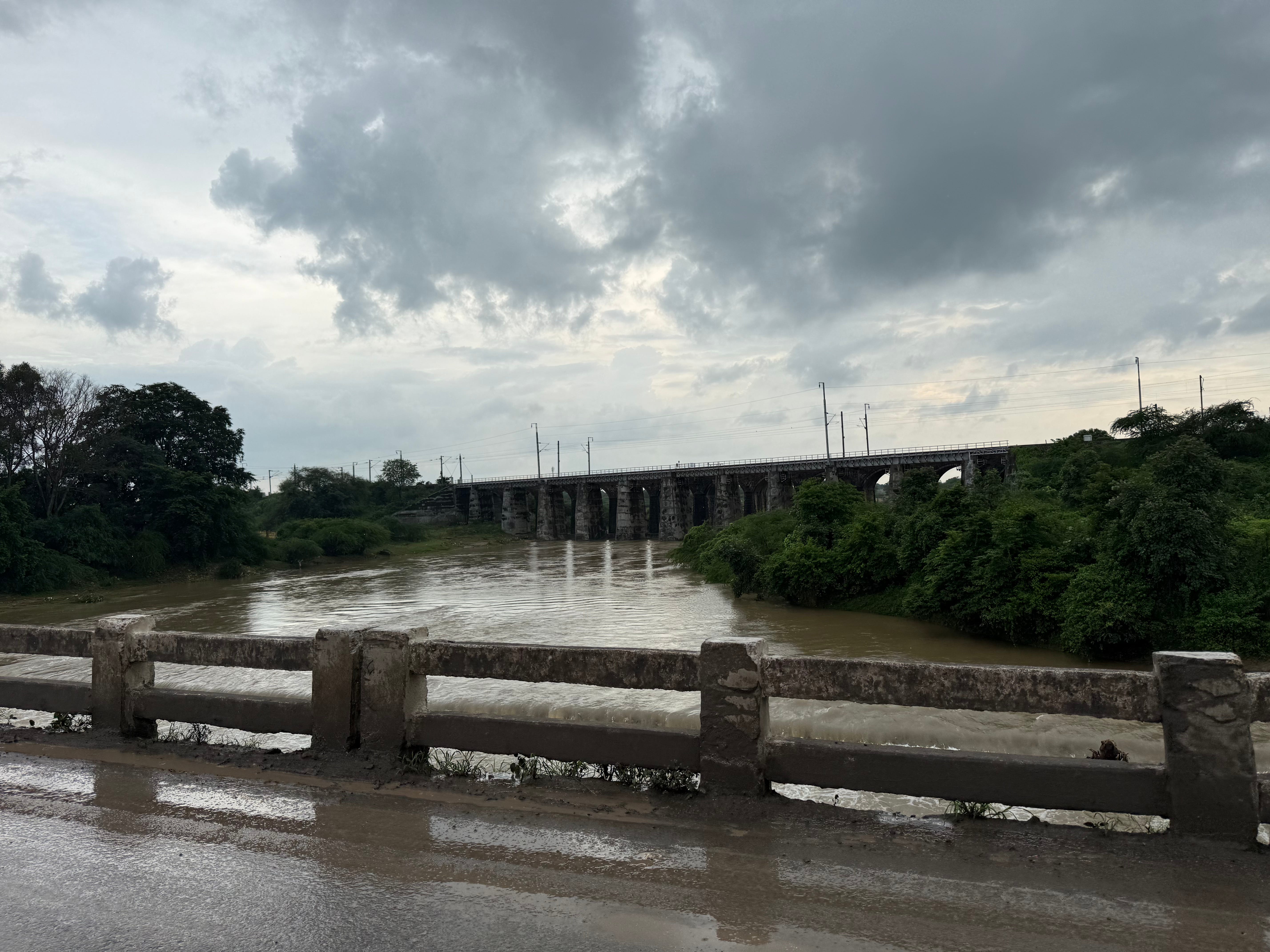
At Jaora, I chose a hotel next to the charger. There was no Type2 slow charger in these towns. So, I’d to keep an eye on the app, and when the car was charged, it was time to bring it into the hotel and fall asleep.
Jaora to Yedshi
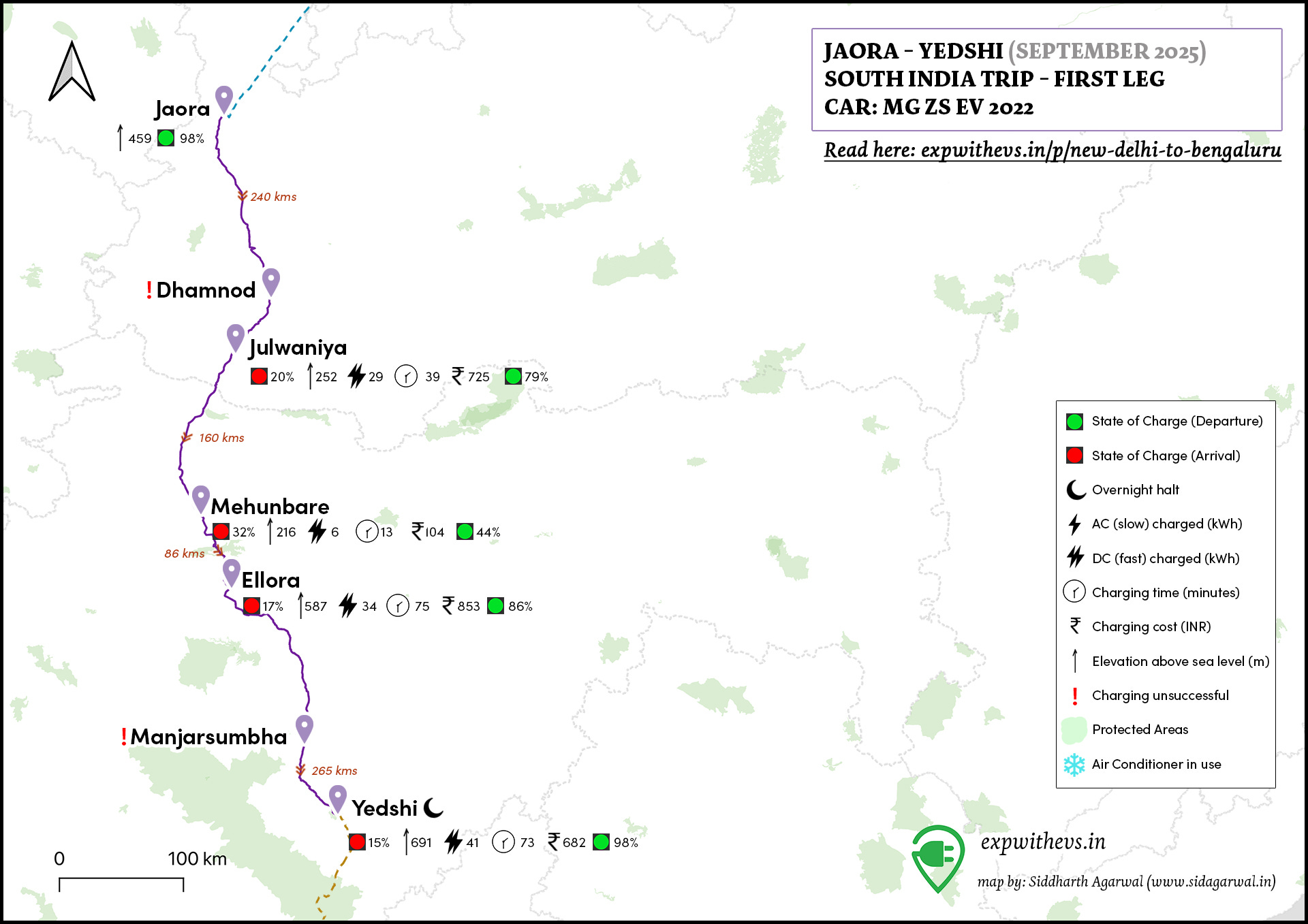
Route: Jaora-Dhule-Aurangabad-Yedshi
Distance: 751 km
Time taken: 16h30m
Number of charging stops: 6 (4 working, 2 not working)
The next morning, Garvit joined me for the trip. You’d have seen his articles on the website before. I’ve been working with him for over a year now. He’d helped TeslaClubIndia become a leading voice in the Indian EV ecosystem before joining ExpWithEVs full time.
These kinds of road trips always have early morning starts. This time, it was 4.28 a.m. There was deathly silence in Jaora. Even this early in the morning, the exciting thing about Madhya Pradesh is that a good bowl of poha is never far away!
Unlike yesterday’s journey, today’s was not on the Expressway. Instead, we’d be driving on a series of national highways towards Dhule.
National highways are replete with stray cattle, stray dogs, speed breakers, potholes or bumpy roads that rattle the car. Sometimes, it was a four-laned highway, sometimes just two, making overtaking slow vehicles tricky. One really misses the ten-laned, smooth, access-controlled expressway.
But, what these highways lack in quality, they make up for in sights. Expressways are dull with very little to see on either side. But highways are bustling. There are dhabas frequently and small towns with their own charm and history.
An hour into our journey, we reached Dhar. The town drips with history, with impressive forts and mahals. But it was too early in the morning to see any of them. But, by the side of the road, we spotted a 16th-century Mughal monument, “Kharbuja Mahal” or “Muskmelon Mahal” because its domes are shaped like muskmelons.


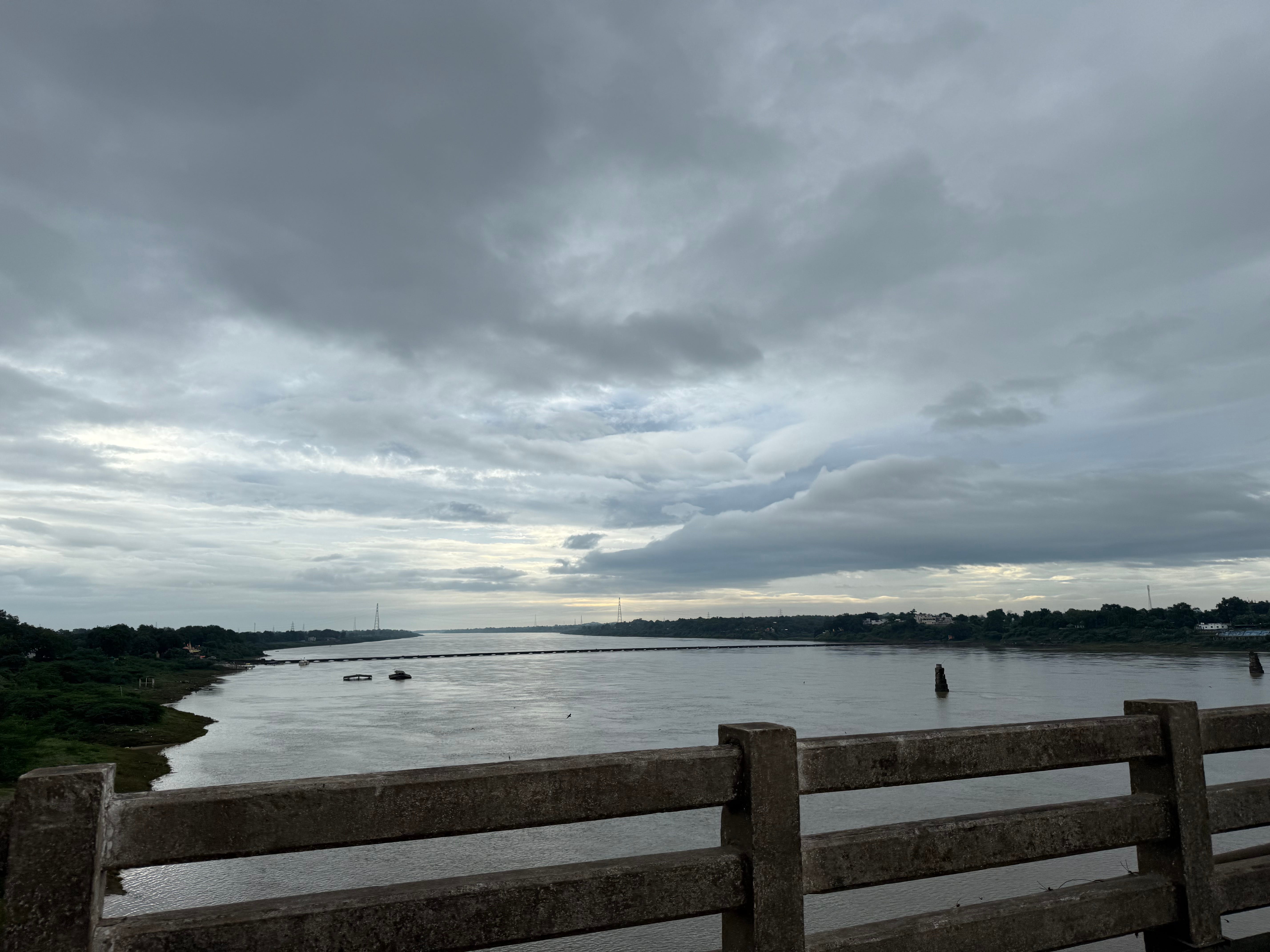
A little while later, the road twisted and turned through the Vindhyas. The sun was rising and there was rain. Dark clouds hung around and the ghats looked green. It reminded me of the Western ghats near Mumbai during the monsoons.
Around 7.40 a.m., we stopped at a Jio-BP charger, which was attached to a restaurant, in Dhanmod. The town sits between the Vindhyas and the Satpura hill range - like a transition between North India (which ends at the Vindhyas) and Southern part of India.
The charger was online, but wouldn’t charge. An error flashed on the screen: “Charging stopped by charger 262 - Grid Fall.” I think it meant, Grid “fail”.
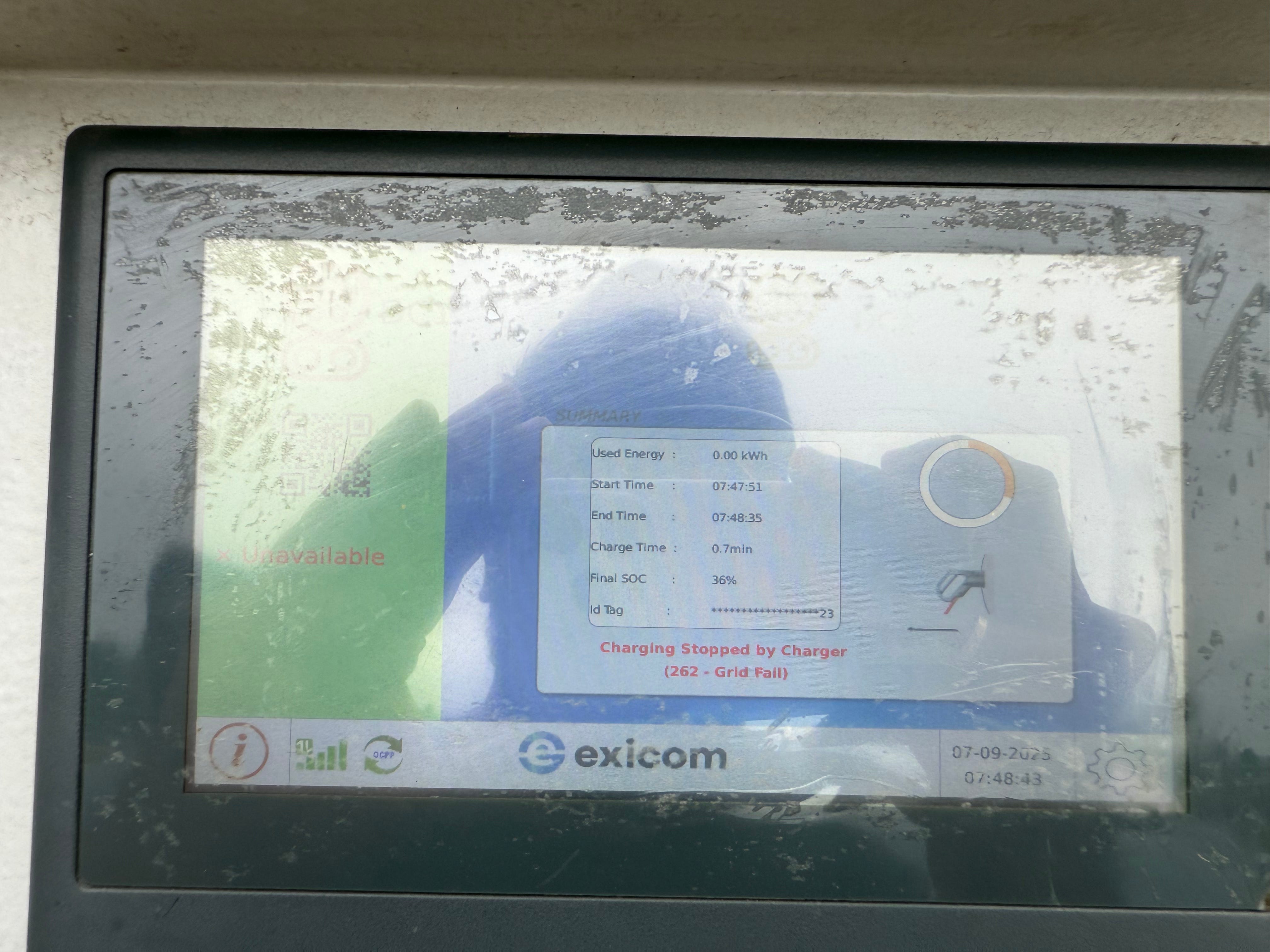
This usually happens when the voltage at the charger is either too high or low. There was a meter box right next to the charger. The voltage was 255V on all three phases, compared to the typical 240V. For some reason, the charger felt this was too high to allow charging to happen.
Sigh. disappointing. We had to continue forward. I knew there was a charger attached to a restaurant at Julwaniya, some 50km away. One more hour of hunger.
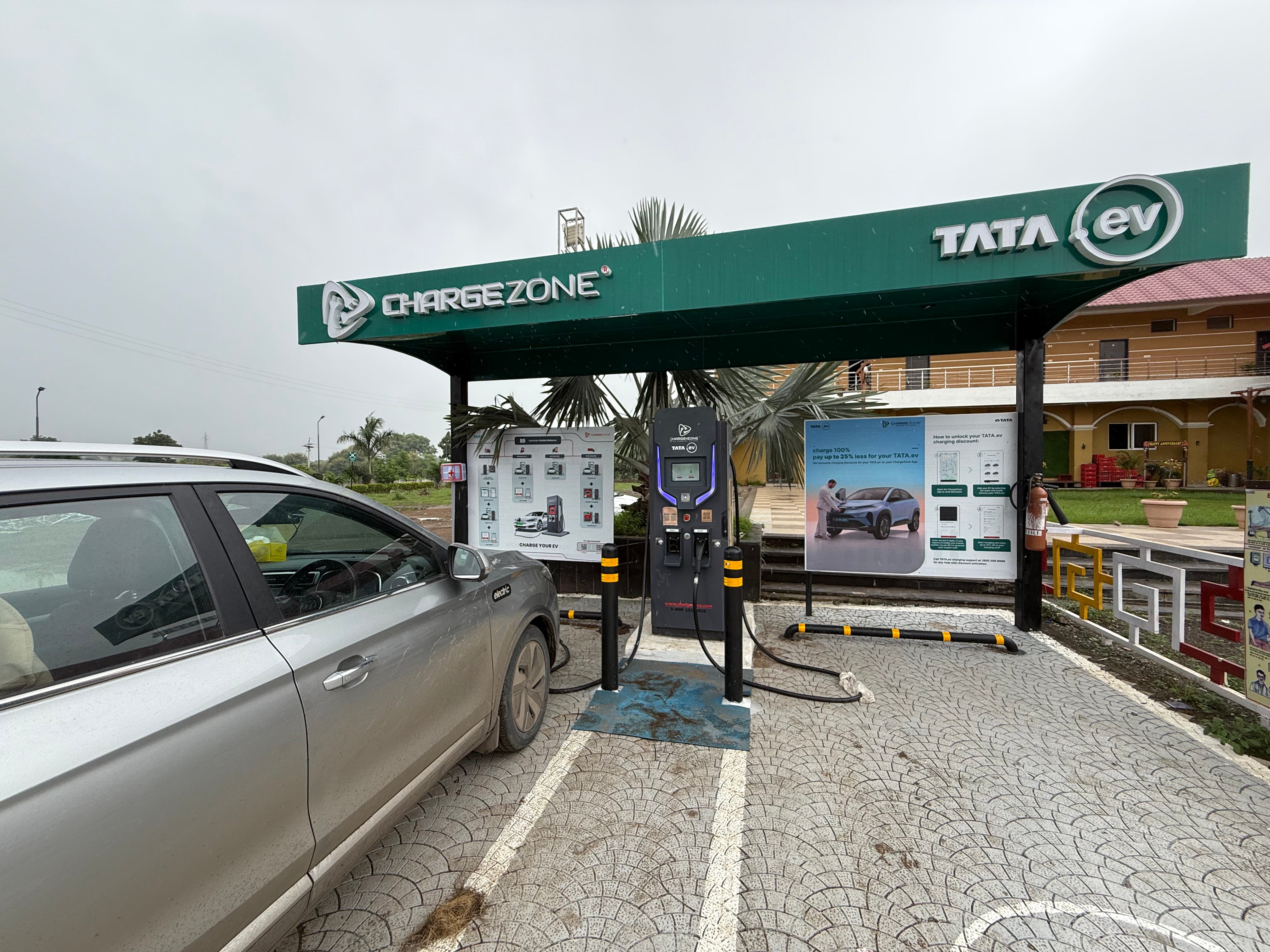
ChargeZone forces you to book a slot. But, it allows booking only at even time slots. The slot was 9 a.m., which means we had to wait till that slot opened up, despite our car being parked by the charger a few minutes before that.
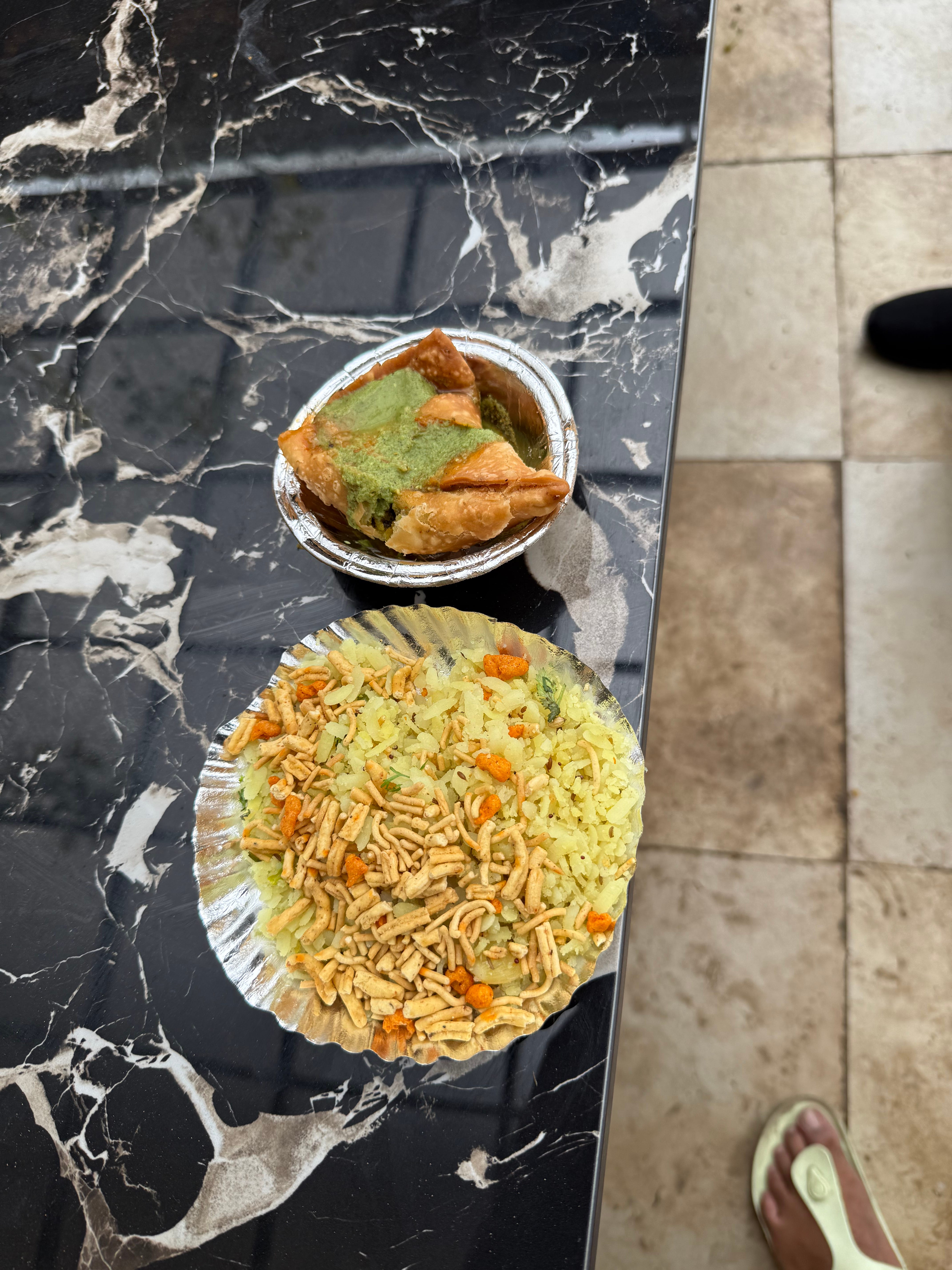
The main hotel was under renovation. Fortunately, they had put a small stall where we got pohas. It’s amazing how ubiquitous Pohas are in Madhya Pradesh, but also amazing how their taste changes city to city. Garvit, whose home is barely 140km away, says the poha here is entirely different to what he gets at his hometown.
40 minutes later, breakfast was done and the car had charged to 80%. We found out that though the ChargeZone charger was previously a 60kW charger, it had been upgraded to a 120kW charger. (We covered about this in our report here)
From Julwania, Dhule is only 120km. But it felt much longer. The road, which snakes around the relatively-sparsely populated Satpura ranges, had taken a beating in the monsoons. With the amount of potholes and speedbreakers, it was hard to cross 40kmph.
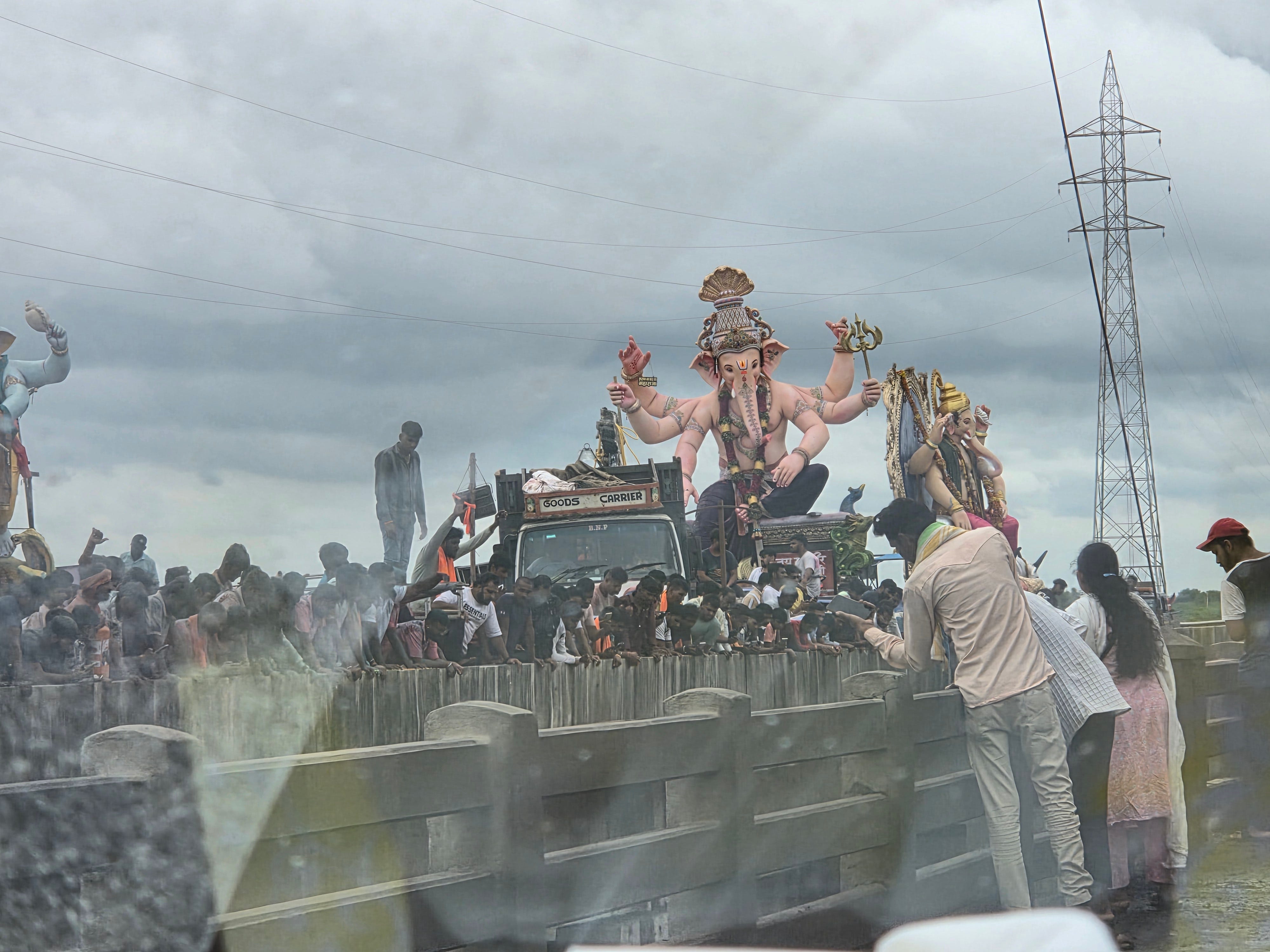
This journey was stalled for over an hour at the Tapi river crossing. We had to wait for an hour due to processions to immerse Ganpati idols.
Dhule is where I’d usually take a turn towards Malegaon and then towards Mumbai. You can read about those trips here.
But this time, we took the deviation towards Aurangabad or Chhatrapati Sambhajinagar. New territory, but smooth roads.
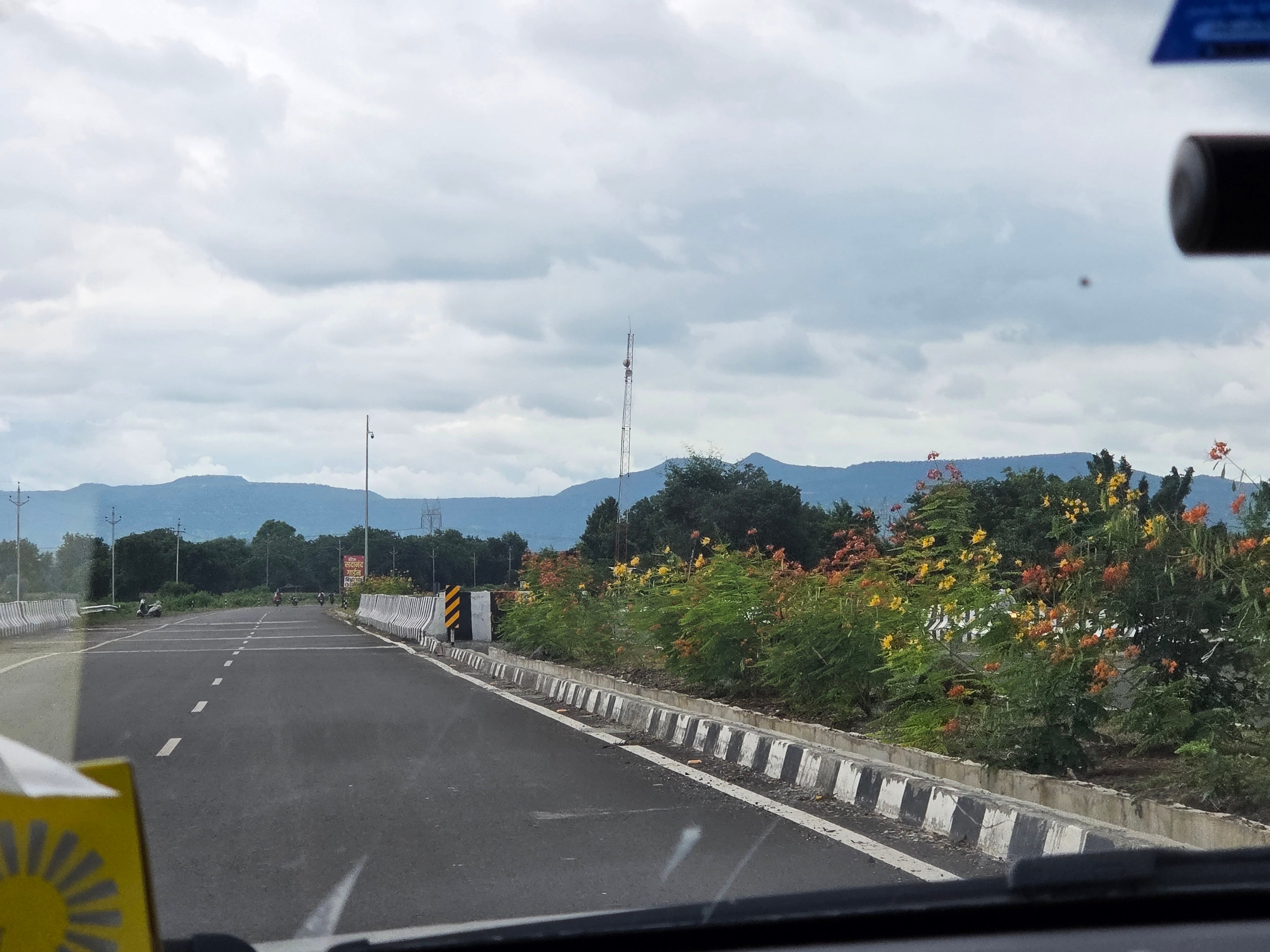
Around 40km later, we came across a BPCL charger in the village of Mehunbare. We decided to do a quick top-up. The Servotech charger was rated as 60kW, but could only charge at 30kW. These stops could be a useful restroom break. But the petrol station washrooms are in a very bad shape.
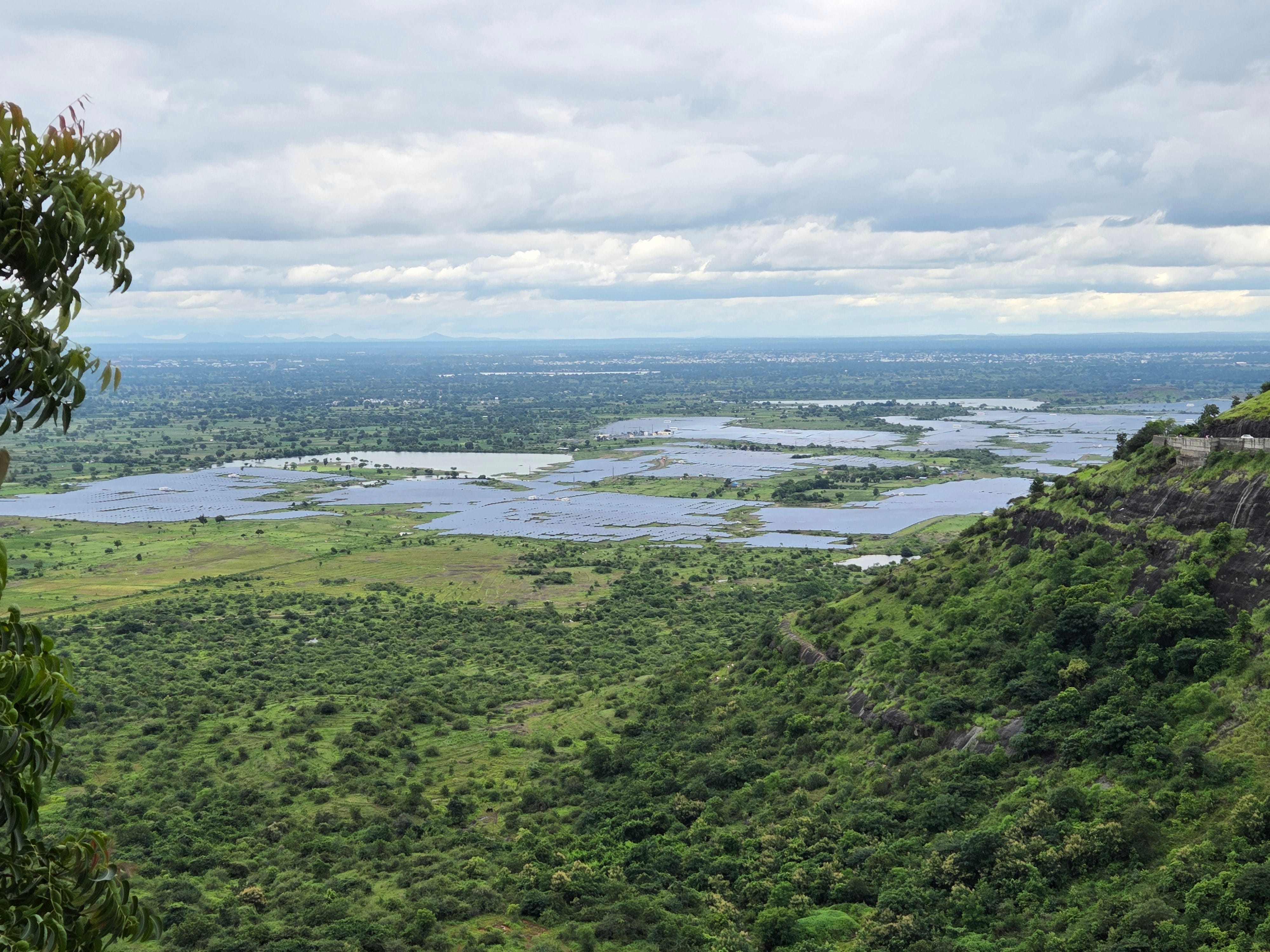
A few minutes later, we were climbing another hill range: Chalisgaon ghats of the Sahyadris or Western Ghats. Our third hill range since the morning. We saw a massive 135MW solar plant before the climb. India powered by EVs and solar plants would be a great thing!
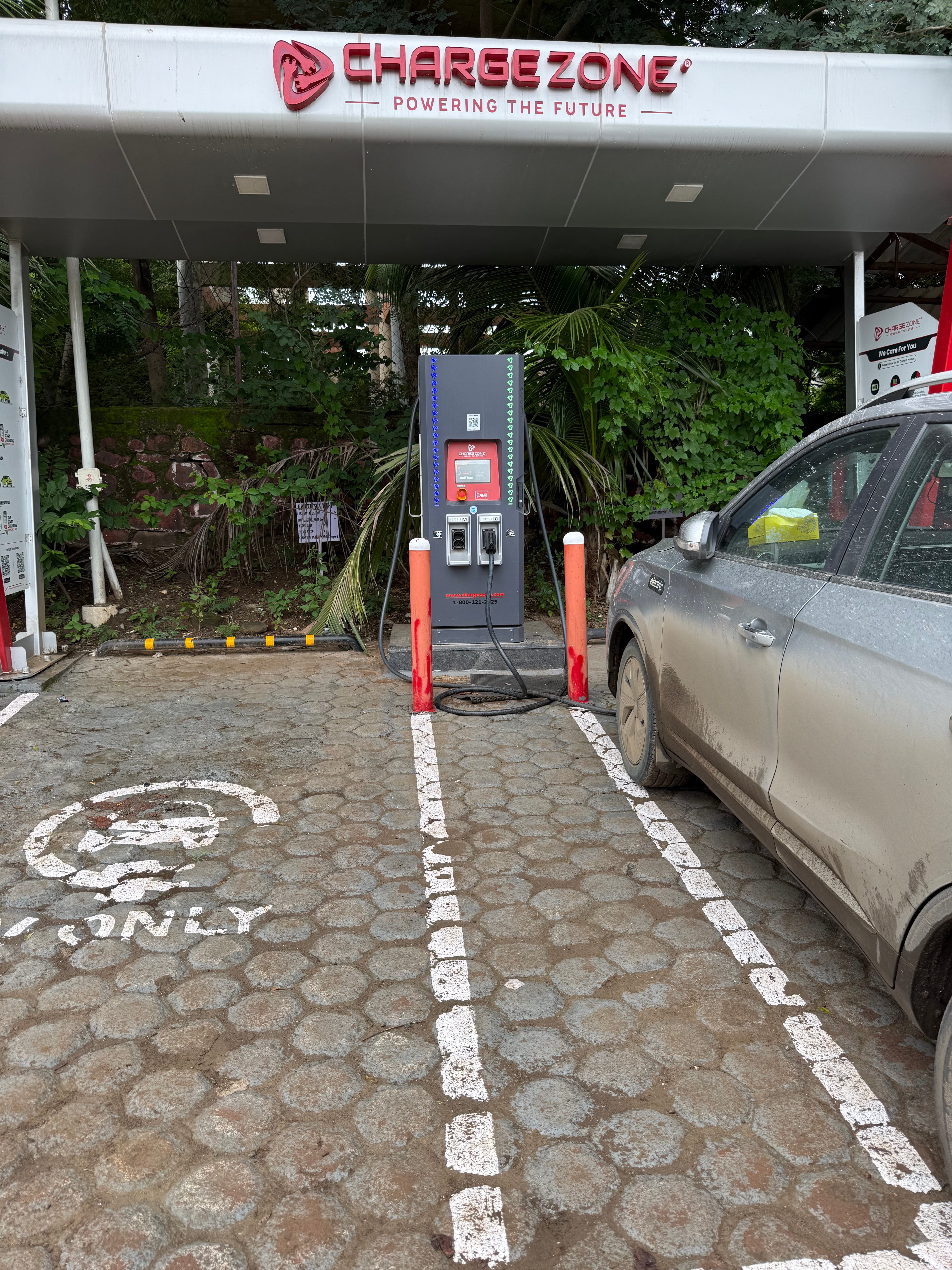
We’d stopped for a late lunch at ChargeZone’s charger at Ellora Heritage Resort, on the outskirts of Aurangabad and close to the world-famous Ellora caves. Unfortunately, the charging kept getting interrupted as the power supply kept going on and off. While the hotel had power back-up, the charger did not.
It was already late afternoon, and our plan was to drive to Solapur. That’s another 350km. And this stretch had little charging infrastructure and I wasn’t keen on driving without full charge.
Our patience wore thin. The power supply was very irritating. By 4.30 p.m., we left towards Solapur with 80% charge in our car - or, enough for 290km. We needed another little top-up along the way.
The route largely passes through the plains, though an occasional hill could be spotted. We crossed another one of India’s great rivers, Godavari.
There were multiple charging options along the way, but most operated by Public-Sector Units such as IOCL, BPCL and HPCL. None of them were really online. That’s the problem with PSU’s charging network: it is very extensive, very cheap, but quite unreliable.
Meanwhile, during the drive, we planned the charging for the night. We wanted to slow charge through the night at Solapur. We looked at multiple apps but couldn’t find good options. Eventually, we found an option through Plugshare, a global community platform to locate and rate EV charging locations. An 800 sq.feet garage with slow charging had been listed by someone who had two EV cars himself. This seemed like a great option, even though we’d reach Solapur after 10 p.m. It’s been a long day, and a long day still ahead.
Close to Beed, we came across a BPCL charger at the M. Khan petrol station. It would be the top up we needed to cover the remaining 200km.
The hardware at the charger says 60kW, but the Statiq app says 30kW. That’s not the only issue with the app. I find that it is very difficult to operate the app when charging has started. The app is over-ridden by a blue screen that will not let you fiddle with the app until it has retrieved data from the charger. Essentially, one can’t plan the next charging stop. And it is very irritating if the starting session has failed. The app will not let you initiate another one until the information is updated.
After all of this, the charging didn’t work at all. We were at 34% SoC and reaching Solapur was becoming difficult. There was a BPCL charger at Yedshi, some 80km away. But considering our luck with the PSU chargers, we just didn’t know. We moved on through the dark of the night.
While I did say that charging was not reliable on this route, things are changing quickly. We saw a new charging being set-up by Adani at Manjarsumbha, a good half-way stop between Aurangabad and Solapur. Private chargers, though expensive, are usually reliable as they have separate dedicated power supply.
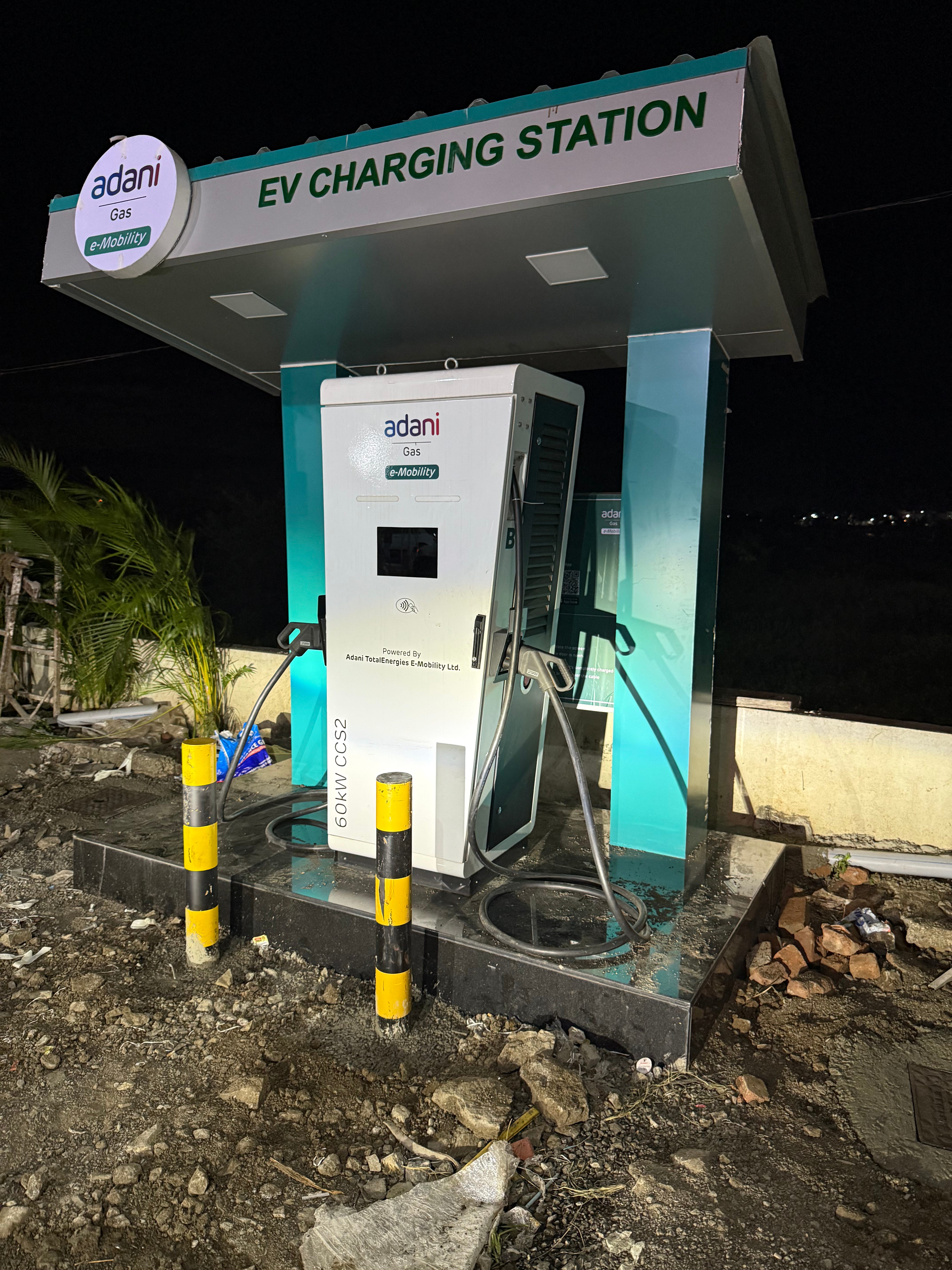
But for now, our aim was the BPCL charger at Yedshi and we’d keep checking the app to see if it was online. Thankfully, a car was charging there. It was working for now.
When we pulled up, our SoC was at 15%. But both connectors were occupied. Sigh. After a long, long day, we had to wait more.
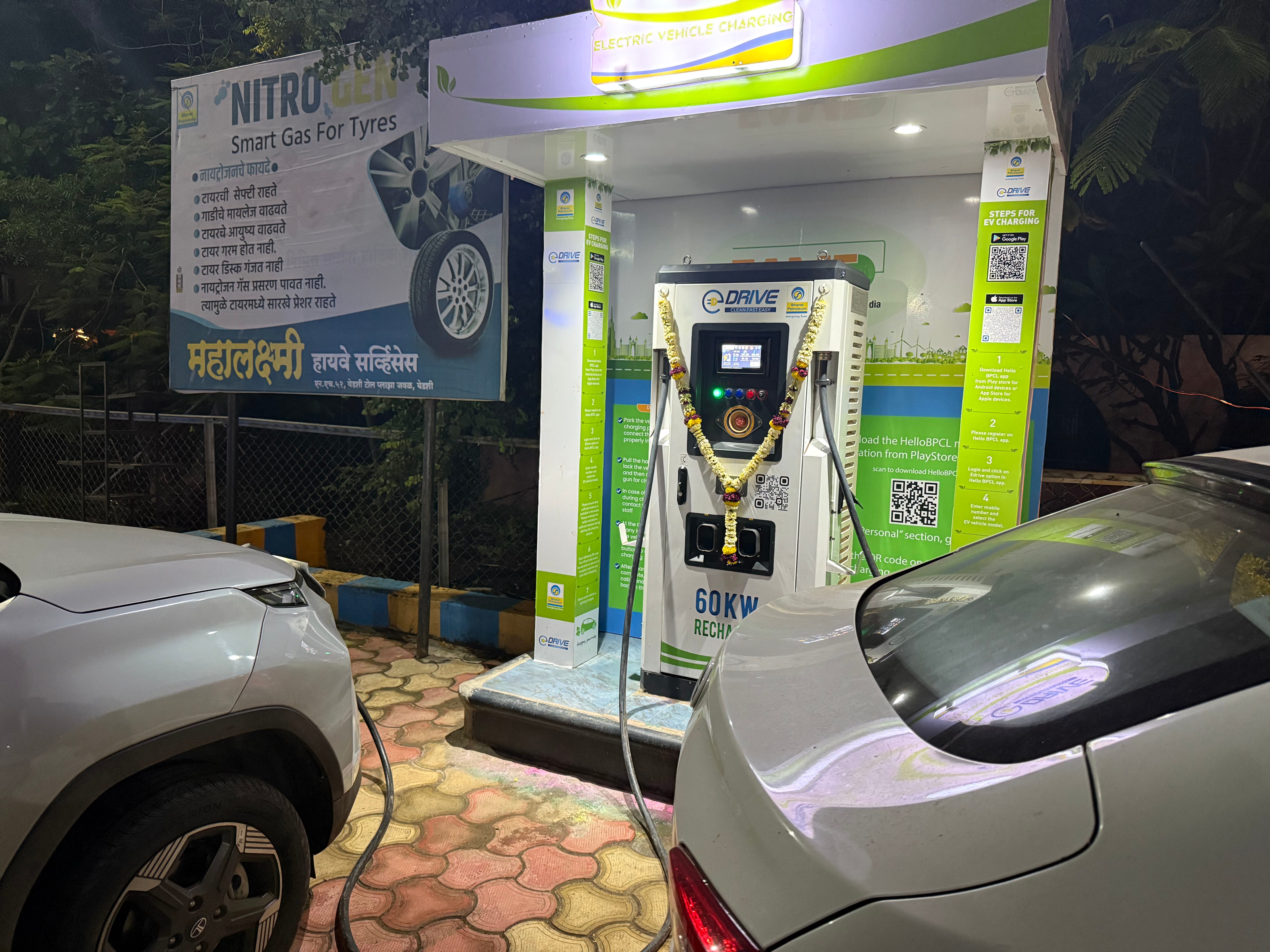
It was already past 9 p.m. I eyed a hotel and restaurant opposite our charger. We decided to call it a day. It took 73 minutes for the car to charge to 98%. The night sky was a delight, and we saw glimpses of a lunar eclipse.
While we couldn’t capture the Lunar Eclipse, here’s our charging curve.
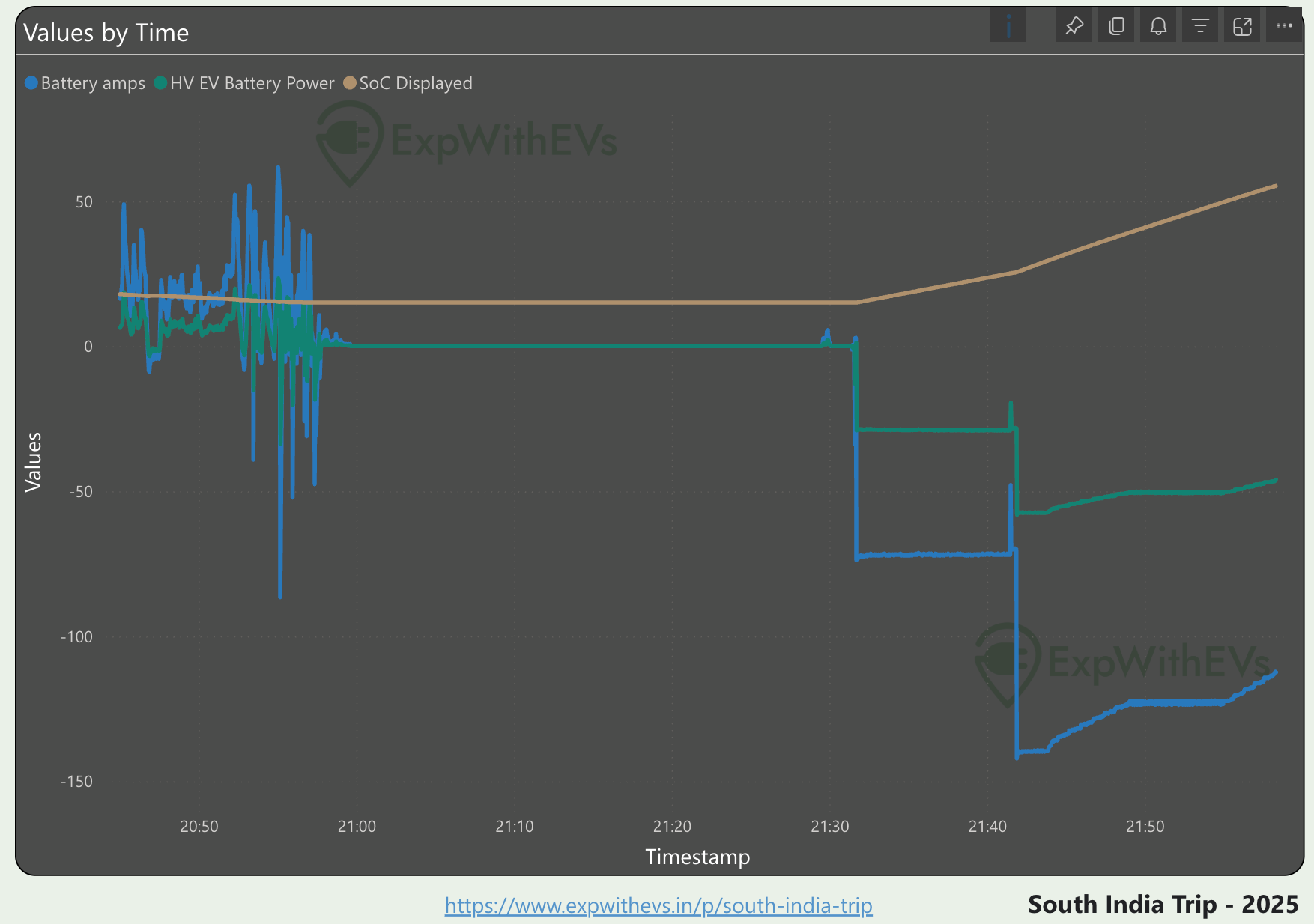
We reached the charger at around 9 P.M. The chart shows the flatlining of Battery Amps and Battery Power. Our charging started at around 9:30 P.M. From this data, we can say that the queuing was for atleast 10 minutes after we started charging. The Battery Amps jumped to 140A after the other car disconnected.
The negative data indicates that the car is receiving the amperage and power instead of dispensing it.
For nerdier data, check out our motor temperature and battery temperature charts.
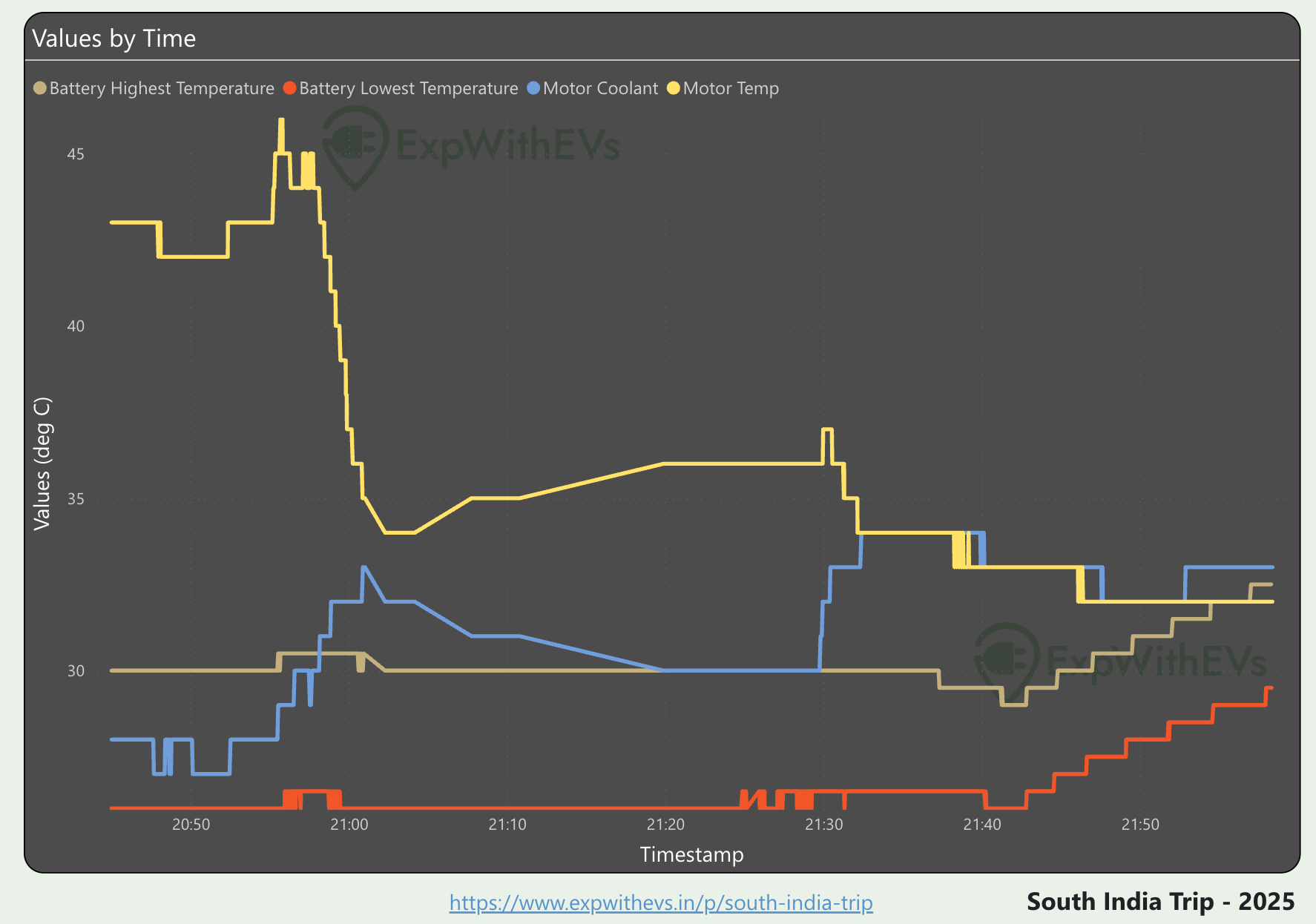
Here, we can see that the motor temperature drops significantly when the car comes to a halt at 9 P.M. The motor coolant and the ambient temperature play a key role to regulate the motor temperature.
Similarly, the lowest and highest battery temperatures rise in steps, indicating that the battery is being heated as it is being charged at higher amps. The heating process starts only after the current goes above 100 Amps, i.e. after the second car leaves the charger. The higher amps heat the battery pack.
Yedshi to Bengaluru
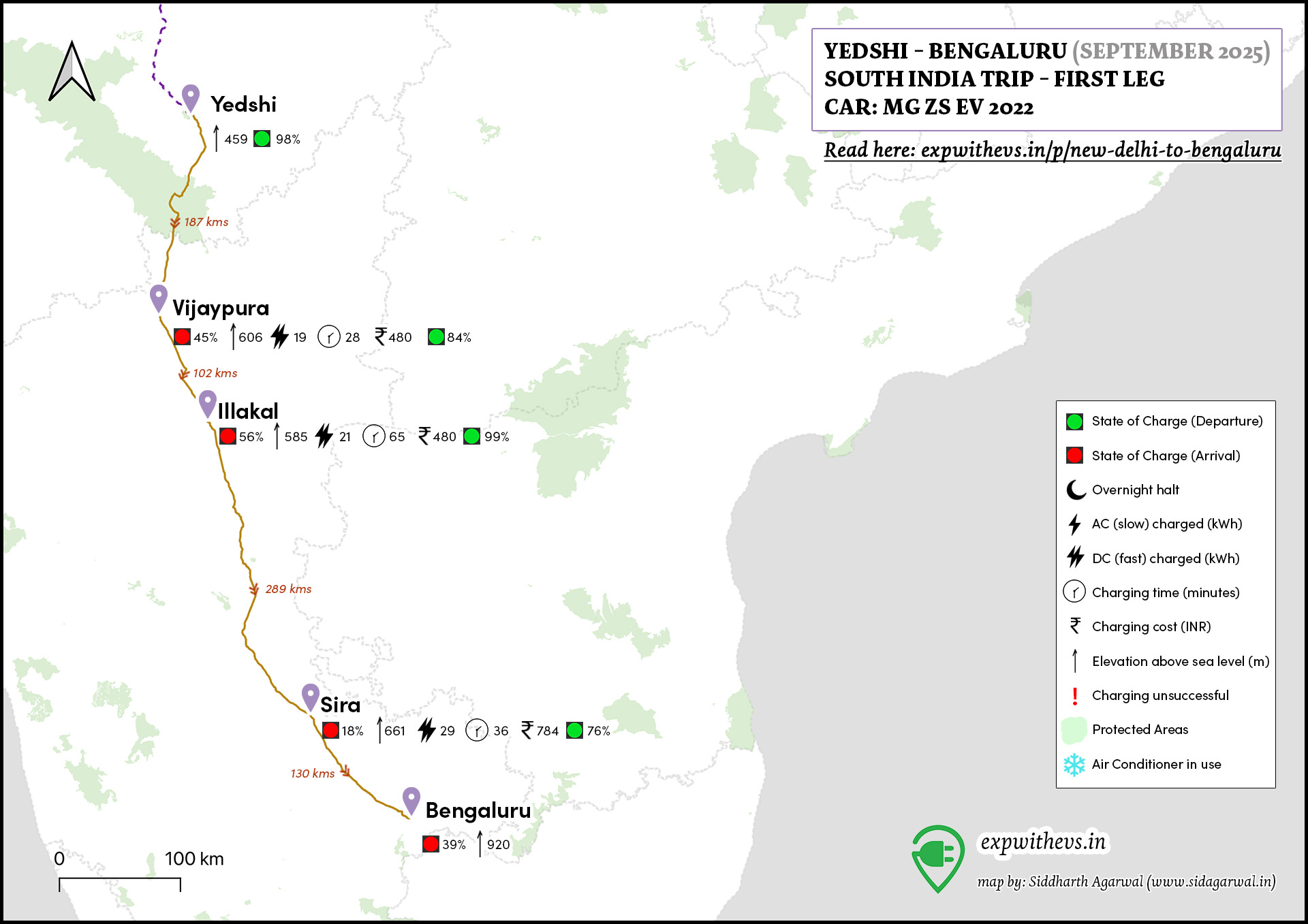
Route: Yedshi-Solapur-Vijayapura-Ilkal-Sira-Bengaluru
Km: 708km
Time taken: 15h15m
Number of charging stops: 2
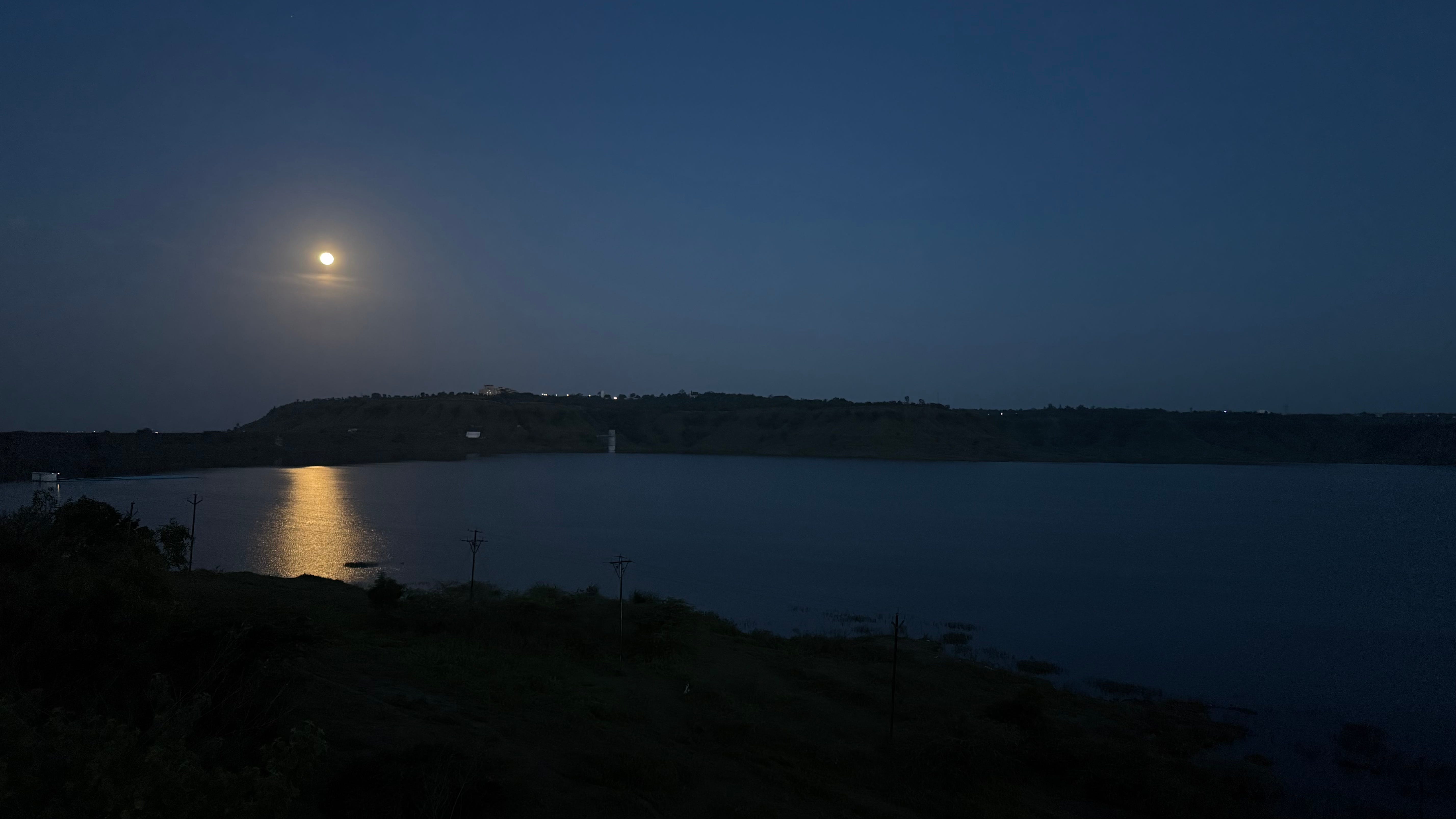
At 5 a.m., we left the hotel. It was a misty morning and the car was coated in fresh dew. I love this feeling. I prefer to drive at dawn when the earth feels fresh, rather than drive late at night when the air feels dirty and stale.
A couple of hours later, we were in Karnataka. We realised that this trip was so rushed that we didn’t eat a good Vada Pav in Maharashtra. Oh well, at least the road quality here in Karnataka improved drastically.
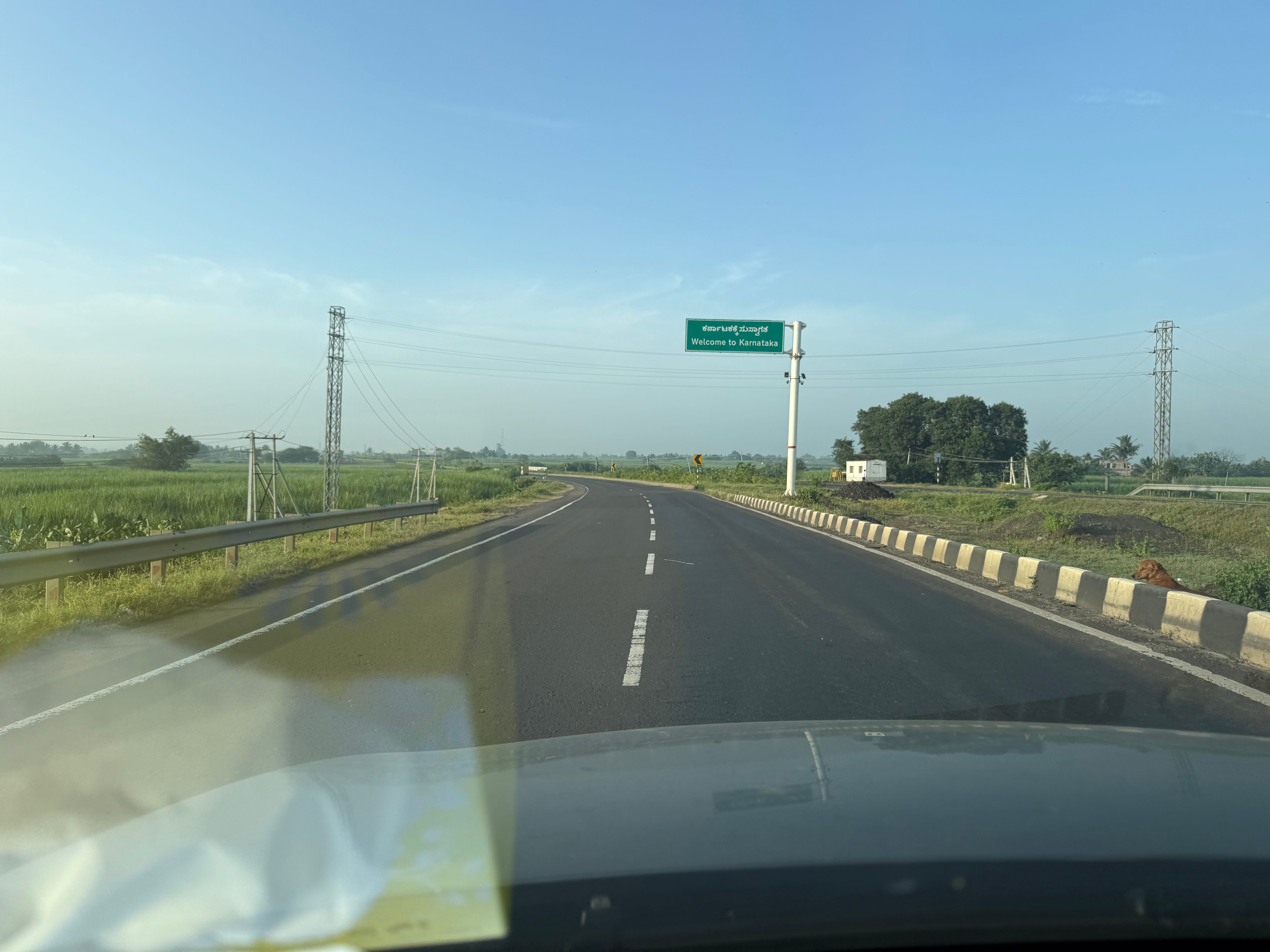
Between Solapur and Vijayapura, there are multiple charging options. Almost all chargers by the Oil Public sector Units (IOCL, HPCL and BPCL) were 30kW, while private players were 60kW. IOCL, on this route had two 120kW chargers from Solapur to Vijayapura in Karnataka. However, they were offline.
We settled with ChargeZone’s charger at a Hyundai dealership in Vijayapura, Karnataka. It was a quick charge: from 45% SoC to 83%.
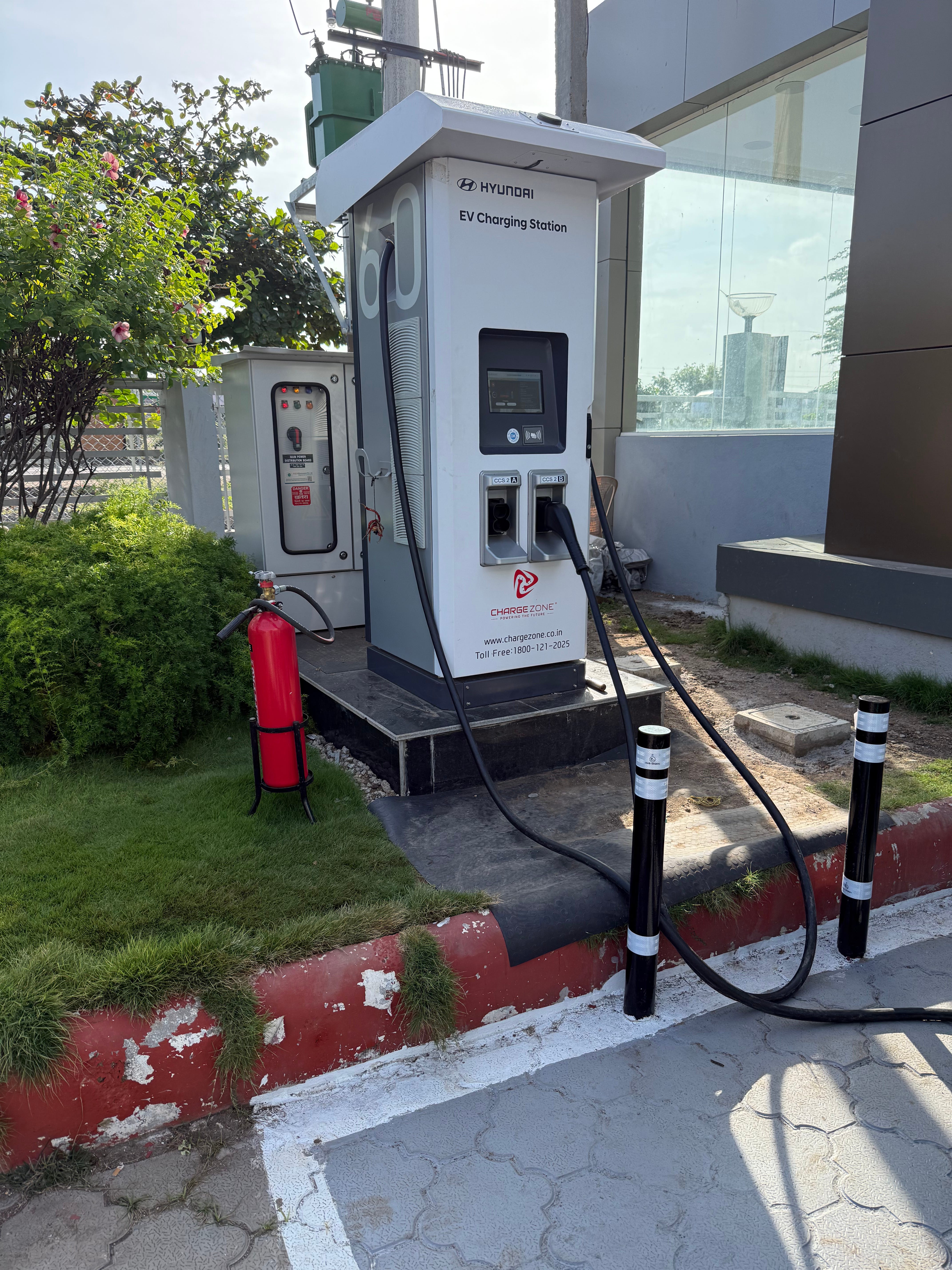
While we charged, we wrote up the third part of the Battery Insights series, based on our observations from The Battery Show Asia, a Battery, Energy Storage and Mobility Technology conference that was held in Hong Kong.
We decided that the next charging stop would be one with a good breakfast stop. We were in South India, and we could eat dosas for all three meals if we chose.
We checked out our PowerBI dashboard and narrowed down on a Jio-BP 60kW charger by a Udupi-style restaurant at Ilkal (a small town known for its saris). EVInfraBI users get access to the dashboard that allows you to see the whole charging infrastructure across apps.
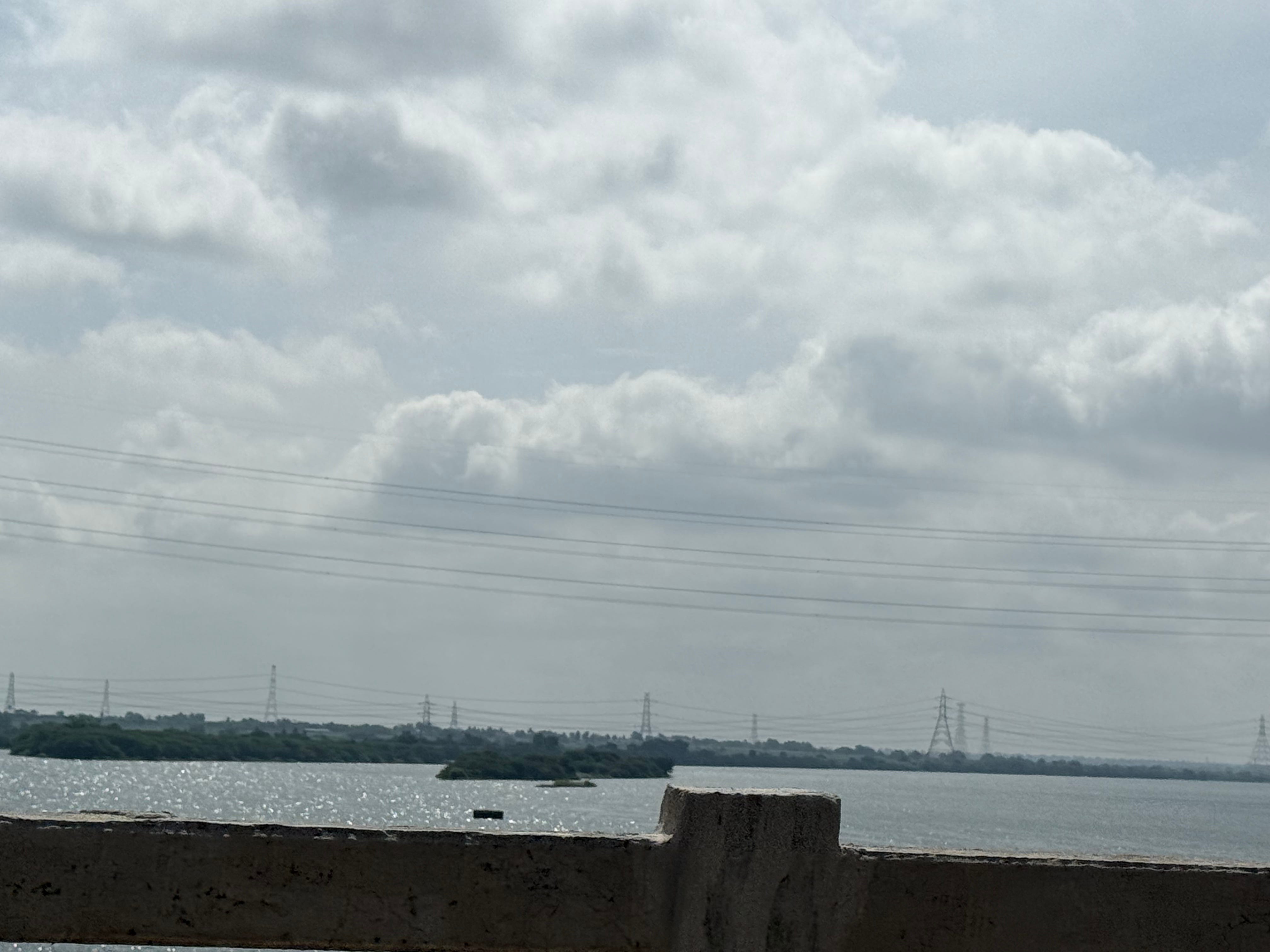
It’s a straight, broad national highway. An absolute pleasure to drive. We crossed on another major river, Krishna. This season, every river brimmed with water.
The charger at Ilkal was smooth. An hour later, our SoC was at 99% and our stomachs were full with a hearty breakfast.
We were driving through the Deccan plateau and we had a buffet of options to charge. This was Zeon’s territory. We decided on their classic high power charging setup, Kempower, at Sira on the Bengaluru-Mumbai highway. It was 300km away and we had enough range.
The National Highway 55 is a relatively new highway, and built primarily for trucks transporting iron ore from Ballari. It’s relatively empty and passes close to Hampi, over the Tungabhadra River and joins the busy Bengaluru-Mumbai Highway.
Four hours later, we arrived at Sira. 18% SoC and hungry. High power charging set-ups like the Kempower dispenser are always preferable for EV customers. No matter how many people are charging, you’ll be guaranteed full charging speed for your car. They are usually very reliable too.
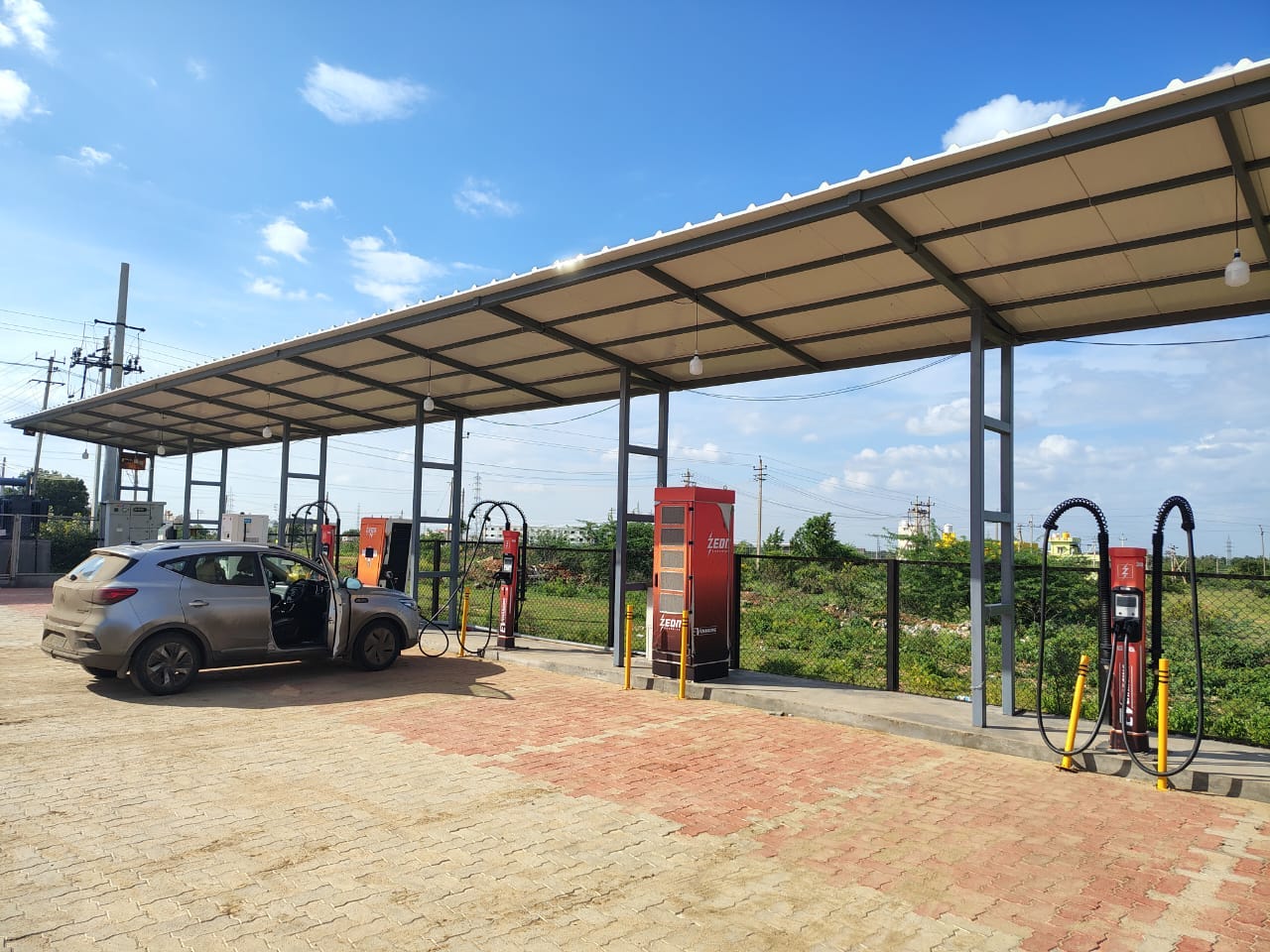
If the car is registered for auto-charge on Zeon’s network, charging becomes a breeze. Just plug in and charge. No need to fiddle around on the app.
Kempower also gives a power chart versus time. That is not permanent, so we have ours.
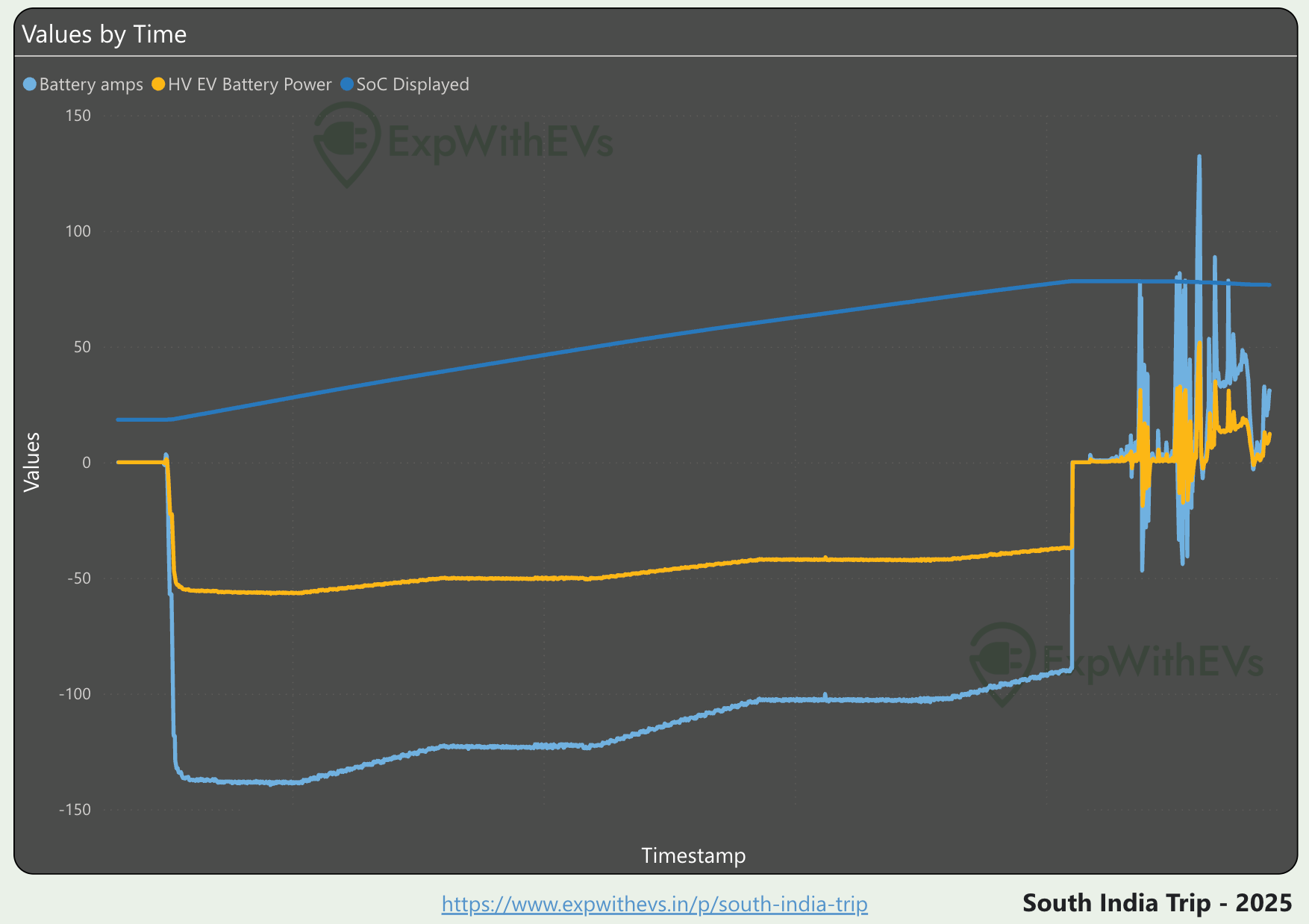
The car went from 18% SoC to 78% SoC in around 35 minutes. The input battery amps stay flat at three distinct levels. From 18% to 30%, the car takes in around 140 Amps, yielding a charging speed of 56kW.
In the next 6 minutes, the battery reduced the inward amps to 120A, yielding 50kW. The battery maintained this from 40% to 50%. The pattern repeated, the current dropped to 100 Amps and stayed consistent between 60% to 70% SoC.
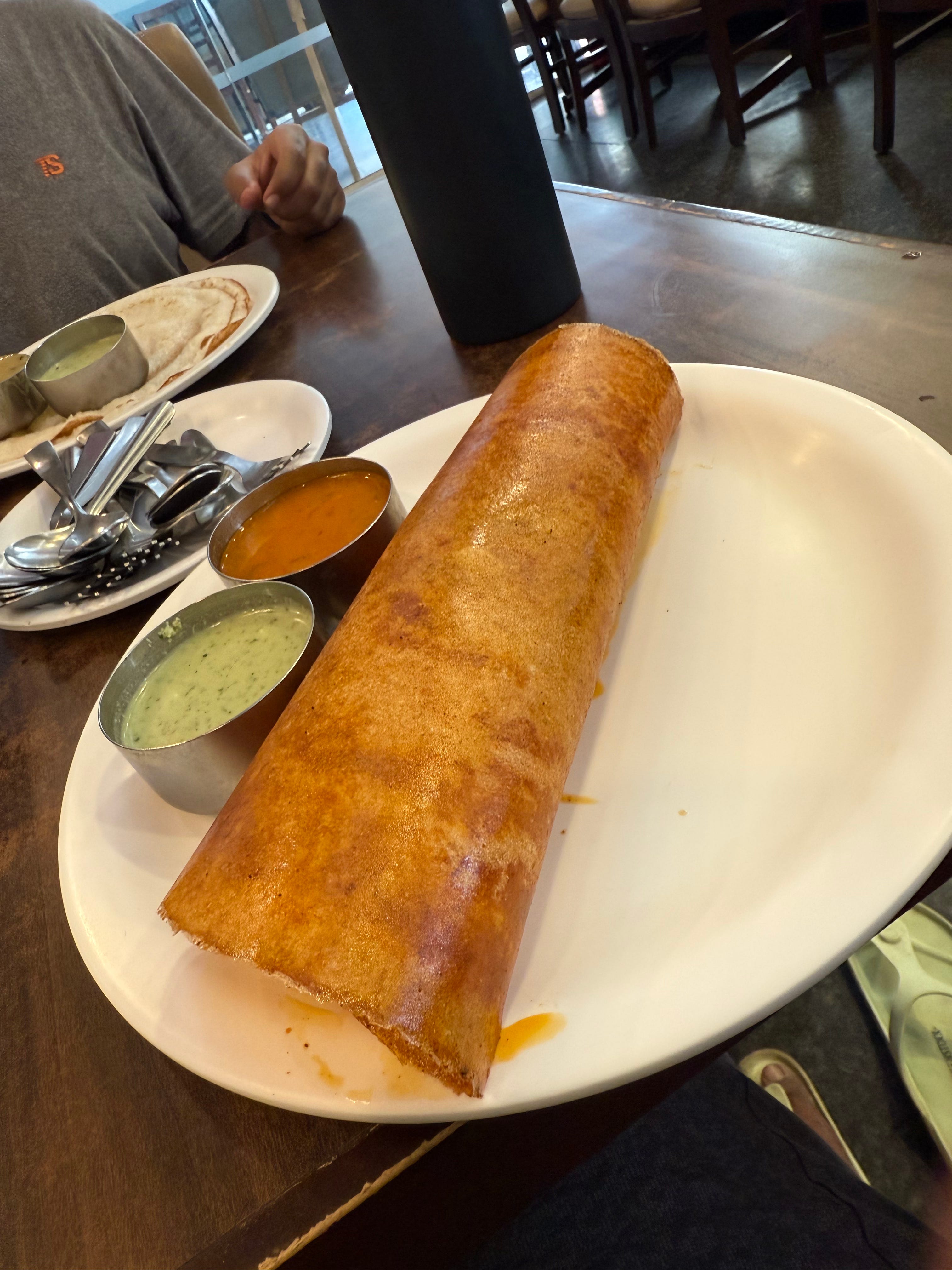
The other great advantage was it had a restaurant attached: Paakashala, an iconic Bengaluru eatery that has a great network of restaurants at highways.
I’d like to imagine a time when these chargers will become commonplace across the country. By the time we were done ordering breakfast, we had more than enough charge to reach Bengaluru, some 130km away. By the time we had our breakfast, the car was at 76% SoC.
The Bengaluru-Mumbai Expressway, particularly after Tumakuru, is extremely busy and is just four-laned. For highway standards, it’s quite mediocre. But it is a good preparation for Bengaluru traffic.
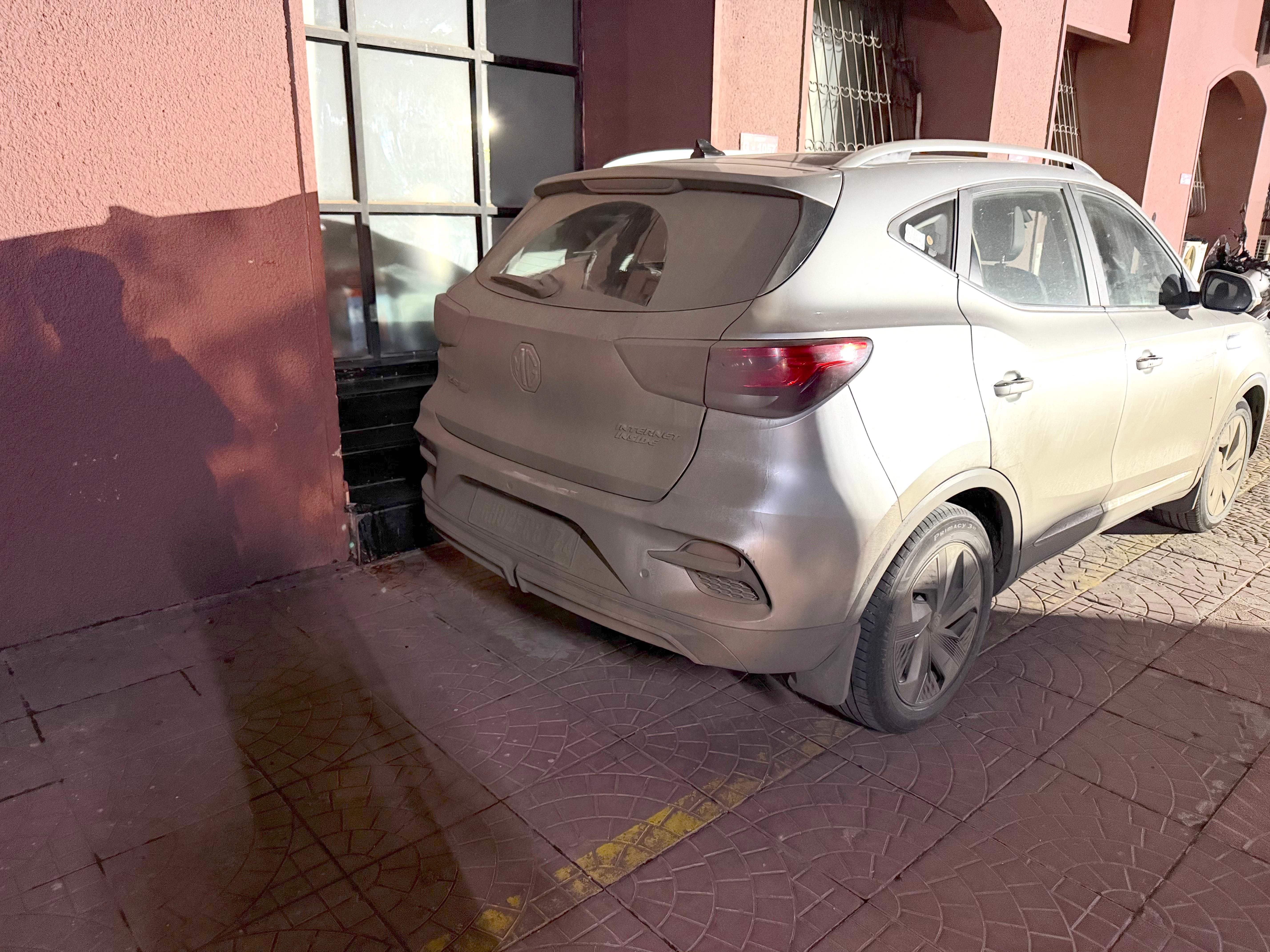
By 8 p.m., the three-day journey from New Delhi to Domlur in Bengaluru had ended. 2,228 km, the longest continuous trip done by me so far. It felt like an achievement.
Costs and savings
These trips aren’t meant to be merely joy rides. They allow me to evaluate charging infrastructure along the way (which has become useful for charging companies to understand customer POVs).
They also, hopefully, encourage others to adopt EV technology if they are still under the impression that long journeys in electric cars are still not possible due to the nascent charging infrastructure in the country. We hope we are changing these minds.
EVs are the future: better for the wallet and the environment.
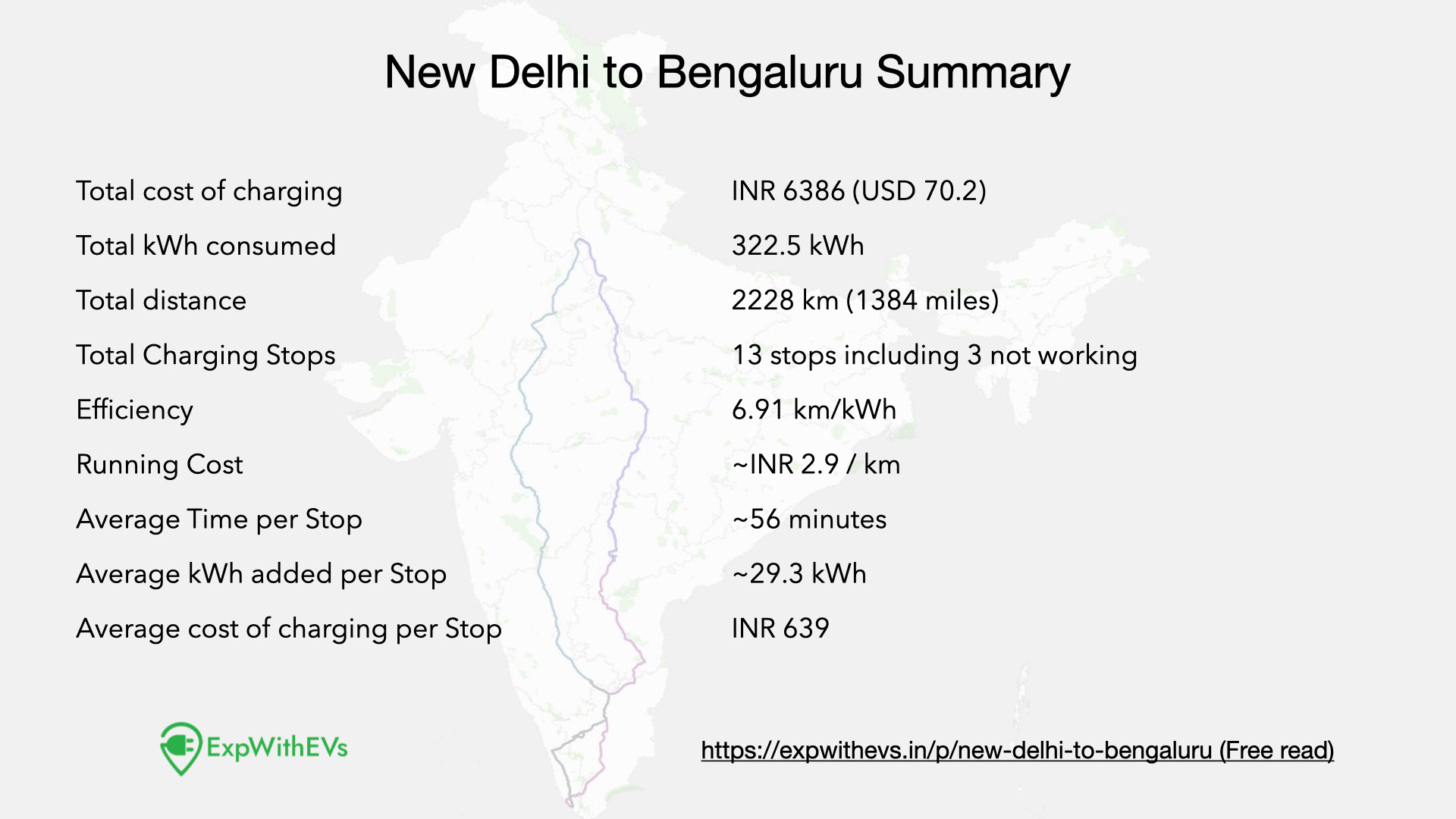
We must add here that we used the annual road toll pass for the trip. We passed through 34 tolls in this section, bringing our total toll cost to Rs. 693 (we paid Rs. 183 as other toll charges). This is 0.3 Rs. per km, compared to Rs. 2.5 per km on my other trips pre annual toll passs. It’s a real value saver if one does these trips regularly.
Series Index
The Epic EV Roadtrip! (Publishing date - 16 February 2026)
New Delhi to Bengaluru (This one!)
Bengaluru to Varkala (Publishing date - 11 March 2026)
This is an index of articles to come. The links will be updated as the articles are published. You can bookmark this section or subscribe to get them straight to your inbox.
This series of articles wouldn’t have been possible without the help of our team. The trip, time, effort - everything was self sponsored and costs money. We do not take advertising or sponsorship money. It allows us to say the uncomfortable truth without compromising on our ethics. You can do your bit by buying us a pizza or getting a premium subscription to the Substack.
Behind the wheel : Garvit, Priyans
Words and Graphics : Priyans
Edit : Mohit Rao
Map : Siddharth Agarwal
All rights reserved with Priyans Murarka @ ExpWithEVs.
The data from here and this article cannot be repackaged or sold without explicit written permission of ExpWithEVs.